Japanese scientists tested whether an antioxidant mixture could help old mice, and found a moderate improvement in memory and spatial cognitive function.
The study was conducted at the Shibaura Institute of Technology in Japan, led by Prof. Koji Fukui, in collaboration with Gifu University. It is important to clarify upfront: this is a study in mice only, with modest results, and it does not show "reversal of aging."
What exactly was tested in the study:
- 18-month-old (elderly) C57BL/6 mice received a commercial antioxidant mixture called Twendee X for just one month.
- The mixture contains eight components, including Coenzyme Q10, Vitamin C, Glutamine, Cysteine, Niacin, and Riboflavin.
- The researchers examined two main measures: spatial cognitive ability (Morris water maze test) and short-term memory (Y-maze test), as well as a treadmill running test.
Improvement in memory and spatial cognition:
- The mice that received the mixture performed better in short-term memory and spatial learning tests compared to untreated old mice.
- In the Y-maze test, the spontaneous alternation rate increased from 49.5% in normal old mice to 68.67% in treated mice (p<0.01), a statistically significant difference in the short-term memory measure.
Modest effect on muscle function:
- In the treadmill test, only a moderate difference was found: the rate of improvement in running distance over the treatment period was higher in treated mice (approximately 111.4% vs. approximately 91.17% in normal mice, p<0.04).
- It is important to emphasize: the mixture did not improve the exercise effect itself, and no improvement in "muscle strength" was measured. This is a certain slowing of the age-related decline in muscle function, not a dramatic increase in performance.
What the study did not test (and is important to know):
- The study did not measure lifespan. There is no finding in this study regarding life extension.
- The study did not measure oxidative damage in cells, mitochondrial function, or cellular aging (senescence). Therefore, it is impossible to claim based on this study that the mixture "reduced oxidative damage" or "slowed cellular aging."
- This is one month of treatment in old mice, not long-term treatment and not in humans.
The other side: what large human studies show
- When examining antioxidant supplements in humans, the picture is completely different. The large Cochrane review by Bjelakovic and colleagues (2012), which aggregated dozens of controlled trials with over 200,000 participants, found no benefit of antioxidant supplements in reducing mortality.
- In fact, in trials with low bias, mortality was even slightly higher in the supplement group (RR 1.04). Beta-carotene and Vitamin E, and at high doses also Vitamin A, were associated with increased mortality.
- The accepted conclusion today: taking antioxidant supplements does not extend life in healthy humans, and in some cases may be harmful. A positive finding in mice does not automatically translate to humans.
How to correctly interpret such a finding:
- This study is an initial and interesting hint regarding a specific antioxidant mixture in old mice, not proof of efficacy in humans.
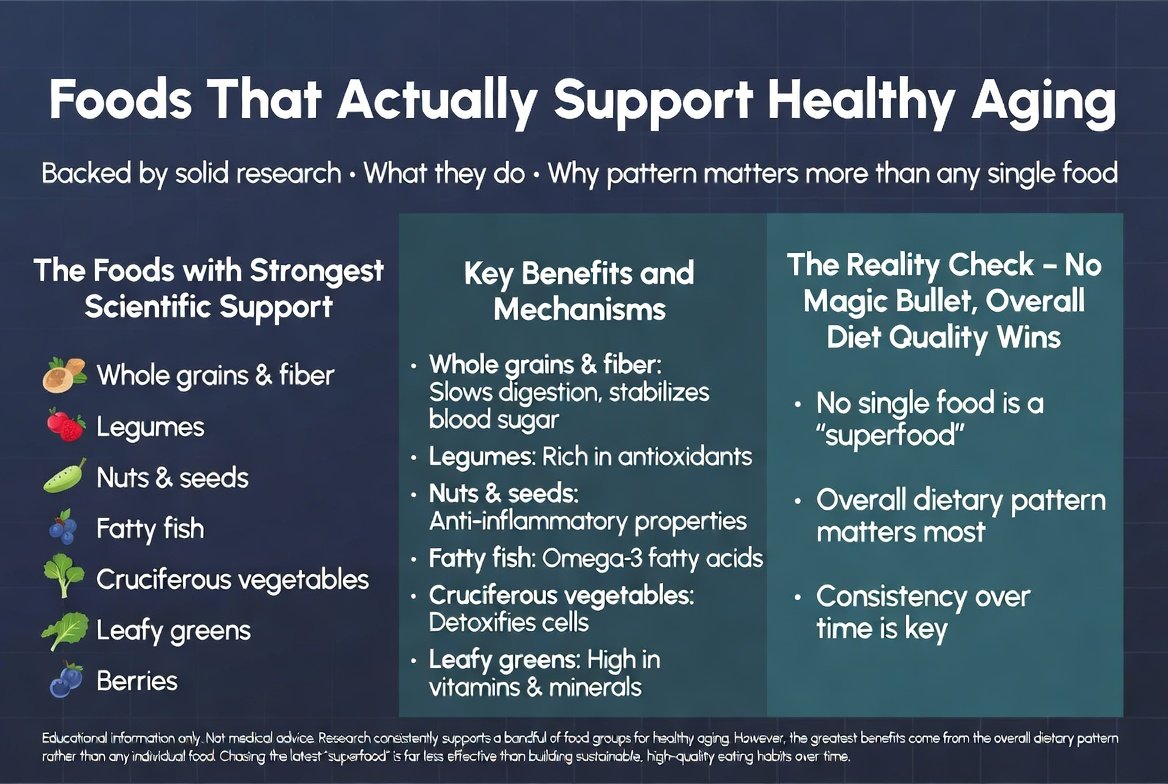
- Antioxidants are not a miracle cure for aging. The most established way to support the body's natural antioxidants is a diet rich in fruits and vegetables, physical activity, and adequate sleep, not necessarily taking high-dose supplements.
- Before taking any supplement, especially in high doses or in combination with medications, consult a doctor or pharmacist.
In summary: A Japanese study in old mice found a moderate improvement in memory and spatial cognition, and a certain slowing of the decline in muscle function, after one month of taking an antioxidant mixture. This is a preliminary finding in mice only. Meanwhile, large human studies do not show an anti-aging or life-extending benefit from antioxidant supplements, and sometimes the opposite. Headlines about "reversal of aging" should be treated with great caution.
References:
Fukui et al., Int J Mol Sci 2024 (original study)
https://pmc.ncbi.nlm.nih.gov/articles/PMC10932377/
Bjelakovic et al., Cochrane 2012 (antioxidant supplements and mortality)
https://www.eurekalert.org/news-releases/1039823
.
Products Antioxidants on the shelf;
(Links to IHERB include 5% discount on the entire shopping cart – discount code KBZ701)
https://il.iherb.com/pr/now-foods-super-antioxidants-120-veg-capsules/860?rcode=KBZ701
https://il.iherb.com/pr/healths-harmony-super-antioxidants-60-capsules/115136?rcode=KBZ701
https://il.iherb.com/pr/21st-century-antioxidant-75-tablets/43825?rcode=KBZ701
https://il.iherb.com/pr/california-gold-nutrition-superfoods-supergreens-antioxidant-strawberry-lemonade-6-03-oz-171-g/99178?rcode=KBZ701

💬 Comments (0)
Be the first to comment on the article.