Sarcopenia – the age-related loss of muscle mass and function – is a leading cause of disability, falls, and mortality in older adults. Early diagnosis is critical: the earlier you start, the easier it is to improve the condition. But a new study from the Federal University of São Carlos, Brazil, published in the journal Cadernos de Saude Publica, reveals a problem: standard diagnostic criteria miss most people at risk. The proposal: raise the threshold.
The Current Criterion: Why It's Not Enough
The global standard for diagnosing sarcopenia (according to the EWGSOP2 – European Working Group on Sarcopenia in Older People, 2019 version) uses grip strength as the first screening tool. The current threshold:
- Men: less than 27 kg
- Women: less than 16 kg
Anyone above this threshold is defined as "without sarcopenia." But what if they are actually at risk?
The Brazilian Study: 7,065 Participants
The team, led by researcher Sara Lima and senior researcher Prof. Tiago Alexandre, analyzed data on 7,065 Brazilians aged 50 and over from the ELSI-Brazil study. This is a cross-sectional analysis: it captured a snapshot of the population at a single point in time, without following participants over years. Participants underwent:
- Grip strength test (dynamometer)
- Additional functional tests
- Nutritional and health status assessment
The question examined: How does changing the grip strength screening threshold affect the prevalence of sarcopenia and the identification of at-risk individuals?
The Finding: Too Low a Threshold = Missed Cases
The study compared the classic criterion of 27/16 kg with a stricter threshold. When they raised the threshold to 36 kg for men and 23 kg for women, the results showed:
- Possible sarcopenia increased from 10.6% to 40.1% (4 times)
- Confirmed sarcopenia from 1.4% to 5%
- Severe sarcopenia from 3.9% to 8.8% (2.3 times)
In other words: with the higher threshold, the study identified 4 times more people in the early risk group – individuals the standard criterion defined as "healthy."
It is important to clarify: this study did not measure mortality itself (it is a cross-sectional analysis, not a longitudinal follow-up). The link between low grip strength and mortality is based on previous longitudinal studies, and the stricter threshold of 36/23 kg has already been linked to mortality risk in prior research. This is why the researchers propose it: to identify earlier those individuals that other studies have already shown to be at increased risk.
Why Does This Matter?
Sarcopenia is not a fully reversible process, but the earlier it is caught, the greater the chance of improving the condition. Resistance training combined with proper nutrition (especially adequate protein) can strengthen muscle and improve function, and the greatest impact is achieved when starting early, before the muscle becomes severely weakened. The current threshold catches people mainly at the confirmed or severe stage, when it is already harder to help. The new threshold catches them at the possible stage, when there is still more time to act.
"By using stricter criteria, we can identify the condition earlier, thereby increasing the chance of reversing it through strength training and proper nutrition." – Prof. Tiago Alexandre
How to Test Yourself at Home
You don't have to wait for a medical checkup. A hand dynamometer (grip strength meter) costs about $30-50 on Amazon. The test is simple:
- Sit on a chair, back straight
- Hold the dynamometer in one hand, arm bent at 90 degrees, elbow close to the body
- Squeeze as hard as you can for 3-5 seconds
- Repeat 3 times, take the highest result
- Repeat with the other hand
- Each hand gives a value. In healthy individuals, there is usually about a 10% difference between hands
According to the stricter criterion proposed in the study:
- Men below 36 kg: Pay attention and consider starting resistance training
- Women below 23 kg: Pay attention and incorporate resistance training with adequate protein intake
The Link to Malnutrition
The team also discovered an important finding: The association between malnutrition and severe sarcopenia was stronger with the stricter criterion. In other words, severe sarcopenia is not just a physical activity problem – it is often also a nutritional problem. Fixing one without the other will not be enough.
A two-pronged strategy:
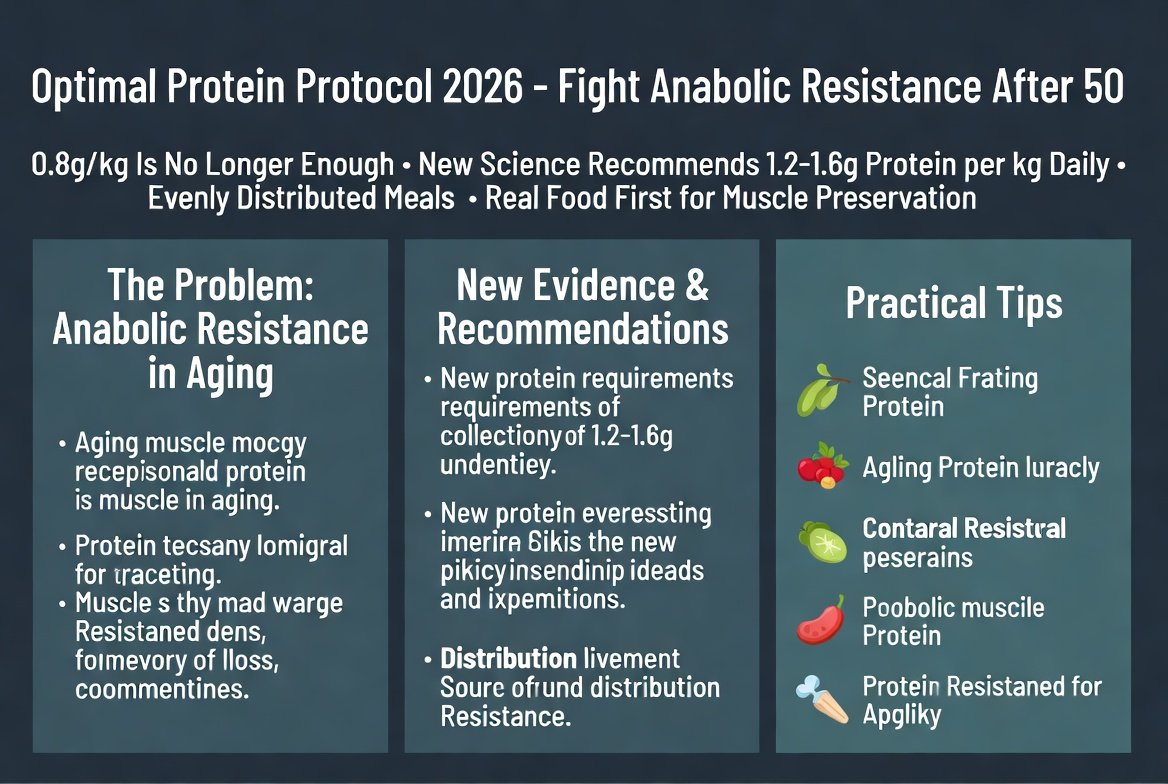
- Nutrition: At least about 1.2 grams of protein per kilogram of body weight per day
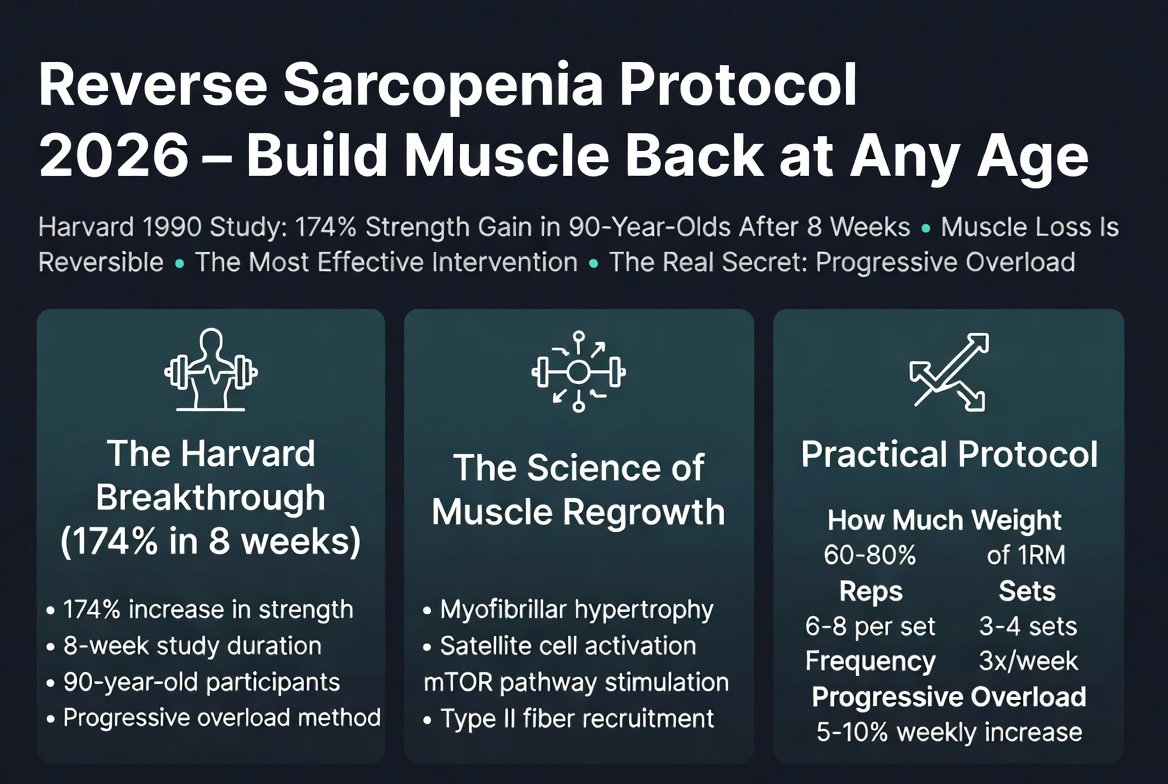
- Resistance training: 2-3 times per week, 30-45 minutes
- Both together yield better results than either alone
Impact on Healthcare Systems
If the stricter criterion is adopted on a large scale, there are systemic implications:
- A significant portion of older adults will fall under the label "possible sarcopenia." A high number, but it reflects the reality of age-related muscle strength decline
- Healthcare systems can incorporate screening: a brief grip strength test during a family doctor visit after age 60
- Earlier referral to training programs is possible: a relatively cheap and targeted intervention
In Summary: One 30-Second Test
The stricter criterion offers a simple approach: Periodic grip strength testing after age 60. If you are below the threshold, it's time to act: resistance training and proper nutrition. It's cheap and simple. Instead of waiting for sarcopenia to progress, you can identify the signs early, when there is still more time to strengthen the muscle.

💬 Comments (0)
Be the first to comment on the article.