We have known for decades that exercise rejuvenates muscles. The question has always been why. A new study from the Duke-NUS Medical School in Singapore, published in the journal PNAS (Proceedings of the National Academy of Sciences), provides an answer at the molecular level: a single gene called DEAF1 rises with age and disrupts the balance between creating new proteins and removing damaged ones. Exercise lowers it, restoring the cell to youthful function.
The Problem: More Production, Less Cleanup
At the heart of the process is a cellular pathway called mTORC1, responsible for two parallel tasks: building new proteins and removing damaged ones (autophagy). In young muscle, the two are balanced. In old muscle, mTORC1 becomes hyperactive in an unhealthy way. It continues building but stops cleaning.
The result: damaged proteins accumulate in the cell. They take up space, interfere with mechanisms, and ultimately weaken the cell. This is the process that produces the decline in muscle strength, sarcopenia, and loss of muscle mass with age.
The Discovery: Who Overactivates mTORC1?
The team led by Assistant Professor Tang Hong-Wen from the Cancer and Stem Cell Program at Duke-NUS searched for the culprit. After a series of experiments in fruit flies (Drosophila), mouse muscle cells (C2C12 cell line), and aged mice, they identified it: a gene called DEAF1. DEAF1 levels rise with age in muscle. And as it rises, mTORC1 races ahead. Proteins accumulate. The muscle weakens.
"Exercise is able to reverse this process and correct the imbalance," explained Assistant Professor Tang. "Exercise activates certain proteins [FOXO proteins] that lower DEAF1 levels and restore the growth pathway to normal balance."
How Does Exercise Lower DEAF1? The Answer: FOXO
The team traced the molecular chain, and the key player revealed is a family of proteins called FOXO. In young, healthy muscle, FOXO proteins keep DEAF1 suppressed and inhibit its expression. But with age, FOXO activity declines, and DEAF1 begins to rise unchecked. This is the tilt that shifts the balance from muscle maintenance and repair toward deterioration.
This is where exercise comes in. When the muscle is exercised, it reactivates FOXO proteins. Active FOXO again suppresses DEAF1, its levels drop, mTORC1 returns to a balanced rate, and the removal of damaged proteins resumes. In other words: FOXO is the natural brake on DEAF1, and exercise is what presses that brake.
What surprised the team: even in aged mice, when DEAF1 was directly lowered, the muscles showed signs of recovery. Muscle strength and protein balance were restored, even without exercise. In fruit flies, reducing DEAF1 improved movement ability (measured in a standard climbing test). That is, lowering DEAF1 alone was sufficient for part of the "as if we exercised" effect.
But there is an important caveat: when DEAF1 levels are already very high, or when FOXO activity has dropped too deeply, as occurs in very aged muscle, exercise alone may not be enough to fully restore repair. This may explain why some older adults derive less benefit from training than others.
The Implication: A Drug That Mimics Exercise?
The discovery opens three practical possibilities:
- A new drug target. A DEAF1 inhibitor (which does not yet exist) could in the future be a candidate for a drug for sarcopenia and muscle loss in older adults who cannot exercise (post-surgery, chronic patients, bedridden individuals).
- A biomarker for muscle health. DEAF1 levels in a muscle biopsy could in the future be used to estimate the biological age of the tissue.
- Optimizing training protocols. If we know which type of exercise activates FOXO and lowers DEAF1 most effectively (aerobic? strength? HIIT?), we can specifically recommend it to older adults.
Why This Is More Important Than Previous Studies
We have had hints before about the connection between exercise and cellular pathways. But DEAF1, together with its controller FOXO, is the first explanation that connects the entire chain from training to protein renewal. It answers the question "what exactly happens at the molecule when I exercise?" with a clear answer. And just as importantly, the mechanism is conserved across species, from fruit flies to mice, which strengthens the likelihood that it is also relevant to humans.
What You Can Do Now
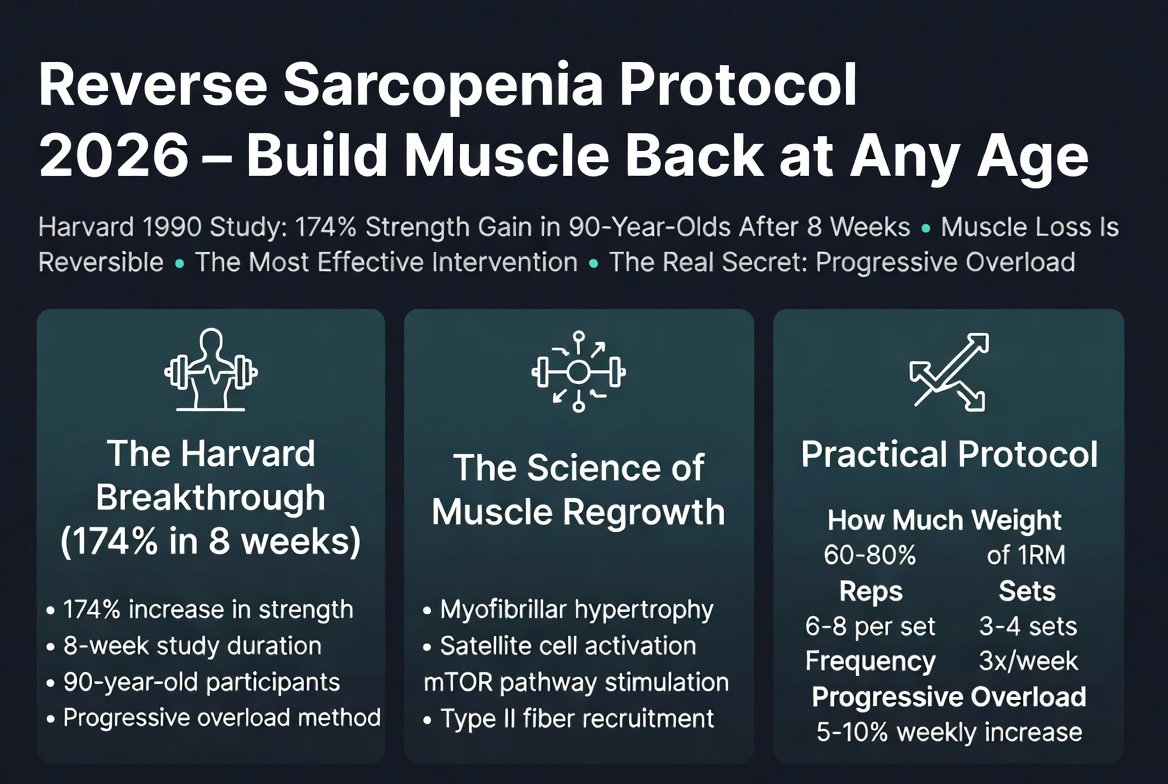
- Resistance training 2-3 times per week remains the most powerful and proven intervention for maintaining muscle with age.
- Consistency is better than sporadic effort. Regular training spread across the week is more beneficial than a single random burst.
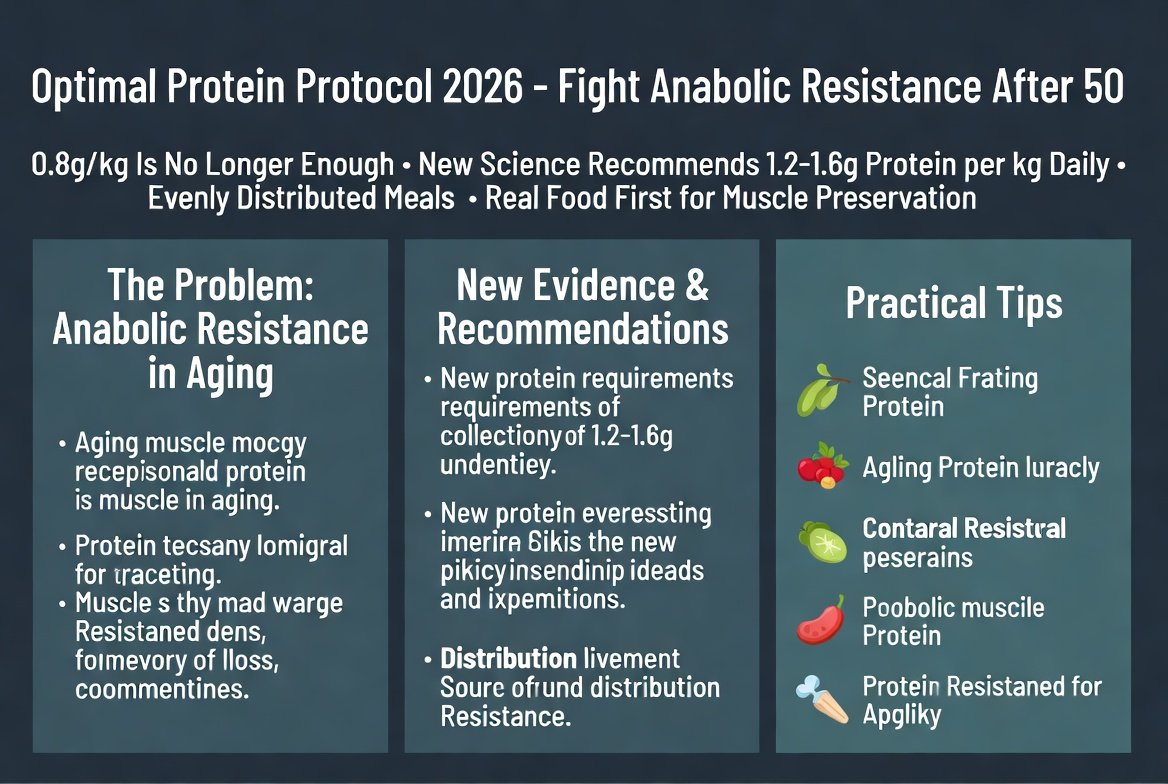
- Combining with adequate protein (1.2-1.6 grams per kilogram of body weight per day at age 60+) enhances the effect.
It is important to emphasize: the study was conducted in animal models and cells, and has not yet been proven in humans. A drug that inhibits DEAF1 is still years away from the market, if at all. Until then, the surest way to lower this gene is also the simplest: get up from the chair and exercise.



💬 Comments (0)
Be the first to comment on the article.