Over the past few years, the combination of Datinib + Quercetin (D+Q) has become the star of the senolytic field. Studies have shown that it succeeds in eliminating zombie cells in culture, and improving function in whole organisms. It entered clinical trials in lung, kidney, diabetes, and general frailty. But a new study published in PNAS (Proceedings of the National Academy of Sciences) offers a serious warning: D+Q may cause brain damage.
What are dacetinib and quercetin?
The two drugs work in combination:
- Destinib: an oncology drug that is approved for the treatment of leukemia. Inhibits several enzymes that cancer cells need for survival
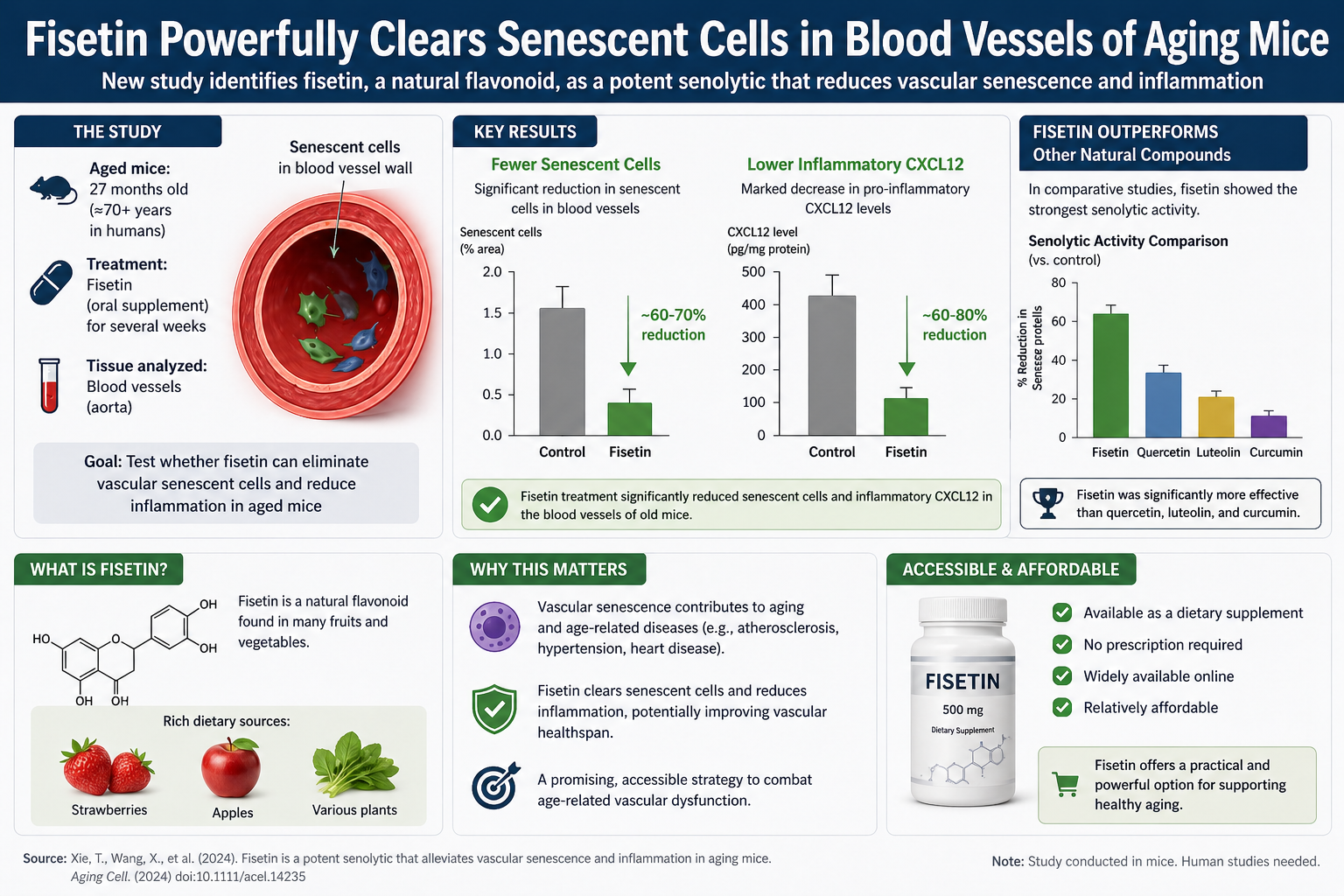
- Quercetin: a flavonoid found in onions, apples, and other fruits and vegetables. Much researched as a dietary supplement
Combined, they attack the "defense pathways" of zombie cells in several different ways, causing them to die. are considered the gold standard of senolites, which is why they are in many clinical trials.
The new study
A team that included researchers Lombardo, Pijewski, Lustig and their colleagues, publishing in PNAS, performed a simple experiment: took old mice, gave them D+Q, and looked at what happened in the brain. The findings were disturbing:
- oligodendrocyte cells functioned less. These are the cells that produce myelin, the substance that wraps the neurons and enables the rapid transmission of nerve signals
- Neurons showed less myelin. That is, the insulating layer around them was reduced
- Fewer nerve branches. The connections between the neurons weakened
"The findings are similar to the symptoms of multiple sclerosis (MS), an autoimmune disease characterized by the loss of myelin," the researchers conclude.
Why is this happening?
The researchers propose several possible mechanisms:
- Healthy oligodendrocyte cells are damaged. D+Q may not distinguish between zombie cells and other healthy cells well enough, causing healthy cells to die as well
- damage to the blood-brain barrier. If the barrier is weakened, more drug enters the brain than intended
- cumulative side effect. In short-term studies, the damage is not seen. Only with enough time, the effect accumulates
What does this mean for the clinical trials?
The D+Q Senolite is currently being tested in clinical trials on:
- Alzheimer and cognitive decline
- Pulmonary fibrosis
- Chronic kidney disease
- frailty and osteoarthritis
- Diabetes
The results of human trials have so far shown promising signals, and so far there are no reports of brain damage. But this study suggests: More careful examination of brain function is required in any future D+Q trial.
What does this mean about you?
If you are taking D+Q:
- Within a clinical trial: Ask the doctor to examine cognitive function, brain MRI if possible. Report any changes in memory, vision, or coordination
- Based on personal experiments: Consider stopping until more human studies are published. The risk according to the new study is not known in humans, but it is researched
- Regardless: consult a neurologist or family doctor before starting any senolytic protocol
The wider context
This study is an example of what happens when a young field tries to move into the clinic too soon. Senolytics are a huge promise, but we are just at the beginning. Discoveries like this remind us that drugs that work in mice don't always work in humans, and that treatments that work on one organ can harm another.
The bottom line
D+Q is not a bad medicine. It's just not accurate enough yet. The next generation of xenoliths, such as those targeting GPX4 (as reported this week in Nature), are expected to be safer. In the meantime, if you are interested in senolytics, the safest way is: regular exercise, controlled intermittent fasting, and a Mediterranean diet. All of these naturally reduce a sensational burden.

💬 תגובות (0)
היו הראשונים להגיב על המאמר.