If you are over 65 and left a doctor's appointment with a "normal" BMI, don't feel too safe. Geriatricians at Johns Hopkins Medicine explain why the body mass index, used in medicine for decades, simply doesn't work correctly for older adults. The reason: it ignores the dramatic change in body composition with age.
Why was BMI invented in the first place?
BMI (Body Mass Index) is based on a 19th-century formula developed by Belgian statistician Adolphe Quetelet to describe the "average person" in a population, not to assess the health of an individual. It weighs weight relative to height: BMI = weight (kg) / height² (meters). The "normal" range is 18.5-24.9. Above 30 = obesity. Below 18.5 = underweight.
The problem: BMI is just a number. It doesn't know what's inside the body. In a 30-year-old, most non-fat weight is muscle and bone. In a 75-year-old, a large part of that weight is fat that has replaced lost muscle.
Sarcopenia: The Muscle That Disappears Quietly
Sarcopenia is accelerated muscle loss with age. After 30, you lose about 3-8% of muscle mass every decade, and after 60, the rate accelerates to 1-2% per year. By age 75, a person who hasn't exercised can lose 30-40% of their muscle mass.
The problem: This muscle is often replaced by fat. Total weight doesn't change much, BMI remains "normal," but internally the person becomes skinny-fat. They:
- Have lost the strength to get up from a chair
- Cannot carry themselves up stairs
- Are exposed to an increased risk of falls and fractures
- Have a compromised metabolic system
- But their BMI is 23, and everyone praises them for their weight
Sarcopenic Obesity: The Most Dangerous Syndrome No One Diagnoses
When sarcopenia combines with obesity, a particularly troubling syndrome called sarcopenic obesity results. A person with a BMI of 28 (borderline) who has lost 35% of their muscle is at a higher risk compared to their counterpart with intact muscle. Meta-analyses indicate an increase of about 20% to 50% in all-cause mortality risk (hazard ratio approximately 1.2 to 1.5), and about double the risk for cardiovascular events. Risks include:
- Higher all-cause mortality
- Cardiovascular diseases
- Type 2 diabetes
- Functional disability
- Serious falls
According to geriatricians at Johns Hopkins Medicine, in older adults, BMI alone does not reflect true health status. A 70-year-old with a BMI of 22 and good muscle mass may be healthier than a 70-year-old with the same BMI whose mass is mostly fat.
What Does Work? The Real Metrics
Instead of BMI alone, geriatricians recommend a combination of:
- Calf circumference. A simple, quick measure. A calf smaller than 33 cm in women or 34 cm in men (per AWGS criteria) hints at muscle loss and requires investigation.
- Handgrip strength. A short test with a dynamometer. Less than 27 kg in men or 16 kg in women (EWGSOP2 criteria) hints at sarcopenia.
- Gait speed. Walking 4 meters. A speed lower than 0.8 meters per second is the official sarcopenia threshold per EWGSOP2 (below 1 meter per second is already considered a soft marker for mobility decline).
- DEXA scan. A scan that measures muscle, fat, and bone mass separately. The gold standard, but expensive and not always available.
- BIA (bioimpedance). Advanced home scales provide a body composition estimate. Less accurate than DEXA but accessible.
When Should You Actually Think About BMI After 65?
BMI is still useful at extremes:
- Below 22 + unwanted weight loss = a warning signal. Malnutrition or illness.
- Above 30 + metabolic changes = true obesity requiring intervention.
- In the 22-30 range, BMI says almost nothing. Additional measurements are needed.
Action Plan for Older Adults
If you are over 60 and want to know where you really stand:
- Ask your doctor for a handgrip strength test and gait speed test. They are free and any clinic should provide them.
- Consider a DEXA scan every two years if there is a family risk.
- Record calf circumference every 6 months. A decrease of more than 2 cm requires investigation.
- If you have lost more than 5% of your weight in 6 months without dieting, see a doctor immediately.
What Can Be Done Against Sarcopenia?
Three proven interventions:
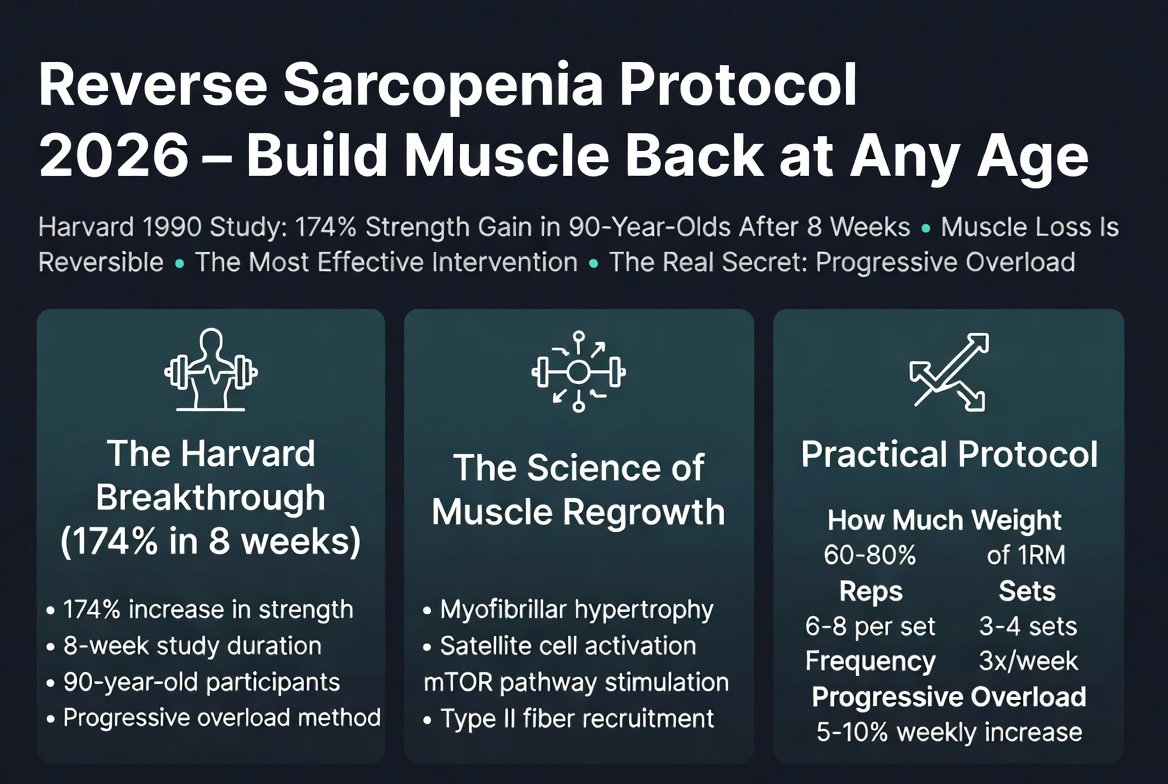
- Resistance training. 2-3 times a week, 30 minutes, can restore 5-10% of muscle mass within six months.
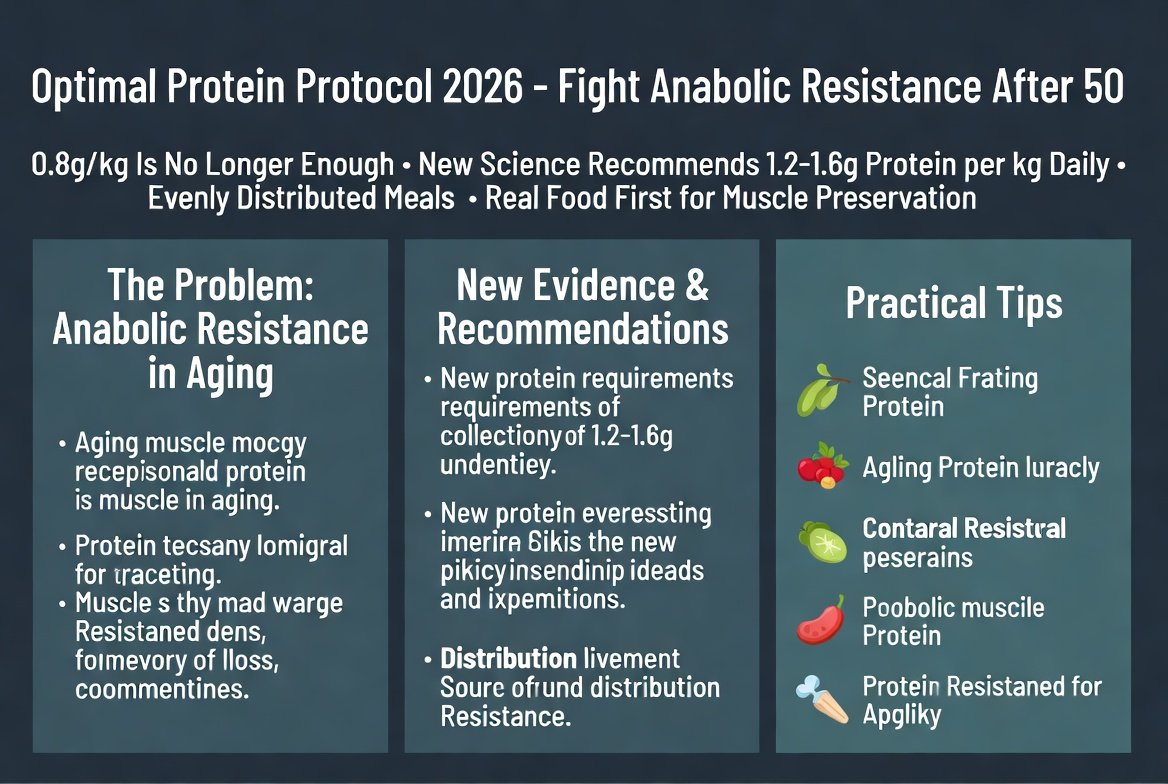
- Adequate protein. 1.2-1.6 grams per kilogram of body weight per day (not 0.8 like for younger people). Spread throughout the day.
- Vitamin D. Decreased levels with age are linked to sarcopenia. Testing and supplementation as needed.
The bottom line: BMI after 65 is not your friend. It gives you a false sense of security. Listen to your grip strength, gait speed, and calf circumference. These are the markers that tell the truth.




💬 Comments (0)
Be the first to comment on the article.