In India, those aged 60+ make up about 11% of the population - approximately 140 million people. How many of them lose significant muscle mass with age? According to a new expert consensus, 39.2% of those aged 60 and over suffer from primary sarcopenia. That is a staggering number. Until 2025, India had no local consensus document for diagnosing and treating sarcopenia. In March 2025, the document was published in the journal International Journal of General Medicine, by an Indian expert panel led by Dr. Sanjay Kalra (a Delphi panel of 13 experts, funded by Abbott Nutrition). This is an important event, not only for India, but for the entire world, because it offers a population-adapted diagnostic framework.
What is Sarcopenia?
Sarcopenia is the loss of muscle mass and function with age. In practical terms:
- A 30-year-old loses 3-8% of muscle per decade
- After age 60, the rate accelerates
- By old age, an untrained person can lose a significant portion of their muscle
The results: weakness, falls, hospitalizations, loss of independence, and ultimately, premature death.
Why Does India Need Its Own Consensus?
Criteria for sarcopenia are often based on Western populations (Europe - EWGSOP) or general Asian populations (AWGS). But different populations have different baseline values. The Indian consensus notes that Western measures are not always suitable for the physiology and average height of the Indian population, hence the need for more accurate local criteria.
European criteria might have classified too many Indians as "healthy" when they were not, or vice versa. Adjusting the threshold to the local population improves diagnostic accuracy.
The New Criteria
The Indian consensus proposes an adapted diagnostic threshold:
Handgrip Strength
- Men: less than 27.5 kg = muscle weakness
- Women: less than 18.0 kg = muscle weakness
Gait Speed
- Less than 0.8 meters per second = poor physical performance
Muscle Mass
- Measured using BIA (bioimpedance) - the cheapest and most accessible
- Or DXA (gold standard, more expensive)
Sarcopenia Rate in India: Concerning
The data presented in the consensus is concerning:
- Primary sarcopenia in those 60+: 39.2%
- Among those aged 35-70: about 28%
Comparison to the West: In Europe, prevalence is estimated at about 11-22%. The Indian data is significantly higher in older age groups.
Why is the Rate High in India? (General Context)
The consensus points to local risk factors. It is important to note that some of the numbers below are general context from the literature and not official data from the consensus document:
1. Vegetarian Diet with Low Protein
A large portion of the Indian population is vegetarian for cultural-religious reasons, and protein sources are limited. Low protein intake is a major risk factor for muscle loss.
2. Sedentary Lifestyle
Many older adults sit for many hours a day, and there is no widespread culture of structured resistance training. Lack of activity accelerates muscle loss.
3. High Prevalence of Metabolic Diseases
High prevalence of diabetes and heart disease in the population contributes to accelerated muscle loss and sarcopenia complications.
4. Low Vitamin D
Vitamin D deficiency is common in the population, partly due to avoiding sun exposure and few dietary sources. Vitamin D is important for muscle function.
5. Underdiagnosis
Sarcopenia is underdiagnosed. Often, patients only come for diagnosis after a fall or fracture, not before.
Treatment Plan According to the Consensus
The consensus recommends combined nutritional therapy and physical activity for at least 3 months:
Phase 1: Nutrition
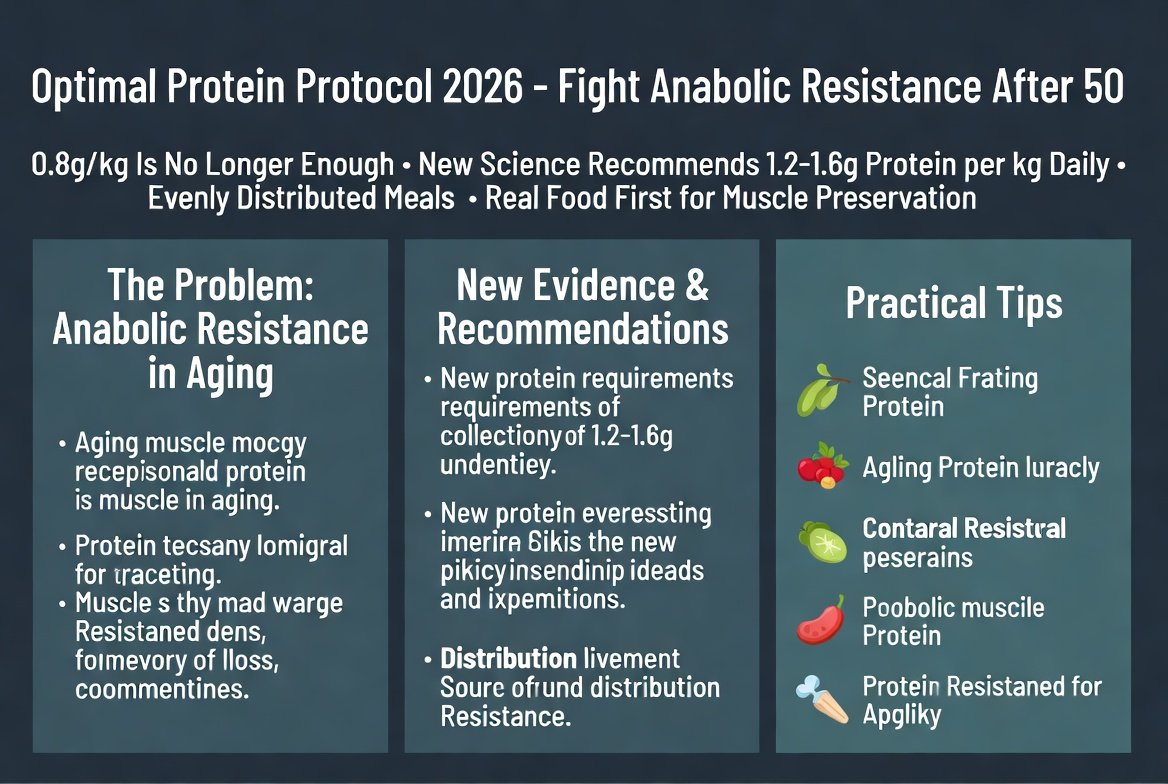
- Protein: The consensus cites a target of 1.0-1.2 g/kg/day for healthy individuals, and up to 1.2-1.5 g/kg/day in chronic or acute illness
- Quality Protein: Eggs, legumes, yogurt, protein powder
- Distribution Throughout the Day: Spreading protein across meals to support muscle building
- HMB (β-Hydroxy β-Methylbutyrate): The consensus notes a range of 1.5-3 g per day combined with physical activity
- Vitamin D and Calcium: The consensus recommends vitamin D about 800-1,000 IU per day and calcium, to correct deficiency and support muscle and bone
- Creatine: Included in the list of supportive supplements in the consensus (a common loading protocol in research is about 20 g per day for a short period, followed by a lower maintenance dose of 3-5 g per day accepted in general literature, not an official consensus number)
- Omega-3 (EPA): Included in the list of supportive nutritional components
Phase 2: Physical Activity
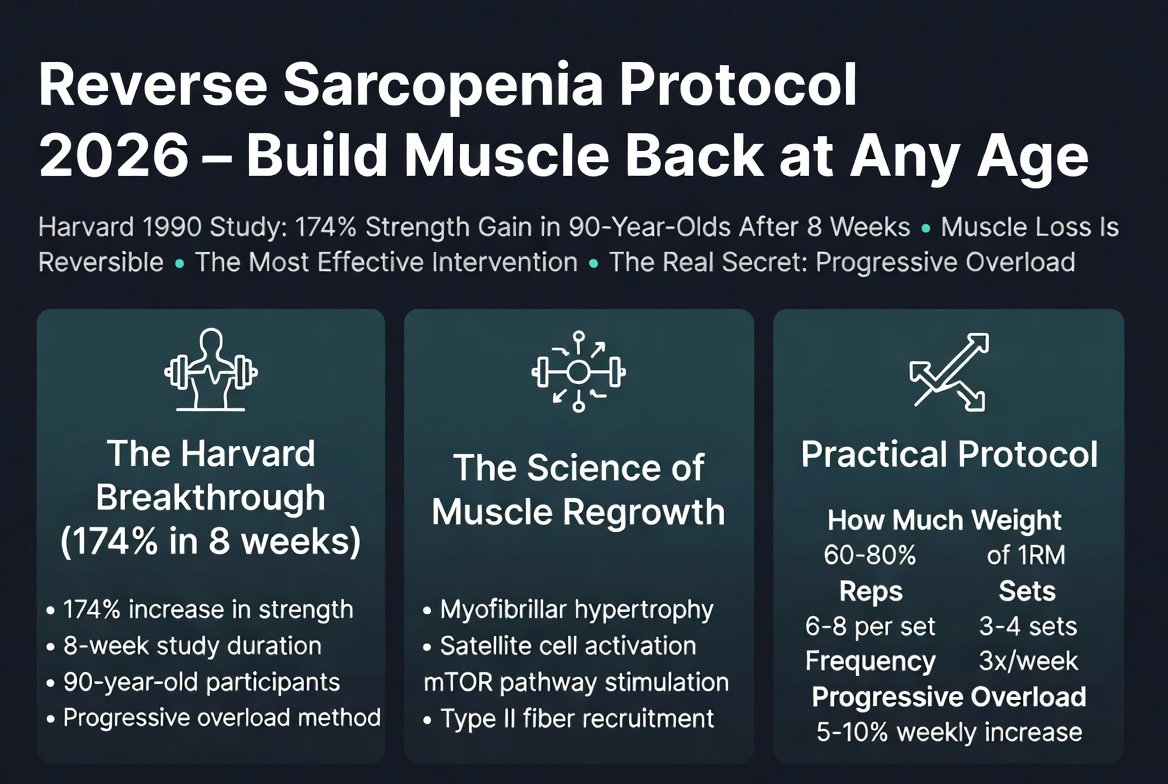
- Resistance Training: The central treatment component, two to three times a week
- Compound Exercises: Squats, rows, and multi-joint exercises
- Progressive Overload: Increasing resistance over time to strengthen the muscle
- Aerobic Training: To support general health and fitness
- Stability Training: To improve balance and prevent falls
Phase 3: Medical Follow-up
- Periodic testing of handgrip strength and gait speed
- Assessment of muscle mass with BIA or DXA when possible
- Monitoring nutritional status, vitamin D, and comorbidities
Global Implications
Although the consensus is Indian, it has broader implications:
- Migrant Populations: Indians outside India can benefit from population-adapted criteria
- Populations with Vegetarian Diets: The insights are relevant to anyone with low protein intake
- Potential for Comparative Research: Understanding how culture and genetics affect sarcopenia
Why This Matters to You
Even if you are not Indian:
- If you are vegetarian, consider increasing quality protein
- If your vitamin D level is low, consider supplementation after medical consultation
- The criteria for handgrip strength and gait speed are international. You can test yourself
- If you are over 60 and not doing regular resistance training, you are at increased risk for sarcopenia. It is advisable to start
The Bottom Line
Sarcopenia is not exclusive to India, but the Indian approach - presenting the scope of the problem in numbers and establishing a treatment framework - can serve as a model. Instead of turning a blind eye, they present the data and set a protocol. If you are over 60, you have a few simple tools: train with resistance, eat enough protein, balance vitamin D, and monitor. Each one is simple. The combination is the best protection against sarcopenia and everything that comes with it.


💬 Comments (0)
Be the first to comment on the article.