Have you noticed it's harder to open a jar? Climb stairs without getting winded? Get up from a low couch? If you're 30+, you might already be losing muscle. Muscle loss begins at age 30, not age 60. Most people only wake up to the problem when it's already in full swing. But here's one new piece of news: the process is reversible, and the intervention that stops it is simpler than you think.
The Numbers Everyone Should Know
Data from the Cleveland Clinic and leading studies:
- After age 30: Loss of 3-8% of muscle mass every decade
- After age 50: The rate begins to accelerate
- After age 60-65: The decline is faster, up to about 8% per decade (and sometimes more in those who don't exercise)
Simple calculation: A 30-year-old who doesn't exercise and doesn't improve will lose about 30% of their muscle by age 75. They will be able to press much less than they could at age 30. This isn't just an aesthetic issue. It's a matter of independence.
Why Does This Happen?
The process of muscle loss, or sarcopenia, has complex causes:
- Motor neurons die: With age, the number of neurons that activate muscle decreases. At age 75, there are about 25-50% fewer motor neurons than at age 25
- Hormones decline: Testosterone, IGF-1, growth hormone. All support muscle building and all decline
- Insulin resistance: The body is less efficient at directing protein to muscle
- Chronic inflammation: Ongoing systemic stress damages muscle
- Decreased activity: When feeling weak, most people reduce activity. This accelerates the process
- Poor nutrition: Insufficient protein, less vitamin D, fewer minerals
How to Know If You're Losing Muscle
Warning signs:
- Difficulty opening jars that were once easy
- Getting up from a couch or toilet requires effort
- Climbing stairs leaves you short of breath
- Feeling heavier when "not dragging the groceries"
- Less stability when standing on one leg
- "Catching" of the foot while walking
- Overall, a feeling that the body is "less alive"
Common screening: Grip strength test. According to the updated European definition (EWGSOP2, 2019), grip strength of less than 27 kg in men or less than 16 kg in women indicates a risk of sarcopenia (warranting further testing).
Who Is at Increased Risk?
- Those who sit more than 8 hours a day (office workers, software developers, drivers)
- Those who have undergone rapid weight loss (sometimes it's muscle loss, not fat)
- Those after major surgery (3+ weeks in bed)
- Those with chronic disease (diabetes, COPD, kidney disease)
- Postmenopausal women (estrogen declines, affecting muscle)
- Those who eat little protein (less than 0.8 grams per kilogram per day)
The Only Solution That Works: Resistance Training
Folks, aerobic activity - it's all good, but it doesn't stop sarcopenia on its own. Only resistance training builds and maintains muscle. It's the only exercise that forces the muscle to resist a load, thereby causing it to strengthen or at least stay the same.
A minimal program that works:
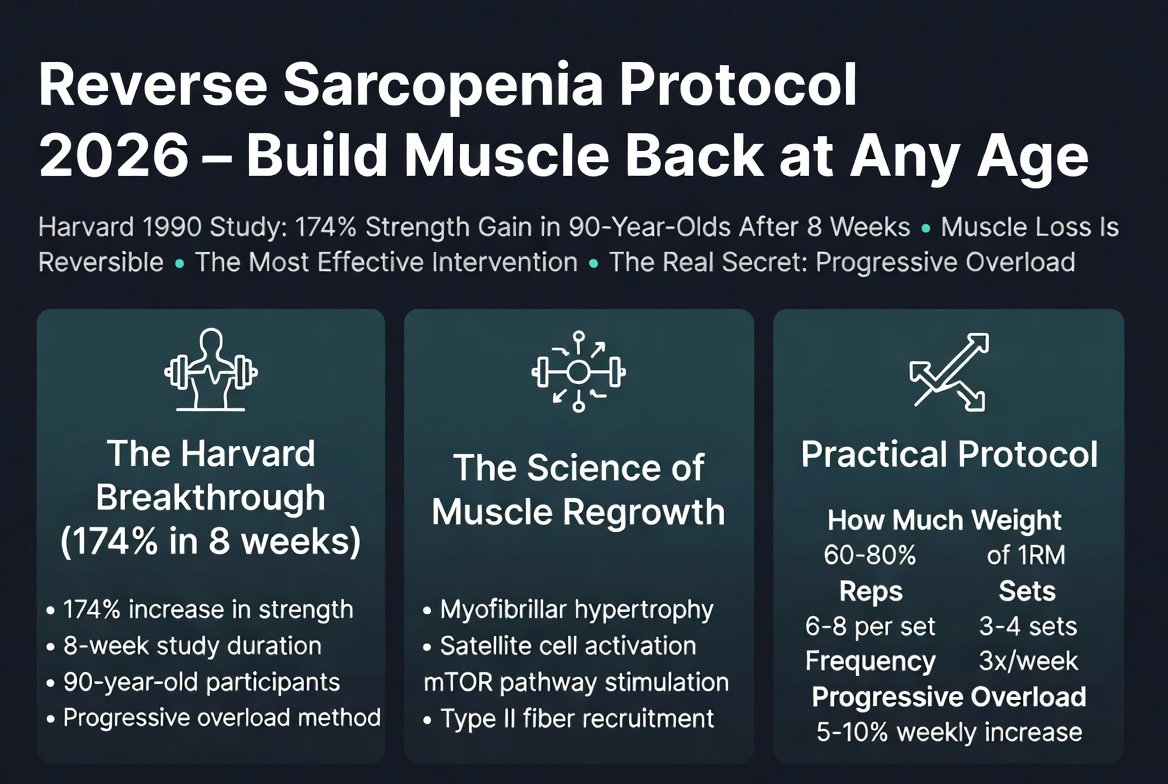
- 2-3 times a week, 30-45 minutes
- Compound exercises: Squat, deadlift, row, press, chest exercises. These engage multiple muscles simultaneously
- 3-4 sets, 6-12 reps per exercise: Enough load to challenge the muscle
- Gradually add weight: This is the critical factor. Without adding weight, the muscle won't grow
The good news: Even a 70-80 year old can build muscle. In studies, older adults who started resistance training showed an increase of about 5-12% in muscle mass (cross-sectional area) within a few months. This isn't just "slowing down," it's actual building.
Protein: The Missing Ingredient
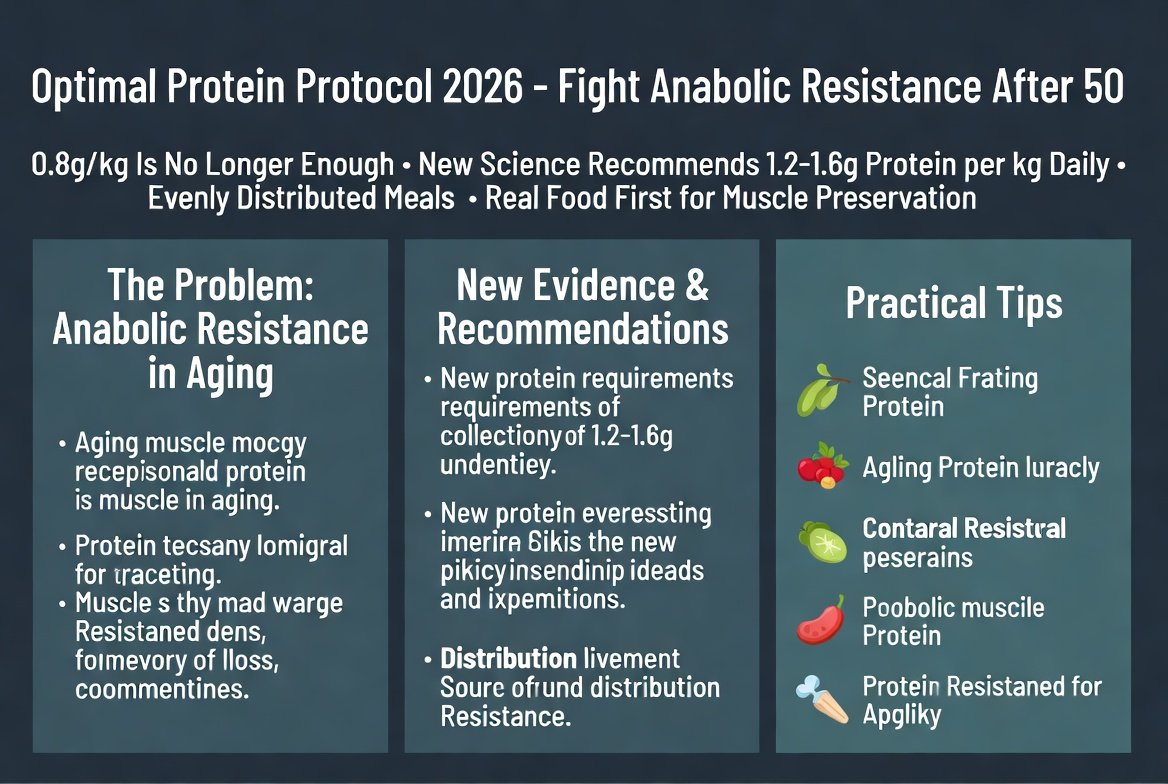
Nutrition is half the equation. The standard recommendations (0.8 grams per kilogram) are too low for active adults. The accepted recommendation for those 50+:
- 1.2-1.6 grams of protein per kilogram of body weight per day
- Spread throughout the day: 25-35 grams per meal (not 70 grams in one meal)
- Around the workout: A serving of about 30-40 grams of protein contributes to building. Important to know: The "one-hour anabolic window" is a myth. Muscle protein synthesis remains elevated for 24-48 hours after exercise, and the decisive factor is total daily protein, not precise timing
In practical terms, a 70 kg person needs about 100 grams of protein per day. That's:
- 1 large egg = 6 grams
- 100 grams chicken breast = 30 grams
- 200 grams Greek yogurt = 20 grams
- 100 grams cottage cheese = 11 grams
- 1 serving protein powder = 25 grams
Supplements That Help
In addition to protein from diet, two supplements with strong evidence:
- Creatine monohydrate: 3-5 grams per day. Increases strength by 5-10% within 4-8 weeks in older adults
- Vitamin D: If levels are low, supplementation improves muscle function
Supplements not proven to help: HMB (expensive and doesn't add much), BCAAs (unnecessary if you eat enough protein), Beta-Alanine (specific to intense physical activity).
What Not to Do
- Don't stop exercising after a long injury: Even physical therapy is resistance training
- Don't reduce protein because of "kidneys": If you don't have a diagnosed kidney problem, protein in reasonable amounts is safe
- Don't rely on "walking": It's great for the heart, but doesn't build muscle
- Don't skip exercise because of age: Age is the reason to exercise, not to skip it
What to Do Today
- Check your appearance: Does it look like you've lost muscle mass? If so, start immediately
- Join a gym or purchase basic home equipment (weights, bands, bodyweight)
- Plan 3 workouts per week for the next 2-3 weeks. Basic exercises: squat, push-up, row
- Add 25 grams of protein to each meal: Eggs in the morning, chicken at lunch, yogurt in the evening
- Add creatine 5 grams per day
The Bottom Line
Muscle loss is not just a "natural part of aging." To a large extent, it is a result of inactivity, and it can be greatly slowed down. Every day you don't exercise, you lose a little. Every day you do, you build. At age 70, the difference between someone who has exercised for years and someone who hasn't can be about 30% in muscle mass. That's the difference between independence and dependence. Start today, even if it's just 15 minutes. Everyone knows what to do. The only question is doing it.


💬 Comments (0)
Be the first to comment on the article.