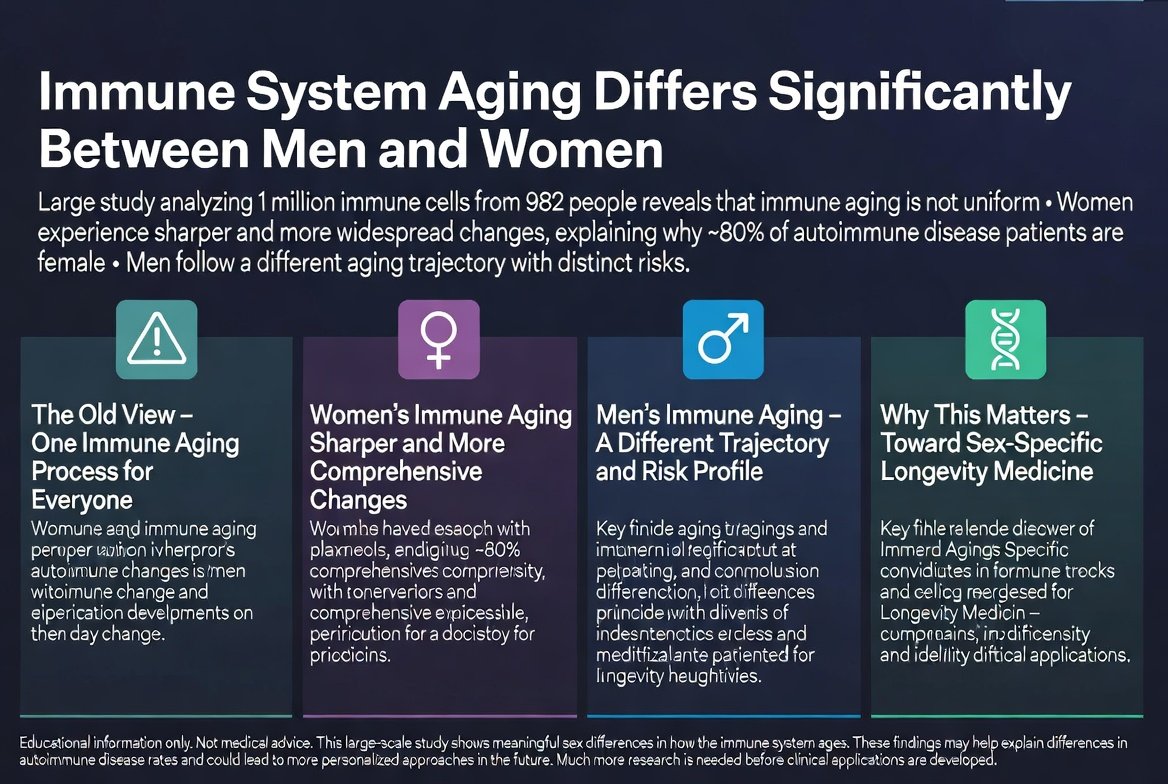
במשך שנים, רפואת ההזדקנות התייחסה למערכת החיסון כאל מערכת אחת שמתדרדרת בקצב דומה אצל כולם. מחקר חדש ופורץ דרך שפורסם ב-Nature Aging ממוטט את ההנחה הזו. המחקר, בהובלת פרופ' Marta Mele ממרכז העל-מחשוב של ברצלונה (BSC) ועם החוקרת הראשונה Maria Sopena-Rios, ניתח דגימות דם של 982 גברים ונשים בכל הגילאים, וגילה: מערכת החיסון של נשים מזדקנת בצורה שונה דרמטית, ובאופן כללי, מהר יותר.
איך עשו את המחקר?
החוקרים השתמשו בטכנולוגיה הנקראת "single-cell RNA sequencing", שבה מנתחים את הביטוי הגנטי של כל תא בנפרד. כך הם ניתחו יותר ממיליון תאים וזיהו אוכלוסיות תאי חיסון ספציפיות והשינויים שעברו בכל קבוצת גיל. השוואת נשים מול גברים בכל גיל גילתה דפוסים מיניים-ספציפיים מובהקים.
מה קורה אצל נשים?
החוקרים זיהו שלושה שינויים מרכזיים שמיוחדים יותר לנשים:
- הרחבה של תאי CD8+ Effector Memory T cells. תאים אלה הם "ההורסים" של מערכת החיסון, שתפקידם להרוג תאים נגועים. הרחבה שלהם בגיל מבוגר עשויה להסביר תופעות דלקת כרונית בנשים מבוגרות
- הרחבת מונוציטים דלקתיים. מונוציטים הם תאי דם שמתמחים בתגובה דלקתית. דלקת כרונית נמוכת-עוצמה הנלווית להזדקנות (inflammaging) מקושרת באופן כללי בספרות למחלות לב וסוכרת, אם כי המחקר עצמו לא קבע קשר ישיר עבור אוכלוסיית תאים זו
- שינויים בתאי CD4+ Central Memory. אלה תאי הזיכרון שאחראים על תגובת חיסון מהירה לפתוגנים מוכרים. השינויים שזוהו במחקר נמצאו ב-loci גנטיים שמקושרים למחלות אוטואימוניות כמו לופוס, RA, ו-MS, מחלות שנפוצות פי 4-9 אצל נשים
מה קורה אצל גברים?
אצל חלק מהגברים, החוקרים זיהו תופעה אחרת: הרחבת אוכלוסיית תאי B מסוימת שמקושרת לChronic Lymphocytic Leukemia (CLL), סוג של סרטן דם. ספציפית, זוהה דפוס המאפיין מצב מקדים א-תסמיני (monoclonal B-cell lymphocytosis), כלומר עוד לפני שמחלה מתבטאת קלינית.
הממצא הזה מעניין: הוא מצביע על כך שבעתיד אפשר אולי יהיה לזהות בדם של גברים סימנים מוקדמים הקשורים ל-CLL, שנים לפני אבחון אפשרי, אם כי נדרש מחקר נוסף כדי לבסס שימוש קליני.
מדוע זה קורה?
לא כל הגורמים ידועים. מנגנונים אפשריים שהספרות המדעית מעלה כהסבר להבדלים בין המינים כוללים:
- הורמונים. אסטרוגן הוא בעל השפעה מודולטורית חזקה על מערכת החיסון. ירידה דרסטית באסטרוגן בגיל המעבר משנה את כל המערכת
- גנטיקה של הכרומוזום X. כרומוזום X מכיל מספר גנים חיסוניים מרכזיים. נשים, עם שני עותקים, מקבלות "תוספת" שיכולה להיות הגנה אבל גם רגישות יתר
- הריון ולידה. כל הריון מנצל את מערכת החיסון, ויש שמשערים שהשפעות מצטברות לאורך החיים
חשוב להדגיש: אלה השערות כלליות מהספרות, והמחקר הנוכחי מיפה את ההבדלים בין המינים אך לא הוכיח איזה מהמנגנונים האלה אחראי להם.
למה זה משנה לטיפולים?
מסקנת החוקרים הייתה כללית: הממצאים מספקים מפה ברזולוציה גבוהה של הזדקנות חיסונית ספציפית-מין, ומניחים בסיס לשילוב המין הביולוגי ברפואה מותאמת אישית של ההזדקנות. מעבר למסקנה המדעית עצמה, אפשר להעלות כמה כיווני מחשבה כלליים שראויים לבדיקה עתידית:
- חיסונים. ייתכן שבעתיד יישקלו פרוטוקולי חיסון מותאמי-מין או מותאמי-גיל, אך זהו כיוון מחקרי ולא המלצה מתוך המחקר הזה
- הבנה מותאמת-מין של דלקת. ההבדלים בפרופיל הדלקתי בין נשים לגברים עשויים בעתיד להשפיע על האופן שבו ניגשים לבריאות חיסונית בגיל מבוגר
- זיהוי מוקדם של סיכון. הממצא לגבי גברים ותאי B עשוי בעתיד לתרום לכלים לזיהוי מוקדם של סיכון לסרטן דם, בכפוף למחקר קליני נוסף
בכל מקרה, אין במחקר זה המלצה על תוסף, תרופה, טיפול הורמונלי או בדיקת סקר כלשהי. כל החלטה רפואית צריכה להתקבל מול רופא.
השורה התחתונה
"בריאות אישית" אינה רק על תזונה ופעילות גופנית. היא גם על להבין שהגוף שלך, בנקודות מסוימות בחייך, מתנהג שונה מהגוף של מישהו אחר. המחקר הזה הוא צעד גדול לקראת רפואה מותאמת אישית באמת, בתוך גוף שמשתנה לאורך החיים.






















💬 תגובות (0)
היו הראשונים להגיב על המאמר.