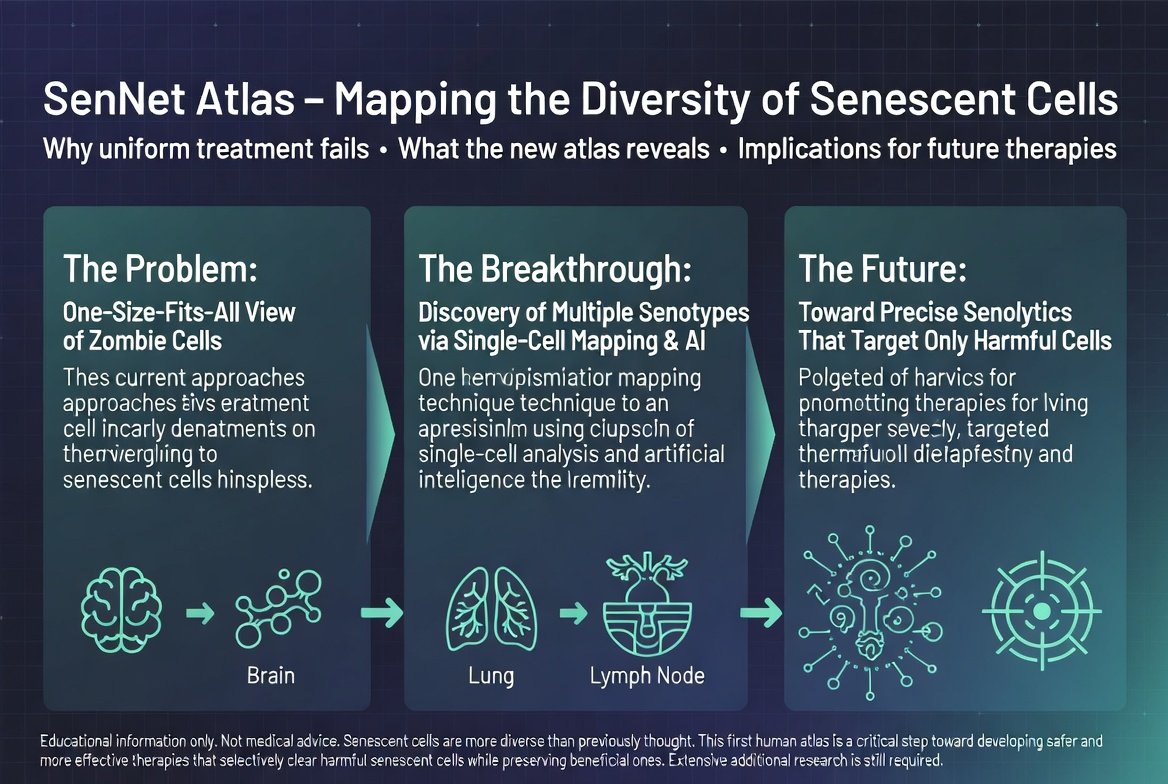
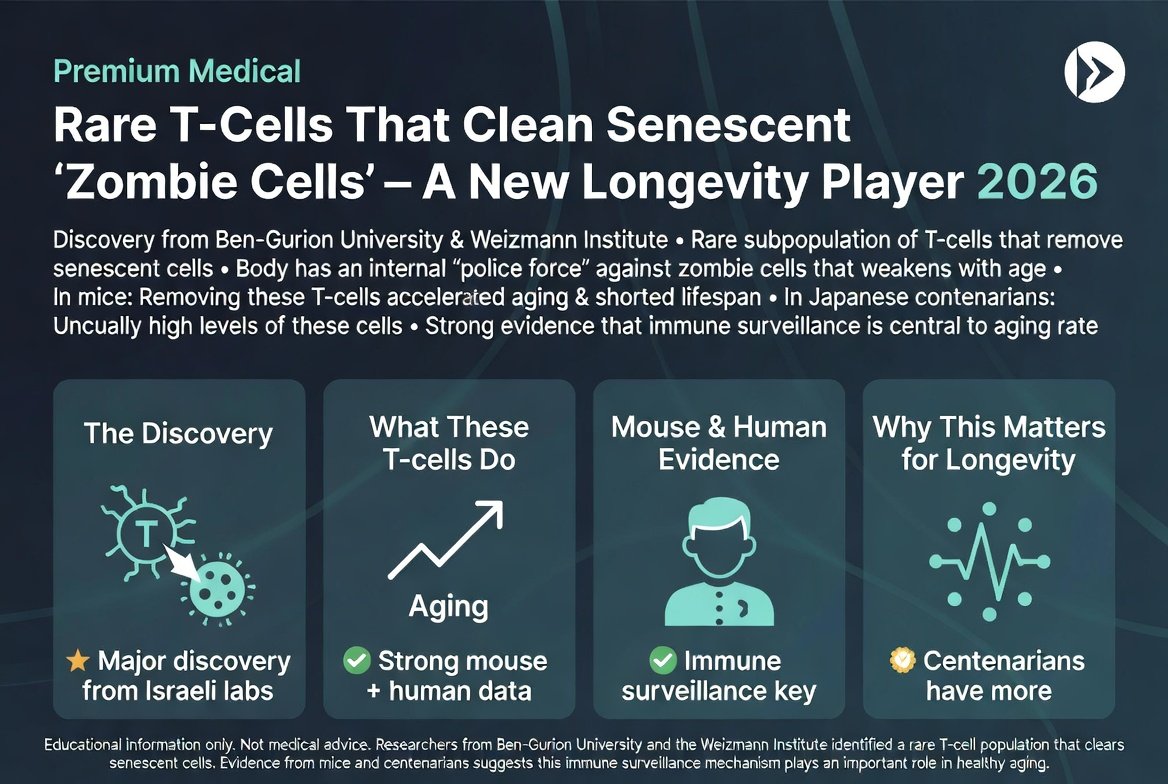
Old cells that don't die. They lose the ability to divide, but don't eliminate themselves. Instead, they remain in body tissues and spread inflammatory factors that cause damage around them. These are zombie cells (cellular senescence), one of the main drivers we've identified for aging. For years, scientists have been trying to find a way to eliminate them, but without sufficient success. Now, a new study published in Nature Cell Biology by the MRC Laboratory of Medical Sciences and Imperial College London reveals a new vulnerability: a protein called GPX4, and a new way to eliminate zombie cells without harming healthy cells.
The Massive Screen: 10,480 Molecules
The team led by researcher Mariantonietta D'Ambrosio conducted an automated screen of 10,480 electrophilic molecules (molecules that can bind to proteins in a unique way). They tested which ones kill zombie cells without harming normal cells. The broad scan flagged about 38 candidate molecules, but only four proved to be potent and selective senolytics, and three of them worked through the same mechanism: a subclass of chloroacetamides.
The Target: GPX4
Using a technology called activity-based protein profiling, the team discovered that all these molecules attack the same target: GPX4 (Glutathione Peroxidase 4). This is an enzyme whose role is to prevent the accumulation of oxidized lipids. Without it, the cell accumulates oxidative damage like fire in straw, and eventually dies in a special process called ferroptosis.
Why Are Zombie Cells Dependent on GPX4?
The team showed something interesting: senescent cells are in a very dangerous state. They:
- Exhibit high levels of oxidative stress
- Accumulate iron in cells (Fe2+), which promotes oxidation reactions
- Are on the "brink of ferroptosis"
But they managed to stay alive because of GPX4. They increase the production of this protein as a defense mechanism. Without it, they would die immediately. And this is the opportunity: if we block GPX4, senescent cells die, but healthy cells survive.
Proof of Concept: Cancers
The team demonstrated the therapeutic potential in models of 3 types of cancer:
- Melanoma (skin cancer)
- Prostate cancer
- Ovarian cancer
In all models, combining standard chemotherapy with a GPX4 inhibitor eliminated not only the primary cancer cells, but also the senescent cancer cells responsible for "remodeling" the tumor and treatment resistance.
Why Is This So Important?
Zombie cells are linked to almost every aging-related disease:
- Osteoarthritis
- Type 2 diabetes
- Alzheimer's and Parkinson's
- Pulmonary fibrosis
- Heart disease
- Cancer (as the study showed)
Senolytics (drugs that eliminate zombie cells) are one of the hottest fields in aging research. But existing senolytics, like dasatinib + quercetin (D+Q), are not specific enough and cause side effects. The GPX4 approach is more precise and expected to be safer.
Next Steps
The researchers note that several questions remain open before a treatment can be discussed. The next steps they describe:
- Understand the effect on the immune system, especially whether the treatment also "awakens" the beneficial side of the immune system (like T cells and NK cells) that helps attack the tumor
- Identify which types of cancer and which specific patients might respond better to the treatment
- Examine the combination with chemotherapy to exploit the senescent cells that the treatment itself creates
It's important to remember: this is an early stage of research, proven in cells and animal models, not in humans. The path to clinical treatment is still long, but the direction is promising.
The Bottom Line
We are slowly understanding more about zombie cells. And every new understanding is an opportunity for treatment. The discovery of GPX4 as their "secret weakness" is a big step toward treatments that could add healthy years to our lives, not just stop diseases.



💬 Comments (0)
Be the first to comment on the article.