When people say "stem cells," they think of a lab and expensive injections. But you have stem cells working 24/7, you just didn't know it: your gut stem cells. They renew your intestinal lining every 4-5 days. With age, they slow down. A new study published in Stem Cell Reports offers a surprising solution: replace the bacteria around them.
The Problem: When the Gut Stops Renewing
The intestinal lining is the fastest-renewing tissue in the body. Your gut stem cells produce billions of new daughter cells daily, replacing the old ones. With age, this mechanism slows down. The result: poor nutrient absorption, slow recovery from gut injuries, and a decline in tissue renewal capacity.
What causes gut stem cells to become "lazy" with age? One theory suggested it was internal to the cell itself. But the team of Prof. Hartmut Geiger, director of the Institute for Molecular Medicine at the University of Ulm in Germany, and his partners at Cincinnati Children's Hospital, thought differently. They wondered if the cellular environment, specifically the gut bacteria, was part of the problem.
The Experiment: Replacing Bacteria
The team took old mice and transferred a microbiome from healthy young mice into them, in a process called FMT (Fecal Microbiota Transfer). After the microbiome of the old mice became "younger," they tested the function of gut stem cells and their gene expression.
The results surprised the team:
- Gene expression in stem cells returned to youthful function: Levels of Ascl2 and Lgr5 genes in the crypts and stem cells rose back to levels resembling young mice
- Division activity in the intestinal crypts (mitosis) increased, meaning stem cells resumed producing new cells at a more youthful rate
- The regenerative function of stem cells was restored, and recovery from intestinal lining injury was significantly accelerated
"A younger microbiome is able to spur an aged gut to heal faster and function more like a young gut," concluded Prof. Geiger.
How Do the Bacteria "Rejuvenate" Stem Cells?
The team uncovered the molecular mechanism. Young stem cells rely on canonical WNT signaling mediated by a protein called Ascl2, a mechanism that keeps stem cells active and dividing. With age, changes in the gut bacterial composition weaken this WNT signaling via Ascl2, thus reducing the regenerative capacity of stem cells.
The most surprising finding concerns the bacterium Akkermansia muciniphila, a bacterium often considered beneficial. The team found that its high levels, which increase with age, suppress the WNT signaling mediated by Ascl2 in stem cells, thereby impairing the renewal of the aged intestinal lining. In other words: the aged bacterial environment alters the signals stem cells receive, and replacing it with a young microbiome restores WNT signaling and normal function.
Important: This Is Still in Mice
The team warns that there is a long way to go before application in humans. Open questions:
- Will the same effect occur in the human gut, which is much more complex?
- Which specific bacteria are responsible for the effect? (If we know, we could develop a capsule instead of FMT)
- What is the correct dosage? How stable is the effect over time?
- Is it safe in older adults with a compromised immune system?
How Does This Connect to Existing FMT Treatments?
Fecal microbiota transplantation is already medically approved in the US for treating persistent Clostridium difficile infection. Clinical experience shows it is a relatively safe procedure in its approved indication. Expanding it to an "anti-aging of the gut" indication would require well-designed clinical trials, but the regulatory and technical infrastructure already exists.
What Can Be Done Today
Until human trials are available, these are interventions with evidence for improving the microbiome:
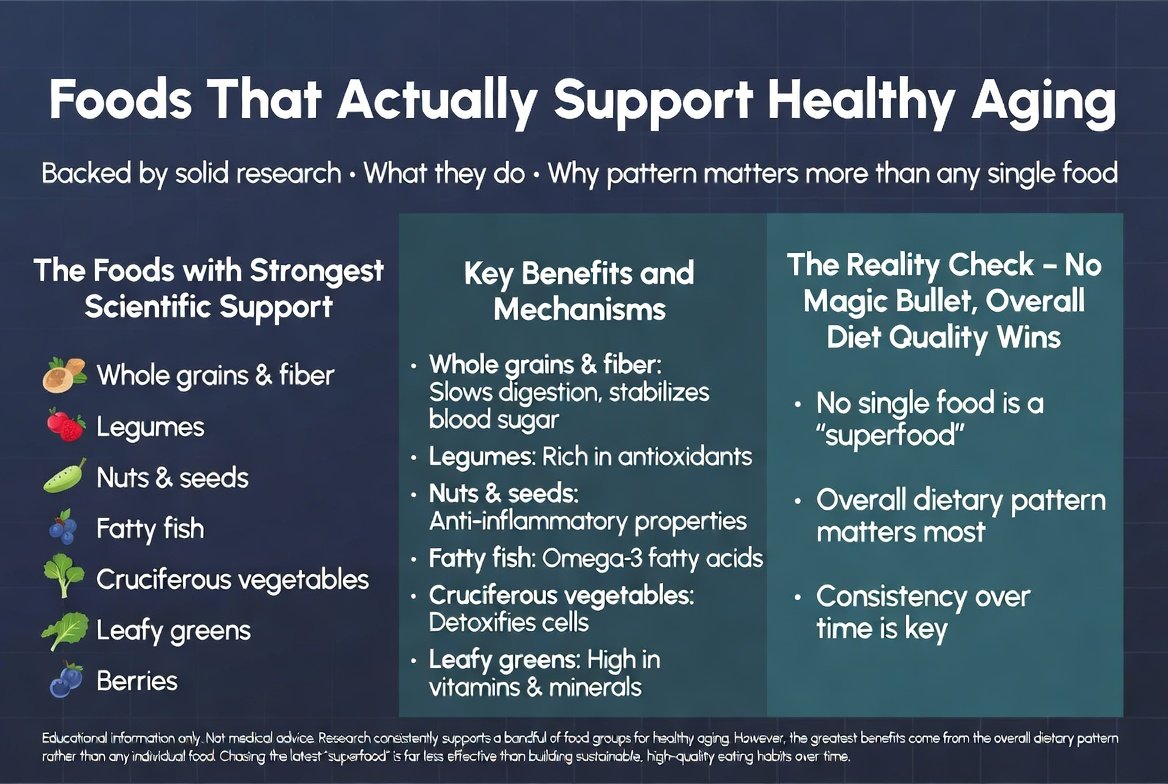
- Diverse dietary fibers (fruits, vegetables, legumes, whole grains), at least 25-30 grams per day
- Fermented foods (yogurt, sauerkraut, kimchi, kefir) on a daily basis
- Limit antibiotics only when truly necessary (they wipe out good bacteria)
- Avoid processed sugars that alter microbiome composition
- Quality sleep. The microbiome is influenced by the circadian clock
The big takeaway from the study: your aging is not just yours. It is shared with the 100 trillion bacterial partners you host in your gut. Take care of them, and they will take care of your gut.



💬 Comments (0)
Be the first to comment on the article.