NMN (Nicotinamide Mononucleotide) is one of the most popular supplements in the anti-aging community. David Sinclair claims he takes one gram per day. But a new meta-analysis published in Nutrients examines the specific effect of NMN on blood pressure, offering a complex picture: NMN does lower blood pressure, and the effect is even comparable to established strategies, but the full story is less glamorous than marketing suggests.
What Was in the Study?
The researchers collected all randomized clinical trials (RCTs) that tested NMN and blood pressure, and analyzed them together (meta-analysis). The data included:
- 10 randomized controlled trials, with 11 intervention arms
- 349 participants in total
- Healthy individuals and those with slightly elevated blood pressure
- Trials lasted 4 to 12 weeks
- Doses ranged from 250 to 1500 mg per day
Key Finding: A Real Decrease, But Only in Diastolic Pressure
Here lies the nuance that marketing misses. NMN did not lower blood pressure uniformly:
- Diastolic pressure (the lower number): Average decrease of 2.15 mmHg, and this result is statistically significant (p=0.006). This is the supplement's real success.
- Systolic pressure (the upper number): A decrease of only about 1.58 mmHg, but it was not statistically significant in the overall study population. That is, regarding the upper pressure, one cannot say NMN made a real difference.
This is precisely the gap between expectation and reality: many hope the supplement will address the concerning "upper number," but the study showed no significant effect there.
One Bright Spot: Ages 60 and Older
A sub-analysis by age revealed an interesting finding. Among participants aged 60 and older, NMN did succeed in significantly lowering systolic pressure, by about 3.94 mmHg. It is possible that the older population, whose NAD+ levels are lower to begin with, responds better to the supplement. But this is a subgroup finding that requires confirmation in dedicated trials.
So How Significant Is the Decrease?
Here comes the positive surprise. To provide context, the researchers compared the decrease in diastolic pressure to well-established strategies, and found that NMN's effect is comparable and promising:
- NMN: Decrease of 2.15 mmHg in diastolic pressure
- Regular aerobic exercise: Decrease of about 2.53 mmHg in diastolic pressure
- DASH diet (Dietary Approaches to Stop Hypertension): Decrease of about 2.60 mmHg in diastolic pressure
In other words: relative to diastolic pressure, the decrease achieved by NMN is in the same magnitude range as a dedicated diet and physical activity. The researchers themselves described the effect as "comparable and promising." This is actually a point in the supplement's favor.
So Why "Less Than Hoped"?
The title "Less Than Hoped" does not refer to the size of the diastolic effect, but to the exaggerated expectations surrounding NMN:
- No significant effect on the upper pressure (systolic) in the general population, and this is often the number doctors focus on in hypertension
- The evidence is still "preliminary and suggestive", in the researchers' own words
- Short-term: All trials lasted only 4-12 weeks, with no long-term studies
- Limited population: Mostly healthy individuals or those with mild elevation, no patients with moderate or severe hypertension
The researchers emphasize that NMN's potential as a real candidate for blood pressure treatment requires confirmation in large, long-term, high-quality studies.
Why Does This Matter?
The NAD+ and NMN supplement market is growing rapidly, and many buyers expect dramatic results, hoping to replace blood pressure medications or significantly extend lifespan. This study balances expectations:
- If being treated for blood pressure, NMN is not a substitute for approved medications
- The diastolic decrease is real and in the range of established measures, but the upper pressure was hardly affected
- Measures like the DASH diet and physical activity provide additional broad health benefits beyond blood pressure
What About Other Effects of NMN?
It is important to note: this study only examined blood pressure. Other effects of NMN are being studied, but most are still preliminary or demonstrated only in animals:
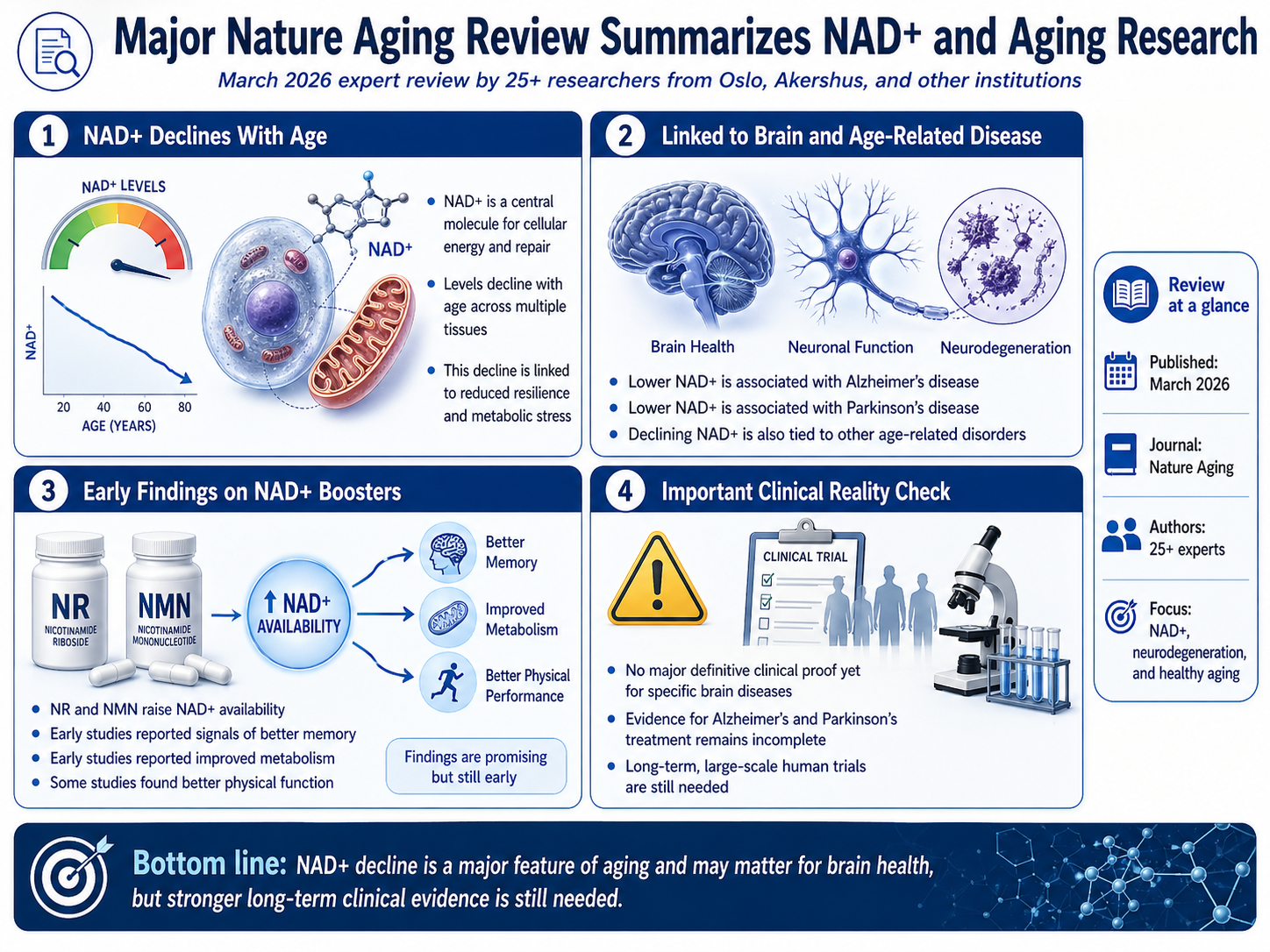
- Mitochondrial function and energy: There are promising signs, but evidence in humans is still early
- NAD+ levels: NMN consistently raises NAD+ levels in the blood, which is the theoretical basis for the supplement
- Physical performance: A few small trials have tested this, with mixed results
But for those taking NMN specifically for blood pressure, the picture is clear: there is a real effect on diastolic pressure, but one should not expect a dramatic change in the upper number.
The Bottom Line
NMN is not a "magic bullet" for blood pressure, but it is not a failure either. The meta-analysis found a real and significant decrease in diastolic pressure, in a range comparable to the DASH diet and aerobic exercise. However, there is no significant effect on systolic pressure in the general population (only in those aged 60 and older), and the evidence is still preliminary and short-term. If you want to lower blood pressure in a measurable and safe way, start with the DASH diet, physical activity, and medical treatment if necessary. If you are taking NMN anyway, a slight decrease in diastolic pressure is a nice bonus, but it is still not a substitute for medications or lifestyle change.




💬 Comments (0)
Be the first to comment on the article.