Amino acid absorption is a vital process that allows the body to obtain the building blocks it needs for protein production.
These proteins contribute to the normal function of all body systems, from muscles to the immune system. With age, we lose muscle mass (a process called sarcopenia), and many assume the reason is that the digestive system can no longer absorb amino acids. This assumption is common, but current research shows it is largely incorrect. Let us clarify the picture.
The Common Mistake: "The Gut No Longer Absorbs"
Contrary to popular belief, the absorption capacity of amino acids in the small intestine is largely preserved in healthy aging. Studies comparing the rate of protein digestion and absorption between young and older men found no significant difference in the availability of amino acids from food. The anatomical and physiological changes described in the digestive system with age are relatively small and do not substantially impair the amount of amino acids the body can extract from food. In other words, the bottleneck is not in the gut.
What Really Happens: The Two Real Mechanisms
Muscle loss with age results from two established processes, both occurring after the absorption stage in the gut:
- Increased splanchnic first-pass extraction: After absorption, some amino acids are captured and utilized in the gut and liver before reaching the general circulation and muscle. In older adults, this extraction is higher, so fewer amino acids actually reach the muscle after a meal, even when gut absorption is normal.
- Anabolic resistance of the muscle: This is the central mechanism. The older muscle responds more weakly to the same anabolic stimulus, whether from amino acids or exercise. The same protein dose that triggers maximal protein synthesis in a young person elicits a weaker response in an older person.
The Leucine Threshold Increases with Age
The amino acid leucine is the main "switch" that turns on muscle protein synthesis. In young people, a dose of about 20 to 25 grams of high-quality protein (providing roughly 2 to 3 grams of leucine) is sufficient to achieve maximal stimulation. In older adults, the leucine threshold is higher: sometimes 35 to 40 grams of protein per serving, or enrichment to about 3 to 4 grams of leucine, is needed to elicit a similar response. This is a direct expression of anabolic resistance, not a problem with absorption.
Consequences If Diet Is Not Adjusted
- Decreased protein synthesis: When the muscle receives less effective stimulation, the rate of protein building decreases.
- Decreased muscle mass and strength: Over time, a negative balance between building and breakdown leads to sarcopenia, weakness, and increased risk of falls.
- Impaired overall function: Loss of muscle mass affects metabolism, functional independence, and recovery from illness.
Proven Ways to Overcome Anabolic Resistance
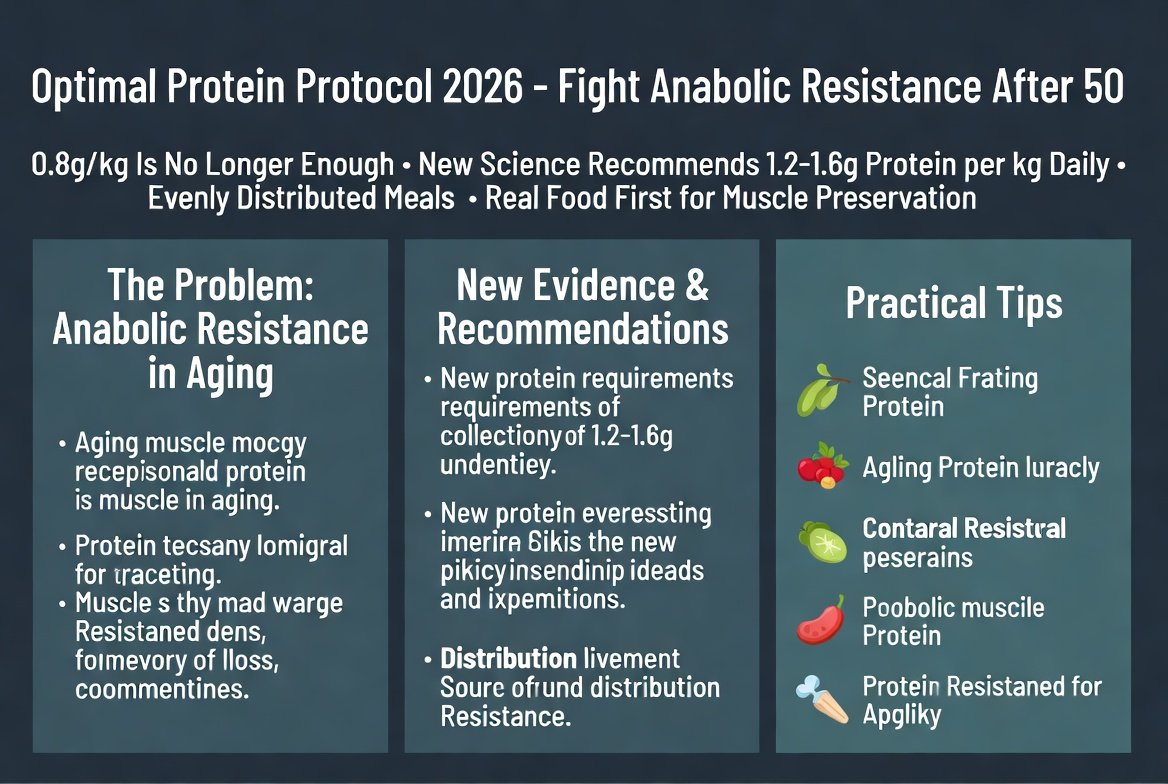
- Adequate protein intake, higher than the basic requirement: The general RDA of 0.8 grams of protein per kilogram of body weight per day is suitable for a young adult but is considered too low for older adults. Expert positions (such as the PROT-AGE group and recommendations adopted by ESPEN) recommend for healthy older adults about 1.0 to 1.2 grams per kilogram per day, and even 1.2 to 1.5 grams during illness or increased physical activity. It is important to consult a doctor or dietitian, especially in kidney disease.
- Distributing protein throughout the day, with a sufficient amount at each meal: Since the leucine threshold is higher in older adults, it is better for each meal to include a sufficient amount of high-quality protein (about 25 to 40 grams) rather than concentrating it all in one meal.
- High-quality protein rich in essential amino acids: Sources such as meat, poultry, fish, eggs, dairy products, and legumes provide all the essential amino acids, including leucine. Whey protein is particularly rich in leucine.
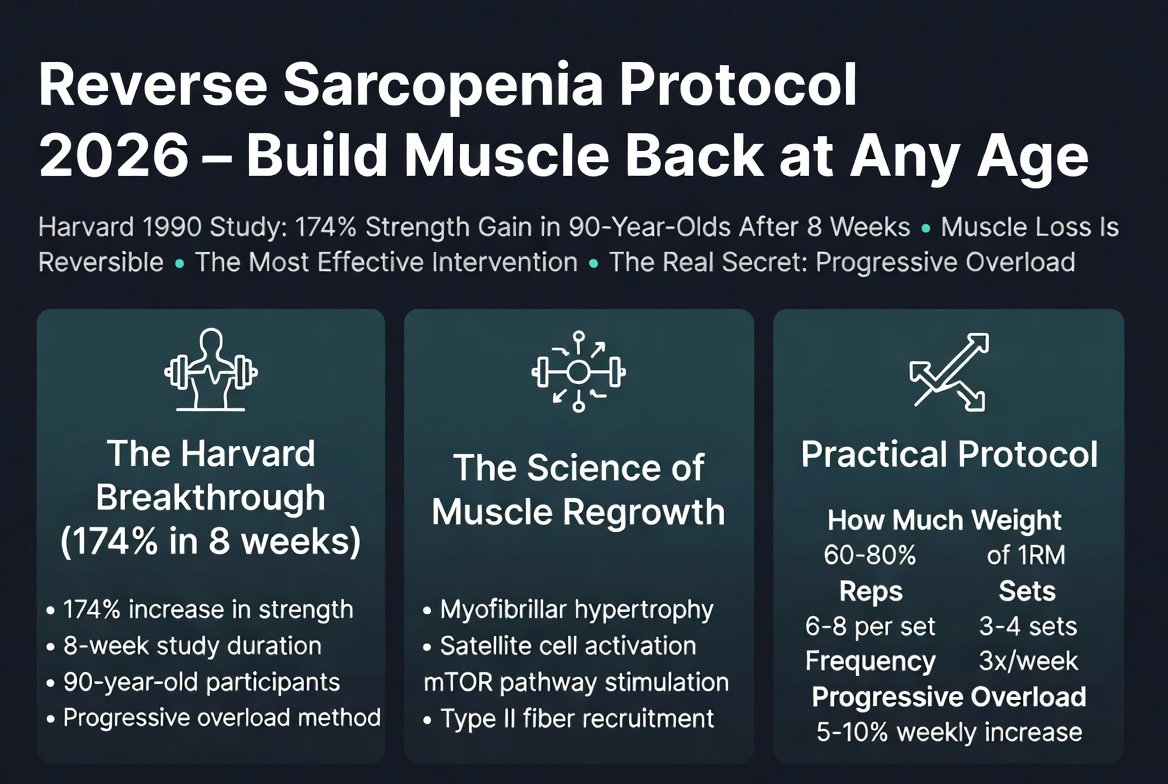
- Resistance (strength) training: This is the most powerful stimulus against anabolic resistance. Combining resistance training with high-quality protein intake afterward allows the older muscle to respond almost like that of a young person.
What About Amino Acid and BCAA Supplements?
Here we need to be precise. Essential amino acids (EAAs) in sufficient doses, especially when enriched with leucine, can indeed stimulate protein synthesis. In contrast, a BCAA supplement alone does not build muscle in older adults. Recent meta-analyses show that whole protein or a complete mixture of essential amino acids is superior to BCAAs, and that benefit from BCAAs is mainly achieved when combined with another intervention such as resistance training or vitamin D supplementation. The reason: BCAAs provide only three of the nine essential amino acids, and therefore cannot sustain prolonged protein building on their own. The bottom line: it is better to invest in whole protein and training, rather than relying on a BCAA supplement as a solution.
Additional Practical Tips
- Incorporate high-quality protein in every meal: Meat, poultry, fish, eggs, legumes, and dairy products.
- Adequate hydration: Water aids digestion and the overall function of the digestive system.
- Adequate sleep: Lack of sleep impairs muscle recovery and hormonal balance.
- Avoid extreme caloric deficit: General undernutrition worsens muscle loss and impairs the ability to utilize consumed protein.
In summary: the main change in older age is not that the gut "stops absorbing," but that more amino acids are captured on the way to the muscle and that the muscle itself is less sensitive to stimulation. Therefore, older adults need more high-quality protein, properly distributed throughout the day, and combined with strength training. This way, anabolic resistance can be overcome, and muscle mass and function can be preserved over the years.
References:
https://www.ncbi.nlm.nih.gov/pmc/articles/PMC9370335/
https://www.ncbi.nlm.nih.gov/pmc/articles/PMC10561576/


💬 Comments (0)
Be the first to comment on the article.