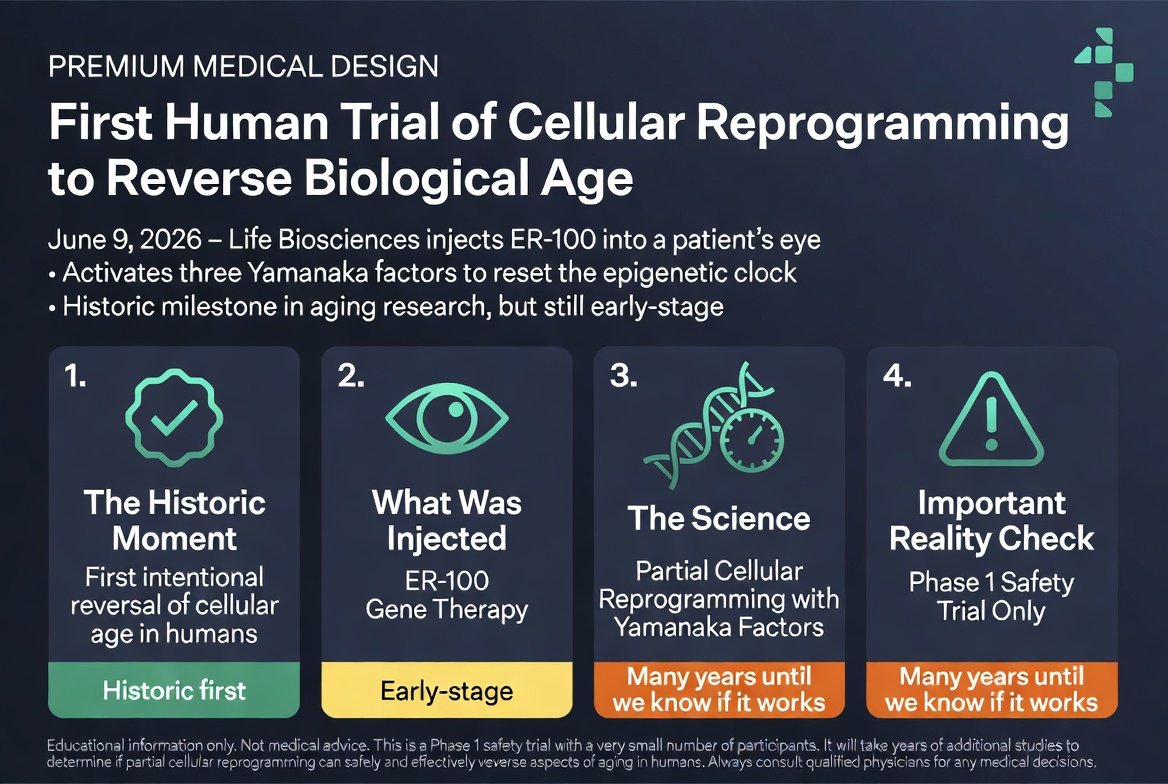
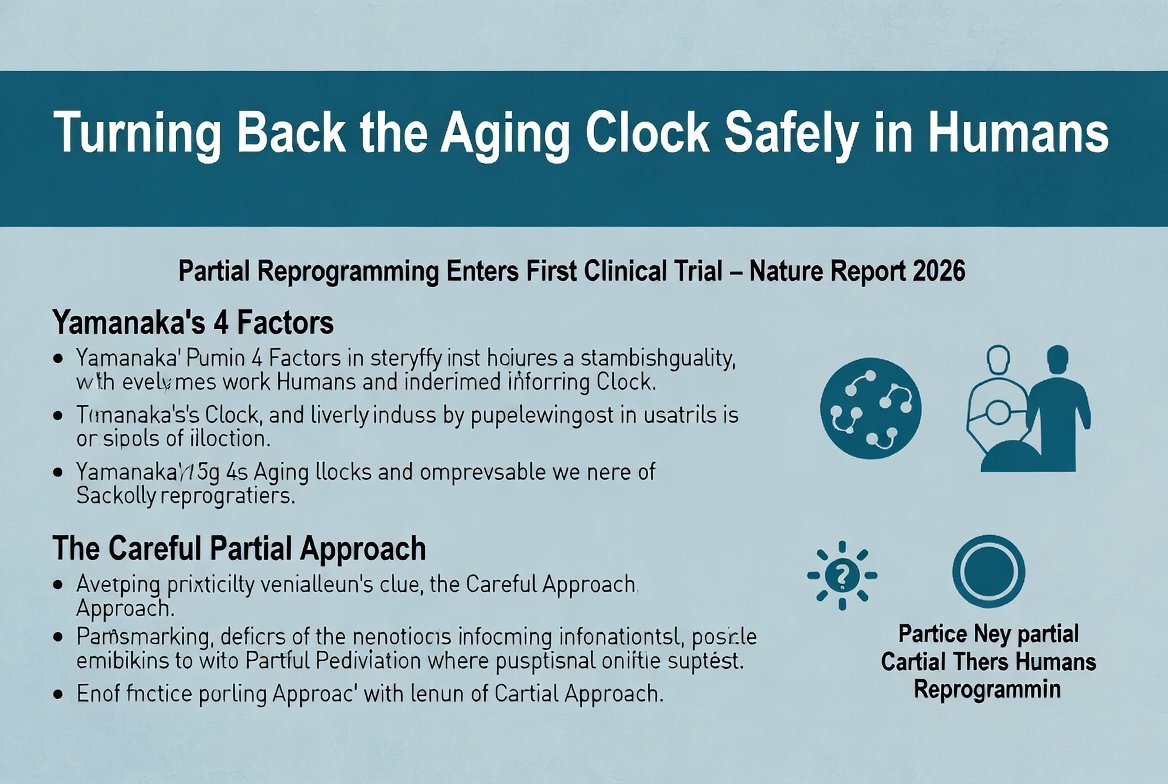
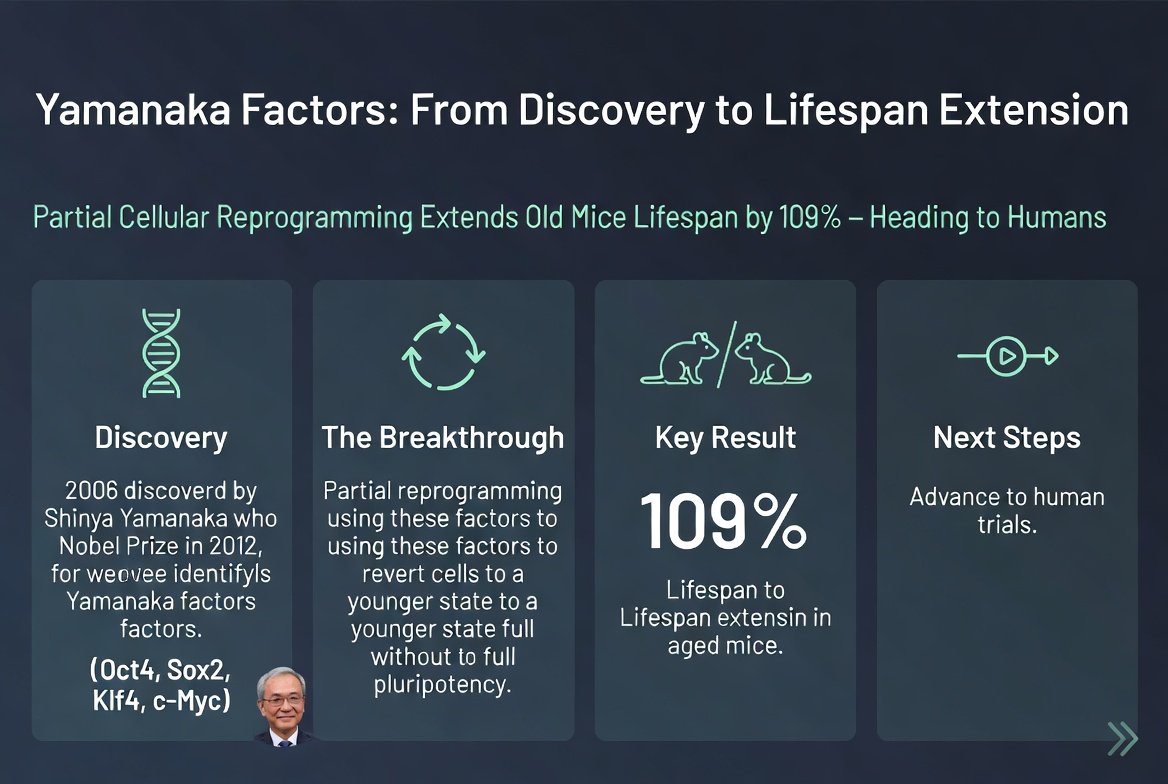
Yamanaka factors reprogram cells into induced pluripotent stem cells (iPSCs), similar to embryonic stem cells.
They cause cells to reset their cellular identity (thereby causing cells to forget their functions and the organs they were destined for) using only 4 reprogramming factors
(Oct4, Sox2, Klf4, and c-Myc (OSKM)). Exposure to reprogramming factors for a sufficient amount of time allows reversing the cell's age without erasing its identity.
This is the basis for partial cellular reprogramming.
In a study published in Nature Aging, scientists report its effect on neurogenesis, the creation of new neurons.
Increased neuroblast production;
Gone are the days when a common misconception was that adult brains do not produce new neurons.
Since then, scientists have found that certain areas of the brain, such as the hippocampus and the subventricular zone (SVZ),
contain neurogenic niches that give rise to new neurons even in adulthood.
However, this process slows down considerably with age.
In their study, the researchers used the classic OSKM Yamanaka cocktail.
Many researchers have focused on how to increase reprogramming efficiency and reduce the risks of tumors,
tumors mainly associated with c-Myc, but this was not the case in this study.
First, the scientists proceeded with whole-body reprogramming by creating genetically engineered mice expressing OSKM when treated with a molecular trigger:
in this case, doxycycline.
Using single-cell RNA sequencing, the researchers found that with age, the proportion of neuroblasts, the immediate precursors of neurons, among neural stem cell (NSC) progeny, decreases, indicating impaired neurogenesis.
The treatment reversed this trend, restoring the proportion of neuroblasts to youthful levels.
Next, the researchers used a more sophisticated mouse model where OSKM expression was spatially restricted to the SVZ only.
Interestingly, this restriction allowed them to extend the expression time of OSKM to what would be lethal in the whole-body model, and it worked safely.
The effect on NSCs and neuroblasts was even more impressive than with whole-body reprogramming.
Reprogrammed Neuron Metrics
To avoid niche-wide effects, the researchers also conducted experiments with cultured NSCs in vitro.
Just like in a living organism, NSCs harvested from old mice produced a lower proportion of neuroblasts than those taken from younger mice.
Treating NSCs with OSKM increased the proportion of neuroblasts in their progeny,
suggesting a rejuvenation-like effect "restoring things to normal."
However, it is neurons, not neuroblast precursors, that we are ultimately interested in.
Did the treatment result in more neurons being born? Apparently, yes.
In mice, neuroblasts originating from the SVZ migrate to the olfactory bulb, where they become mature neurons (this shows how important the sense of smell is for these animals).
With age, this process slows down dramatically.
OSKM treatment increased the number of newborn neurons in the olfactory bulb, though not to youthful levels.
Using single-cell transcriptomics and immunohistochemical validation, we find that partial whole-body reprogramming in old mice partially reverses the age-related defect in the neuroblast proportion within the SVZ neurogenic niche.
This "rejuvenation" effect can be recapitulated by targeting the SVZ itself for partial reprogramming, indicating an intrinsic phenomenon.
Furthermore, partial reprogramming in old NSCs in culture autonomously enhances their differentiation into neural precursors.
The study in question reveals the effect of partial reprogramming in old brains by systematically examining its impact on several different cell types.
The full study:


💬 Comments (0)
Be the first to comment on the article.