Aging is a complex physiological process involving many changes at the molecular, cellular, tissue, and organ levels.
This process is characterized by chronic dysregulation of cellular processes, leading to a gradual decline in tissue and organ function.
As a result, the organism's ability to cope with environmental challenges decreases, and the likelihood of developing age-related diseases increases.
Preventing Aging and Improving Health in the Elderly:
Although the aging process cannot be completely prevented, its effects on the lifespan and health of the elderly can be minimized.
This can be done through therapeutic interventions aimed at restoring these cellular processes to optimal function.
Studies on Partial Reprogramming:
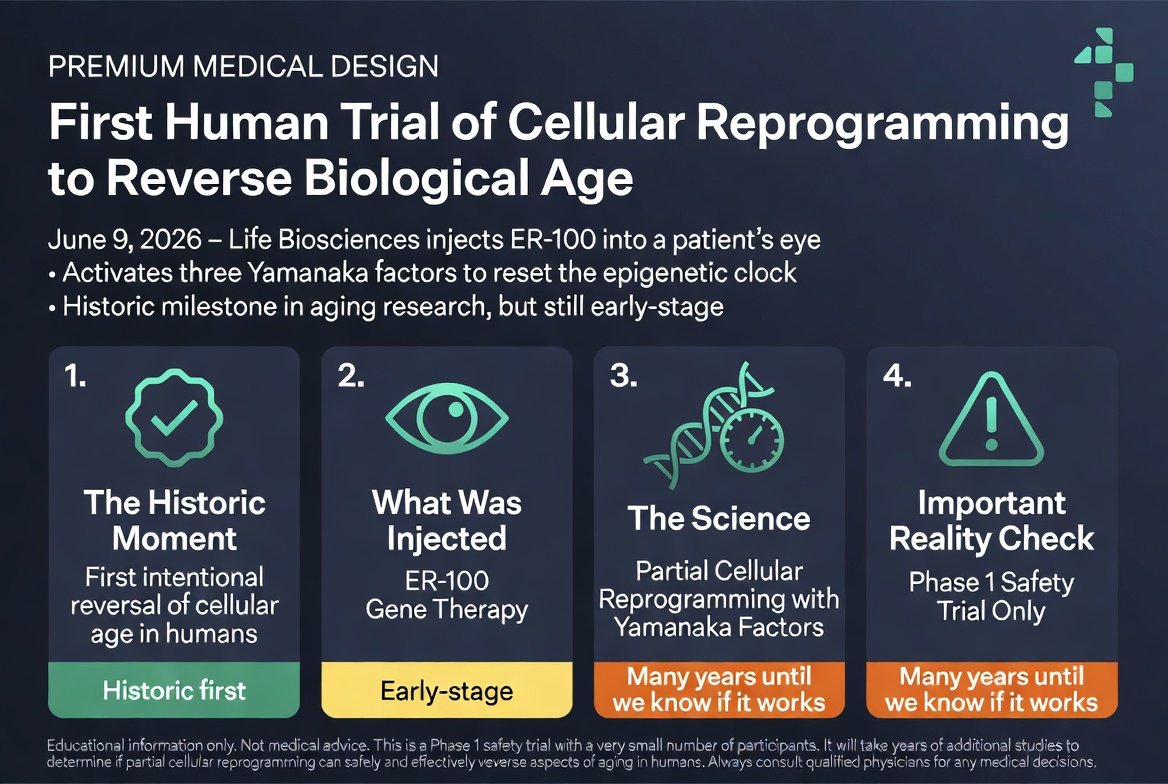
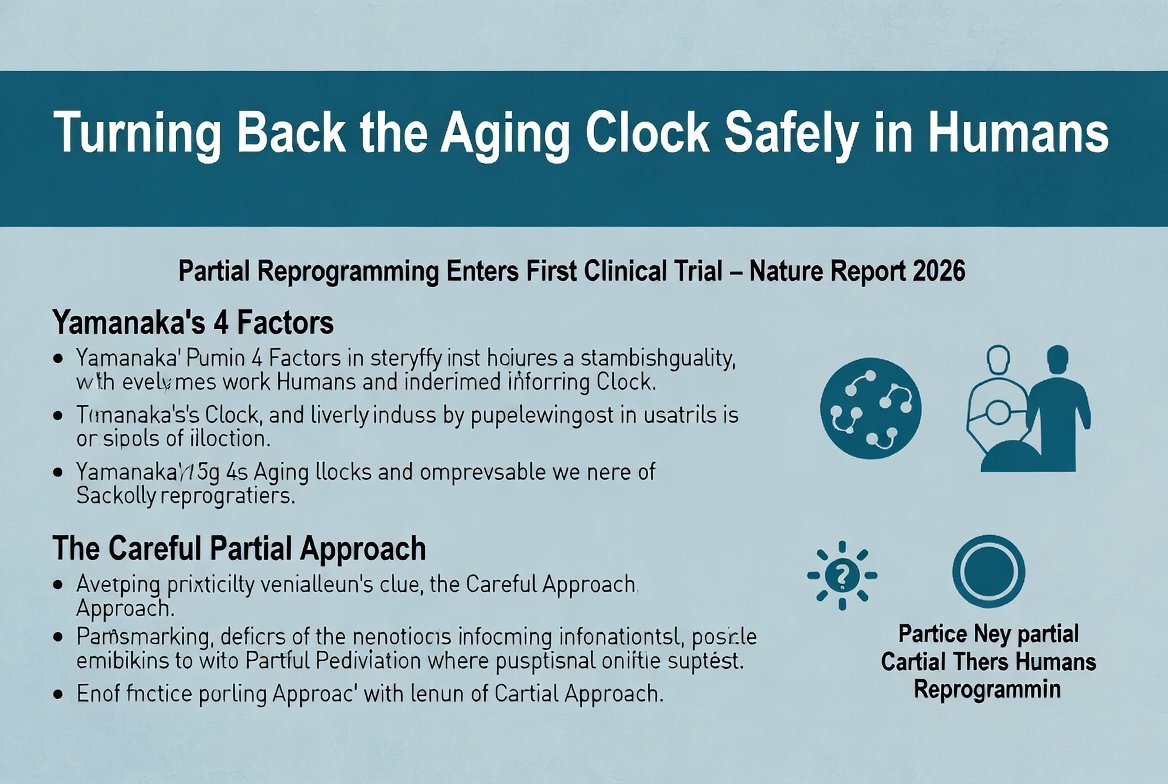
Recent studies have shown that partial cellular reprogramming using Yamanaka factors (or a subset thereof: OCT4, SOX2, and KLF4; OSK) can reverse age-related changes both in vitro and in vivo.
Yamanaka factors are transcription factors whose role is to regulate gene expression.
Their overexpression in adult cells causes them to lose their unique characteristics and revert to an embryonic stem cell-like state.
These cells, called induced pluripotent stem cells (iPS), similar to embryonic stem cells, can be directed to differentiate into any cell type in the body.
Extending Lifespan in Mice:
Until now, it was unknown whether Yamanaka factors (or a subset) could extend the lifespan of very old mice.
This study examines this question.
Study Results:
Effect of Treatment on Lifespan:
The study found that injecting viruses encoding an inducible OSK system into very old (aged) male mice aged 124 weeks caused a significant extension of the remaining lifespan.
It is important to understand the number precisely: the median remaining lifespan increased by about 109% compared to control mice.
In practice, this amounts to about ten additional weeks of life, which is about 7% of the total lifespan of the mice, not a doubling of lifespan.
In other words, the 109% refers only to the remaining time window for the mouse to live after treatment at 124 weeks of age, not to the total lifespan.
Effect of Treatment on Mouse Health:
In addition to extending the remaining lifespan, a significant improvement in frailty scores was observed in treated mice.
Frailty scores reflect the organism's ability to cope with environmental challenges, such as infections, injuries, and stress.
This improvement indicates that the treatment not only extended the remaining lifespan but also improved the health of the mice.
Effect of Treatment on Epigenetic Markers:
The study found that expression of Yamanaka factors in human skin cells (keratinocytes) causes a reversal of age-related epigenetic markers.
These markers reflect the cell's genetic activity history.
Reversal of these markers indicates a potential resetting of genetic networks to a younger state, which may be healthier.
Explanation of OSK:
OSK is an acronym for three Yamanaka factors: OCT4, SOX2, and KLF4.
These factors are transcription factors whose role is to regulate gene expression.
Their overexpression in adult cells causes them to lose their unique characteristics and revert to an embryonic stem cell-like state.
These cells, called induced pluripotent stem cells (iPS), similar to embryonic stem cells, can be directed to differentiate into any cell type in the body.
Risks and Limitations:
It is important to note: partial reprogramming is not without risks.
Full or uncontrolled reprogramming of cells can cause loss of cell identity and formation of tumors, including teratomas and types of cancer, so precise control over the dosage and duration of Yamanaka factor expression is critical.
Additionally, this is early-stage research conducted in mice and human cells in the lab only, not a proven, safe, or approved treatment in humans.
Further research, including clinical trials, is needed before it can be known whether and in what form this approach is relevant to humans.
Importance of the Study:
The study results indicate a promising therapeutic potential for partial reprogramming using Yamanaka factors.
In the future, subject to solving safety challenges, this technology may be used to treat age-related diseases and improve the health and quality of life of the elderly.
Effects and Outcomes:
These results may have important implications for developing new therapeutic interventions aimed at reversing age-related diseases and improving the health and quality of life of the elderly. Partial reprogramming may represent an innovative therapeutic strategy in the field of anti-aging medicine, but as mentioned, subject to further research and proof of safety.
The full study:


💬 Comments (0)
Be the first to comment on the article.