There are few stories in the supplement world that so beautifully illustrate the difference between theoretical logic and what actually happens in the body, like the story of niacin. Niacin, also known as vitamin B3, was for decades one of the main tools doctors used to improve cholesterol profiles. It raises good cholesterol (HDL), lowers triglycerides, and lowers bad cholesterol (LDL). On paper, this sounds like a miracle drug for the heart.
Then came the good science. Two massive randomized studies, involving tens of thousands of participants, examined what happens when niacin is added to statin therapy, and found something troubling: not only was there no cardiac benefit, but serious side effects actually increased. The long-standing use of niacin for cholesterol, based on improving blood test numbers, simply collapsed in the face of the real test question: does it actually save lives? At the same time, niacin is a completely essential vitamin, and in recent years its name has returned to the headlines from a completely different angle: NAD and longevity. In this article, we will separate what is evidence-based from what is not, and explain why we rated niacin yellow.
What is Niacin (Vitamin B3)?
Niacin is a water-soluble B vitamin that the body does not store in large amounts and needs to receive regularly. Here is what is important to understand about it:
- It is the raw material for NAD and NADP. These two molecules are essential co-factors for hundreds of reactions in the body, primarily cellular energy production. Without niacin, energy metabolism simply stops.
- It exists in two main forms. Nicotinic acid, the form that affects cholesterol and causes flushing, and niacinamide, a form that does not cause flushing and does not affect cholesterol.
- Severe deficiency causes a real disease. Chronic niacin deficiency causes pellagra, a disease characterized by the three Ds: dermatitis, diarrhea, and dementia. Today it is rare in developed countries but still exists in severe malnutrition.
- The body can produce a small amount on its own. A small portion of niacin is produced in the body from the amino acid tryptophan, so a protein-rich diet also provides an indirect contribution.
Food sources rich in niacin include meat, poultry, fish, peanuts, legumes, and whole grains. In most Western diets, niacin intake is adequate, and true deficiency is rare, which already hints that mega-dosing a supplement is a completely different story from correcting a deficiency.
The Connection to Cholesterol: Why It Seemed Logical
To understand why niacin was used for so many years, you need to understand what it does to the numbers. At high doses (1,500 to 2,000 mg per day, a thousand times the daily allowance), nicotinic acid dramatically changes the blood lipid profile: it raises HDL ("good") by about 20 to 25 percent, lowers triglycerides by about 20 to 50 percent, and also lowers LDL ("bad"). In terms of a blood test, this is an impressive improvement on all fronts.
The logical assumption was simple: If niacin improves all cholesterol markers, it must also reduce heart attacks and strokes. For decades, doctors prescribed it precisely based on this logic, alone or alongside other drugs. And here comes the great lesson of modern medicine: improvement in a biomarker (like HDL level) is not a guarantee of improvement in a clinical outcome (less death, fewer heart attacks). This difference can only be tested in a large randomized study that counts real events, not just numbers. And that is exactly what was done.
Current Evidence
Study 1: AIM-HIGH, USA 2011
The first study to break the consensus was published in the prestigious journal New England Journal of Medicine in 2011. In the AIM-HIGH study, 3,414 patients with stable heart disease and low HDL levels were randomly assigned to receive extended-release niacin (1,500 to 2,000 mg per day) in addition to a statin, or a placebo in addition to a statin.
The result surprised the cardiology world. Although niacin did raise HDL by about 25 percent and lower triglycerides, no benefit was found in reducing cardiovascular events. The study was stopped early due to futility, meaning it was clear that continuing would not show a benefit. Worse, a trend towards a slight increase in stroke rate was observed in the niacin group. In other words: all the nice improvement in numbers did not translate into any real advantage for the patient.
Study 2: HPS2-THRIVE, UK 2014
Criticism of AIM-HIGH argued that the study was too small and too short. The answer came in a much larger study, also published in the New England Journal of Medicine in 2014. The HPS2-THRIVE study included 25,673 patients with vascular disease, who were randomly assigned to receive extended-release niacin (2,000 mg) with laropiprant in addition to a statin, or a placebo, for nearly 4 years.
The result confirmed AIM-HIGH and significantly strengthened it. Again, adding niacin did not reduce major cardiovascular events. But this time, something more severe was found: a significant increase in serious side effects. In the niacin group, there was an increase of about one-third in new cases of diabetes, worsening of blood sugar control in existing diabetics, and an increase in gastrointestinal, muscle, skin problems, and even infections and bleeding. In numbers: the niacin group had an absolute excess of about 3.7 percentage points in serious disturbances of diabetes control compared to placebo, and the rate of treatment discontinuation was higher (about 25.4 percent vs. about 16.6 percent). This is a complete reversal of what a supplement is supposed to do.
Study 3: The Bottom Line of the Guidelines
These two large studies changed medicine. Following them, clinical guidelines have largely abandoned the use of niacin for lowering cholesterol, and several extended-release niacin preparations have even been removed from certain markets. The current medical consensus is clear: for the vast majority of patients, there is no justification for adding niacin to statin therapy, and the risk outweighs the benefit. This is a prime example of how science corrects itself, even when it means abandoning a treatment used for decades.
What About NAD and Longevity?
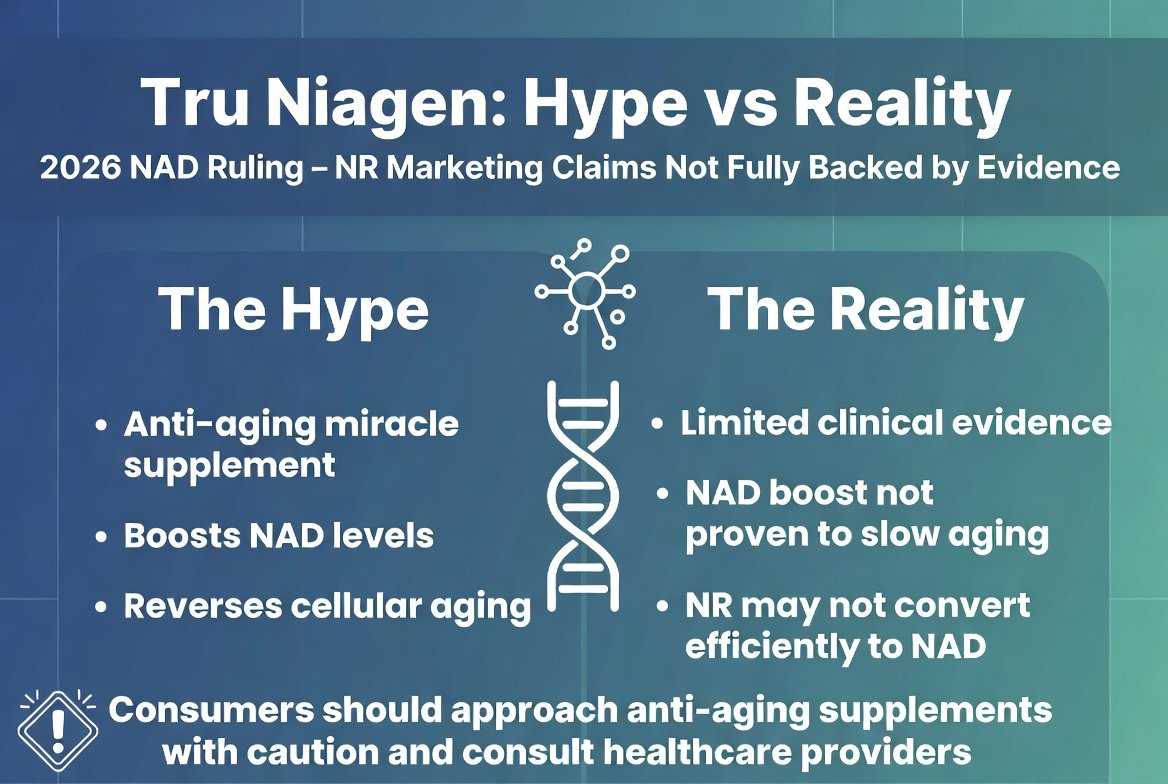
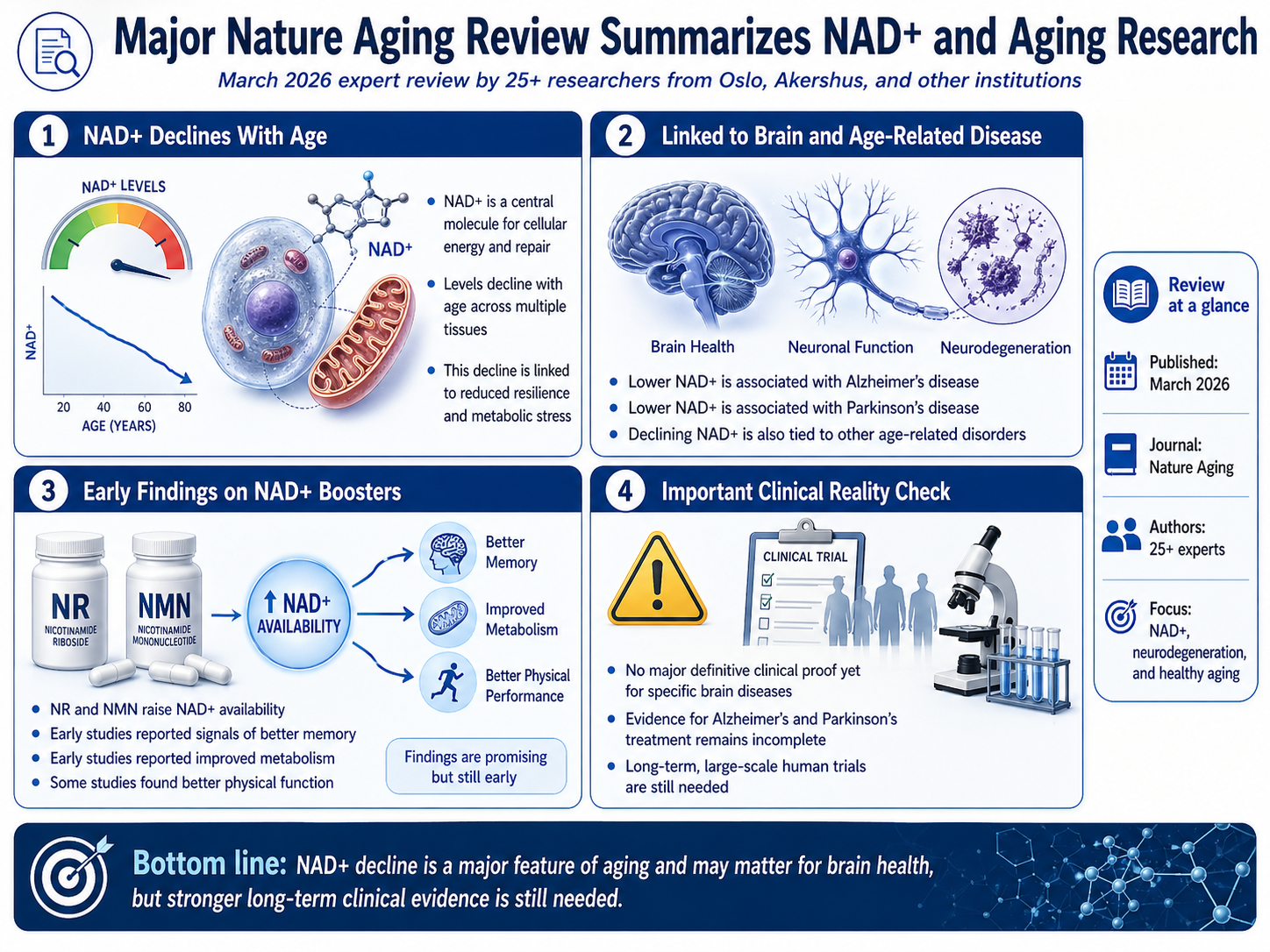
Here the story takes an interesting turn. Niacin is the raw material for NAD, a molecule that has become one of the hottest topics in aging research. NAD levels decline with age, and restoring them is one of the leading hypotheses in the field. This is why supplements like NMN and NR (relatives of niacin) are aggressively marketed as anti-aging molecules. So perhaps, the logical question arises, regular, cheap niacin also raises NAD and helps with longevity?
Here we need to be very careful. It is true that niacin raises NAD, but the leap from "raises NAD" to "extends healthy lifespan in humans" has not yet been made in research. There are no clinical trials showing that taking niacin (or NMN, or NR) extends lifespan, slows aging, or prevents disease in healthy people. As we have written in our critical articles on NAD and NMN, the theory is intriguing but the human evidence is thin. Raising a number in a lab is not the same as extending life, just as raising HDL did not save hearts. To check which supplements are truly suitable for energy and health goals based on your age and condition, you can use our personal supplement checker that ranks based on evidence quality.
Should You Start Taking Niacin?
This is why we rated niacin yellow, not green. This rating reflects a complex picture: niacin is a truly essential vitamin, and deficiency is dangerous, but mega-dosing it as a supplement, for cholesterol or longevity, is not evidence-based and carries real risks.
- As a cholesterol supplement, its use has been abandoned. AIM-HIGH and HPS2-THRIVE showed no cardiac benefit when added to statins, and there is harm. Do not start high-dose niacin for cholesterol on your own.
- Flushing is the most well-known side effect. Nicotinic acid causes redness, warmth, and tingling of the skin, especially on the face and chest, minutes after taking it. It is usually not dangerous but very unpleasant. Niacinamide does not cause flushing.
- Extended-release niacin is dangerous for the liver. Ironically, the "convenient" form designed to reduce flushing has been linked to liver toxicity, sometimes severe. This is a particularly important warning.
- Other risks at high doses. Increased blood sugar, worsening of diabetes, increased uric acid (risk of gout), and gastrointestinal problems. Therefore, mega-dosing without medical supervision is not recommended.
- To prevent deficiency, a little is enough. Those who eat a balanced diet get enough niacin. The daily allowance is about 14 to 16 mg, a tiny amount compared to therapeutic doses.
From a safety perspective, the distinction is critical: niacin at a normal dietary dose is completely safe, but mega-dosing of hundreds to thousands of milligrams is already a pharmacological intervention with real side effects. Anyone considering a high dose should only do so under a doctor's supervision, with monitoring of liver function and blood sugar. It is not an innocent vitamin at these levels.
What Should You Take Away from the Research?
- Do not take high-dose niacin for cholesterol on your own. This is the clearest lesson from the two large studies. If you have a cholesterol problem, the evidence-based treatment is statins and lifestyle changes, under a doctor's supervision.
- Separate an essential vitamin from a mega-dose drug. Getting niacin from food is essential and safe. A dose a thousand times the allowance is a completely different story, with risks.
- If you are interested in NAD and longevity, approach with open eyes. The human evidence is still thin. Do not assume that niacin (or NMN/NR) extends life just because it raises NAD in a lab.
- Pay attention to flushing and the liver. If you do take niacin under medical supervision, niacinamide avoids flushing, and the extended-release form requires liver monitoring due to the risk of toxicity.
- Diet before supplement. Meat, poultry, fish, peanuts, and legumes provide plenty of niacin. Most people simply do not need a niacin supplement at all.
Those who still want a supplement, mainly as part of a B-complex or for a specific purpose under a doctor's guidance, can purchase niacin (vitamin B3) on iHerb in various forms and dosages, including flush-free niacinamide.
The Broader Perspective
The story of niacin is one of the most important lessons in the world of health and supplements: improvement in a biomarker is not a real benefit until proven in a study that counts real outcomes. Niacin improved all cholesterol numbers impressively, yet it did not save a single heart, and even caused harm. This same caution should be applied today to the promise of NAD and longevity: a molecule that raises a lab measure is not necessarily a molecule that extends life.
The practical lesson: Niacin is an essential vitamin that should be obtained from food, not a miracle supplement to be swallowed in huge doses. Between safe dietary use and dangerous pharmacological mega-dosing, there is a chasm, and the difference between them is exactly the difference between informed use and unnecessary risk. This is the perspective we hold here: to rate each supplement according to what the science actually shows, even when the answer is that its popular use simply does not work.
References:
AIM-HIGH Investigators (Boden WE et al.), Niacin in patients with low HDL cholesterol levels receiving intensive statin therapy, NEJM, 2011;365(24):2255-2267 (DOI: 10.1056/NEJMoa1107579)
HPS2-THRIVE Collaborative Group, Effects of extended-release niacin with laropiprant in high-risk patients, NEJM, 2014;371(3):203-212 (DOI: 10.1056/NEJMoa1300955)

💬 Comments (0)
Be the first to comment on the article.