For nearly two decades, aging researchers have spoken about 'zombie cells' as if they were one uniform thing: cells that stopped dividing, remained alive in the tissue, and secreted toxins that harm their neighbors. This image was useful, but it turns out it was also overly simplistic. On June 11, 2026, the SenNet consortium, a massive research network funded by the NIH, published a series of studies in the prestigious journal Cell that fundamentally changes the picture.
The central publication, led by Prof. Rong Fan from Yale School of Medicine together with researchers from ten research institutions, presents what we have never had before: the first comprehensive atlas of senescent cells in the human body. This is not a new drug or a clinical trial, but something more fundamental and more important in the long run: a map. And for anyone hoping that one day we can precisely eliminate harmful zombie cells, this map is a necessary prerequisite.
In this article, we will explain what senescent cells are, what exactly this atlas maps, why the discovery that senescence is a 'spectrum' rather than a 'state' changes everything, and how all this brings us closer to a new generation of precise anti-aging drugs.
What are Senescent Cells (Senescence)?
Cellular senescence, or in Hebrew 'zombie cells', is a biological state where a cell permanently stops dividing but does not die. It remains in the tissue, consumes resources, and affects its environment. Here are the key characteristics:
- Permanent division arrest: The cell is 'locked' and no longer responds to growth signals, even when the tissue needs new cells.
- SASP secretion: Acronym for Senescence-Associated Secretory Phenotype, a cocktail of inflammatory cytokines, tissue-degrading enzymes, and growth factors that the zombie cell secretes, poisoning its neighbors.
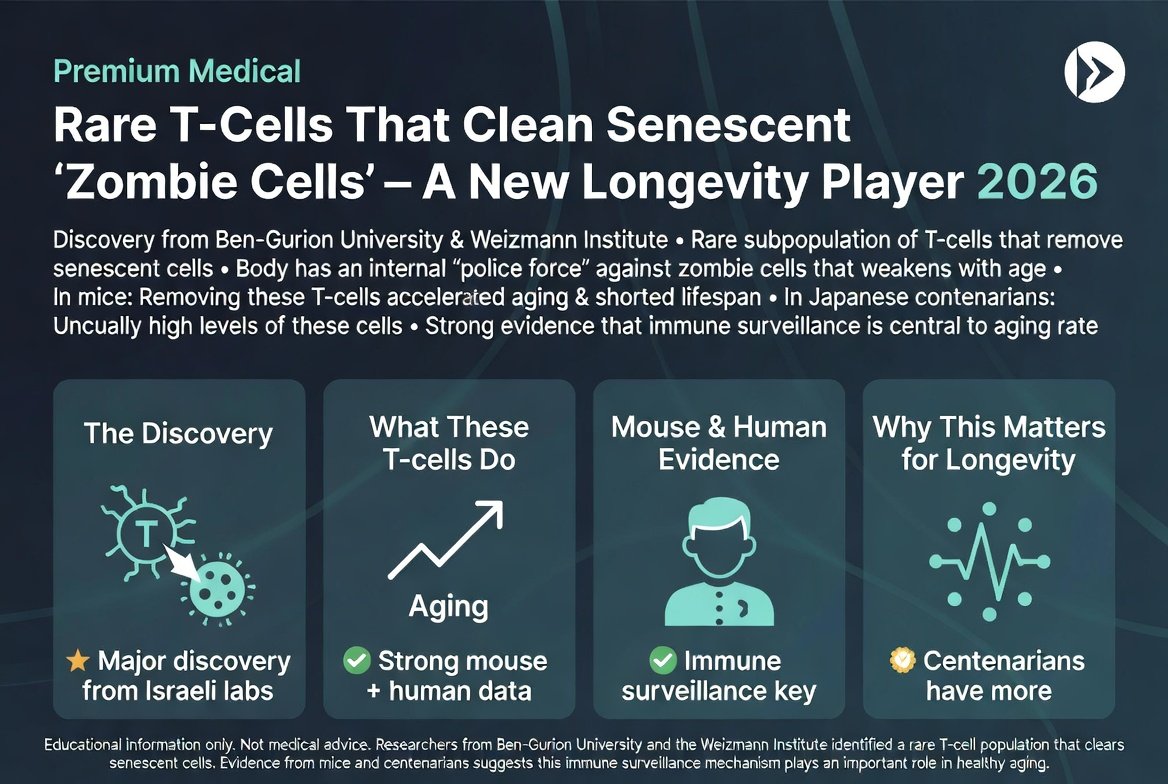
- Accumulation with age: As we age, more cells become senescent, and the immune system struggles more to eliminate them.
- Link to age-related diseases: Senescence is involved in Alzheimer's, type 2 diabetes, osteoarthritis, fibrosis, heart disease, and more.
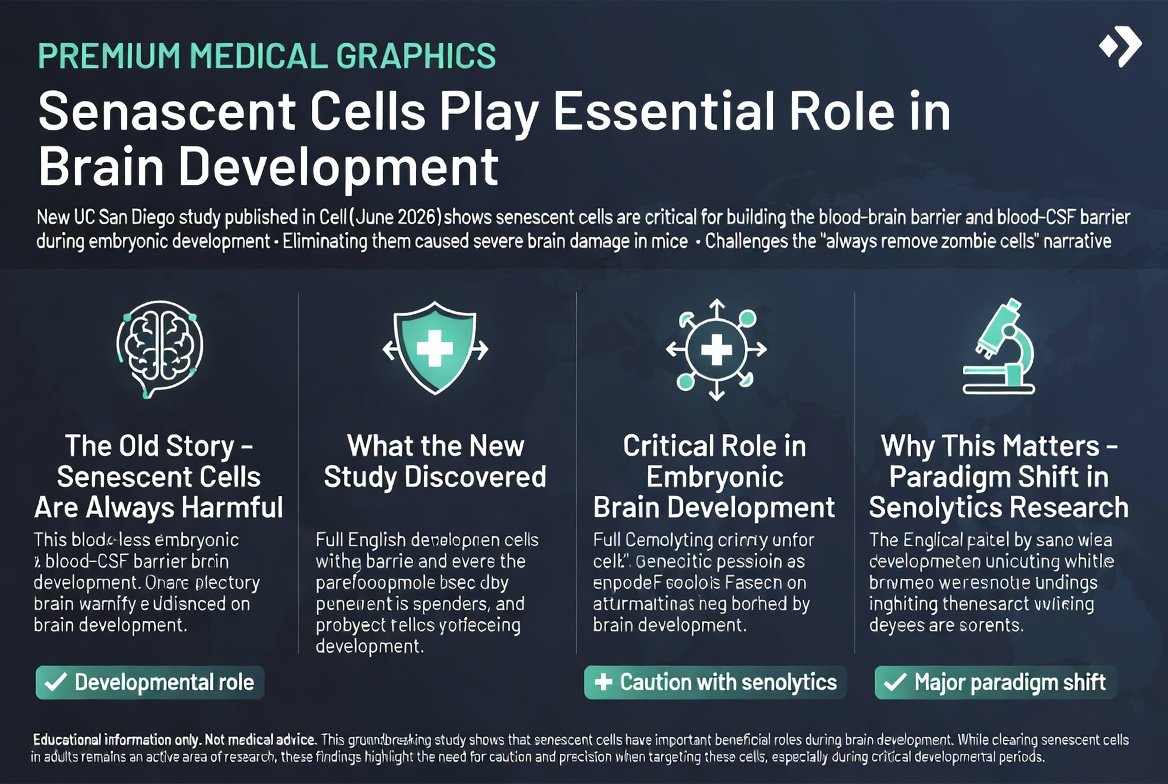
A critical point often forgotten: senescence is not only damage, it is also a defense mechanism. It evolved evolutionarily to prevent damaged cells from dividing and becoming cancer, and it is essential for wound healing and tissue regulation. The problem is not the mere existence of zombie cells, but their uncontrolled accumulation. And here precisely begins the importance of the new atlas.
What is an 'Atlas' of Senescent Cells, and Why is it Needed?
The biggest problem in the field of senescence has always been simple but frustrating: we didn't know exactly where zombie cells are located in the body, how many there are, and how they differ from each other. As Prof. Fan put it: 'Cellular senescence is a fundamental hallmark of aging, and yet we still know surprisingly little about where these cells reside in the human body.'
An atlas is precisely the answer to that. Just as a geographical atlas maps cities, roads, and borders, this biological atlas maps where senescent cells sit in each tissue, at what density, and what characterizes each one. The consortium used an arsenal of advanced technologies to achieve this:
- Single-cell sequencing: Reading the gene expression of each cell individually, instead of an average of the whole tissue.
- Spatial omics: Preserving the information of exactly where in the tissue each cell sits, to understand its spatial organization.
- AI-based analysis: New computational tools developed specifically to identify rare senescent cells that could not be detected with older methods.
The goal of the SenNet consortium, launched by the NIH Common Fund in 2021, is particularly ambitious: to map senescent cells in 18 different human tissues, across the entire lifespan, and in various health and disease states. The current publication is the first wave of results, and it already includes new atlases for the brain, liver, and skin.
The Key Finding: Senescence is a Spectrum, Not a Single State
If there is one thing to remember from this study, it is this: Zombie cells are not one uniform thing. They are a wide variety of different cellular states, which the researchers called 'senotypes'. Just as there are different types of cancer cells with different behaviors, there are different types of senescent cells, and they vary from tissue to tissue and from disease to disease.
This is a profound conceptual shift. Until now, most research treated senescence as if a zombie in the skin and a zombie in the brain are fundamentally the same. The atlas shows this is a wrong assumption. A senescent cell in the prefrontal cortex is fundamentally different from a senescent cell in the lung or lymph node, both in its gene expression, the proteins it secretes, and the way it communicates with its tissue environment. The study's abstract in Cell states it precisely: 'Cellular senescence encompasses diverse cell states that emerge in human tissues during aging and disease.'
Why is this so important? Because it explains why generic senolytics, drugs that try to eliminate all zombie cells with the same approach, have worked inconsistently. If there is no such thing as one 'zombie cell', there is also no such thing as one drug that will work on all of them. You need to target the specific senotype, in the specific tissue, for the specific disease. We wrote extensively about this distinction between harmful and beneficial zombie cells in the article Good and Bad Zombie Cells: New Precise Senolytics.
The Evidence: What the Atlas Has Already Revealed
Finding 1: Multi-tissue mapping across various organs
The SenNet series of studies mapped senescent cells in tissues from various body regions, including the prefrontal cortex (the area responsible for decision-making and working memory), the lungs, and lymph nodes. The broad collection also includes dedicated atlases for the brain, liver, and skin. Each tissue was found to have its own unique senescence profile, not a single uniform signature.
In Cell, a team led by Yale specifically analyzed immunosenescence in lymph nodes, the areas where immune cells are trained and organized. The accumulation of senescent cells there may explain part of the decline in immune function with age, the phenomenon that leaves the elderly more vulnerable to infections and cancer.
Finding 2: AI tools for identifying rare cells
One of the main achievements was technological. Senescent cells are relatively rare in tissue, sometimes constituting a small percentage of all cells, which made their detection very difficult. The consortium developed AI-based computational tools capable of scanning single-cell data and identifying the unique biological signature of senescent cells, even when they are few. This is the technical foundation that allowed building the atlas in the first place.
Finding 3: Blood biomarkers that predict age-related diseases
Perhaps the finding with the most immediate clinical implications: using the new tools, researchers identified blood markers that can predict the risk of kidney disease, frailty, and future diabetes in human aging studies. The practical meaning: instead of waiting for a disease to break out, we may in the future be able to identify from a simple blood test who is at increased risk, based on their senescence burden, and intervene early.
Finding 4: A new conceptual framework for the field
Beyond the data itself, the NIH emphasized that the studies establish a new framework for the role of senescence in aging. Instead of a collection of disconnected findings from different labs, there is now a common language, a shared set of tools, and an open data repository that researchers worldwide can build upon. This is the same leap that cancer research took when the 'hallmarks of cancer' were formulated, and general aging research took when the 'hallmarks of aging' were formulated.
What Does This Mean for Precise Senolytics?
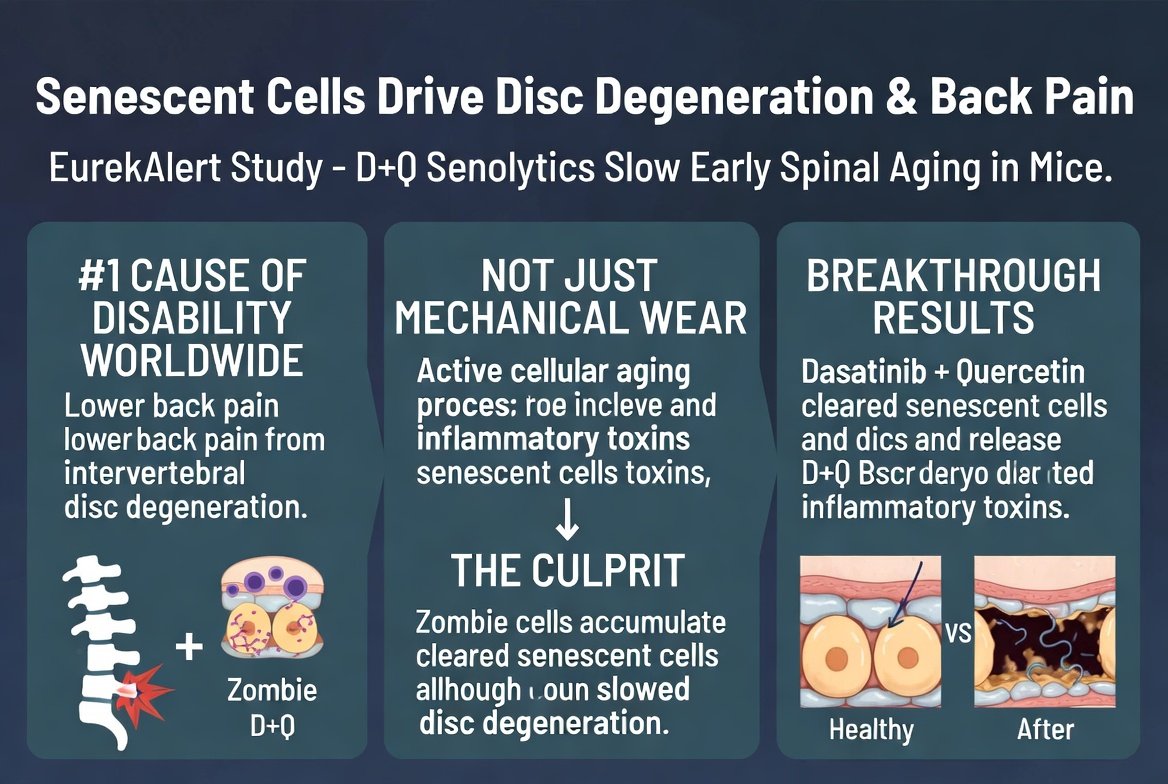
Here lies the deepest connection of the atlas to future medicine. Senolytics are a family of drugs aimed at selectively eliminating zombie cells. The first generation, like the combination of dasatinib and quercetin or the flavonoid fisetin, worked with a relatively broad approach. The problem: a broad approach can also harm beneficial senescent cells, those that help in wound healing, cancer prevention, and tissue organization.
The atlas provides what was missing to move to the next generation: the ability to distinguish between a harmful senotype and a beneficial senotype, and target a drug only at the former. If we know which molecular signature characterizes the pathogenic zombie cells in the brain versus those preserved in the skin, we can design a drug that identifies only those that need to be eliminated. The study's abstract in Cell states this directly: these advances 'provide frameworks for biomarker discovery and the development of targeted senotherapy strategies.'
In other words, the atlas is not a drug, but it is the map by which the next drugs will be designed. We wrote about the pipeline of these drugs in the article New Senolytic Drugs: The 2026-2030 Pipeline, and about the mechanisms that lead a cell to senescence in the article Mechanisms of Senescence and Aging: A Field Review.
Does This Mean There is Already a Treatment? The Sobering View
It is important to be clear: The atlas is a research infrastructure, not an available treatment. Here are the caveats to remember:
This is basic research, not clinical
The atlas maps and characterizes cells. It does not say 'take this drug'. The path from discovering a harmful senotype to an approved drug targeting it is long, and includes development, animal trials, and three phases of human trials. It is likely many years away.
No senolytics approved for aging
As of 2026, there is no senolytic drug approved for general treatment of aging. Dasatinib is approved for types of leukemia, quercetin and fisetin are dietary supplements or in trials, and any anti-aging use of them is off-label and without sufficient basis. The atlas does not change this in the immediate term.
The complexity itself is a warning
The finding that senescence is a spectrum is a scientific breakthrough, but also a reminder of humility: if there are dozens of different senotypes, the path to a precise drug is more complex than we hoped, not simpler. Each senotype may require its own strategy. This is not magic arriving tomorrow.
Caution against overinterpretation
Companies and clinics selling 'anti-aging treatments' may exploit such headlines to market unsubstantiated products. A research atlas is not an endorsement of any commercial product. If someone offers you a 'senolytic treatment' based on this study, that is a red flag.
What to Take from the Study?
- Understand that science is progressing, but slowly and carefully. The atlas is a huge step, but a foundational step. It brings closer the day when precise senolytics will exist, but does not bring it tomorrow. Do not rush to buy 'senolytic' supplements or treatments based on the headline.
- Manage senescence burden through lifestyle. Until a precise drug arrives, the available interventions are lifestyle: regular physical activity (especially strength training and HIIT that encourage zombie cell clearance), a Mediterranean diet rich in polyphenols, quality sleep, and avoiding smoking and air pollution.
- Consider testing inflammatory biomarkers. Levels of hsCRP, IL-6, and HbA1c in a standard blood test reflect systemic inflammatory burden related to senescence. High levels are a sign to focus on lifestyle.
- If you have an advanced age-related disease, ask about clinical trials. Precise senolytics will first be tested in people with specific diseases. A doctor can check if there is a relevant trial.
- Be a critical science consumer. Distinguish between 'promising foundational research' and 'available and proven treatment'. The former is common, the latter rare. The SenNet atlas is the former, not the latter.
The Broader Perspective
It is easy to miss the importance of foundational research like this, because it does not come with a shiny drug or a promise of eternal life. But in the history of science, maps are sometimes more important than individual discoveries. The human genome did not cure a disease on the day it was decoded, but it became the foundation upon which almost all medical research since has been built. The cellular senescence atlas aims to be the same for senescence research.
The deeper lesson is about biological humility. For a decade, we treated zombie cells as a uniform enemy that simply needed to be destroyed. Now we understand that it is a complex ecosystem of cellular states, some harmful and some essential. True scientific maturity is not in promising a simple solution, but in recognizing the complexity and building the tools to deal with it carefully.
And there is also a reminder here about the true goal. As SenNet researchers emphasized, the aim is not just to extend lifespan, but to improve healthspan, the number of years we live healthy and disease-free. An atlas that shows us where and when zombie cells accumulate, and in which tissues they are most harmful, is precisely the tool that helps direct this effort. Not to eliminate senescence, but to understand it well enough to guide it gently.
In the end, the first atlas of senescent cells in the human body is a story about science maturing. We know much more today than we did, and we are more humble than we were. And that, perhaps, is the right way forward: not with promises, but with maps.
References:
Cell - Charting human cellular senescence in aging and disease (Suryadevara et al., June 2026)
Yale School of Medicine - First Comprehensive Atlas of Human Cellular Senescence
NIH Common Fund - Cellular Senescence Network (SenNet)

💬 Comments (0)
Be the first to comment on the article.