If you ask a hundred people over 50 what bothers them about their bodies, a quarter are likely to answer the same thing: lower back pain. This is no coincidence. Lower back pain is the number one cause of disability worldwide, according to the World Health Organization, and behind the vast majority of cases lies one quiet but destructive biological process: degeneration of the intervertebral discs, the flexible cushions that pad the vertebrae in the spine.
For decades, medicine viewed disc degeneration as a 'mechanical' problem: natural wear and tear of material that erodes over the years, like a tire wearing out. But new research published on April 14, 2026, in the journal Bone Research (from the Nature group) paints a completely different picture. It turns out disc degeneration is not just passive erosion, but an active cellular aging process driven by zombie cells. And just as zombie cells cause damage in the brain, liver, and joints, they also accelerate the breakdown of the spine. The study received widespread media coverage after a press release about it was published on the science news service EurekAlert! on May 25, 2026.
The exciting news: When researchers gave mice the senolytic combination dasatinib and quercetin (D+Q), drugs aimed at eliminating senescent cells, they were able to slow and delay disc degeneration in its early stages. Interestingly, in the same study, another senolytic drug called navitoclax failed and did not improve disc condition, while D+Q did work. This is a completely new extension of the senolytics field into an area not yet deeply studied: spinal health. In this article, we will understand why discs degenerate, the role of zombie cells in the process, what exactly D+Q did in mice, the immense potential, and what challenges pose a serious gap between a lab mouse and a human suffering from back pain.
What is an Intervertebral Disc, and Why Does It Degenerate?
Our spine is made up of 33 vertebrae, and between each pair of vertebrae sits an intervertebral disc, a cartilaginous cushion whose job is to absorb shock, allow movement, and maintain the proper distance between vertebrae. The disc is composed of two main parts:
- Nucleus Pulposus: A gelatinous center, rich in water and water-attracting molecules (proteoglycans), which gives the disc its flexibility and shock-absorbing ability.
- Annulus Fibrosus: Layers of strong collagen fibers that wrap around the nucleus and hold it in place, like a tire around an inner tube.
- Cartilaginous Endplates: Thin layers that connect the disc to the vertebrae above and below, through which nutrients reach the disc.
The major problem with the disc is that it is one of the tissues with the poorest blood supply in the body. Unlike most organs, the disc receives almost no direct blood vessels. Its nourishment occurs mainly through slow diffusion via the endplates. The implication: The disc hardly regenerates, and any damage accumulated within it remains and builds up over years.
With age, several processes occur simultaneously in the disc: the nucleus loses water and becomes dry and less flexible, the collagen fibers in the annulus weaken and crack, and the endplates calcify, further blocking nutrient supply. The result is a flat, dry, cracked disc that loses height. In severe cases, the nucleus ruptures through the annulus (herniated disc) and presses on nerves, causing radiating pain, numbness, and weakness in the legs.
The Connection to Zombie Cells: A Surprising Mechanism
This is where the biology of aging comes into play. For years, it was thought disc degeneration was mainly 'mechanical wear and tear.' But the new study, along with a wave of recent research, shows that zombie cells are a central and active player in the process, not just a byproduct of it.
A zombie cell, scientifically known as a senescent cell, is a cell that has stopped dividing but refuses to die. It remains in the tissue, consumes resources, and secretes a toxic cocktail of molecules called SASP (Senescence-Associated Secretory Phenotype). Throughout life, disc cells (mainly chondrocytes and cells in the nucleus) are exposed to constant mechanical stress, oxidation, and DNA damage. All of these accelerate their entry into a zombie state.
- Accumulation with age: In discs of older people, and especially in degenerated discs, a significantly higher concentration of zombie cells is found compared to young, healthy discs.
- Inflammatory SASP secretion: Zombie cells in the disc secrete inflammatory cytokines like IL-6, IL-8, and TNF-alpha, which ignite chronic inflammation in the disc and surrounding tissues.
- Breakdown of cartilage matrix: The SASP includes degrading enzymes called MMPs (matrix metalloproteinases) and ADAMTS, which break down collagen and proteoglycans—exactly the materials that give the disc its strength and water-holding capacity.
- Infection of neighboring cells: Zombie cells spread the 'zombie state' to nearby healthy cells in a process called paracrine senescence, thus accelerating degeneration in a chain reaction.
The conclusion is revolutionary: If zombie cells drive degeneration, then eliminating them could stop or slow the process. This is precisely the logic behind senolytics, only this time the target is not the brain or joint, but the spine.
Current Evidence
Study 1: D+Q Slows Disc Degeneration in Mice (Bone Research, 2026)
The main study, published in the journal Bone Research, used a special strain of mice called SM/J. This strain develops early and rapid disc degeneration spontaneously, on a genetic basis, not due to injury or artificial intervention. In other words, the degeneration in these mice is natural and built into their genetics, making them a convenient model for testing early intervention. Researchers gave some mice the senolytic combination dasatinib and quercetin (D+Q) via weekly injections from a young age (about 4 weeks) until 17 weeks of age, while a control group did not receive the treatment. The main result: In mice treated with D+Q, disc degeneration was significantly delayed and slowed compared to the control group.
Analysis of the discs showed that senolytic treatment reduced the zombie cell burden (including markers like p21 and p19ARF), decreased inflammation and SASP levels, and better preserved the structure of the cartilage matrix and nucleus properties. However, it is important to emphasize: The treatment did not completely reverse the damage. Researchers described a reduction of about 25% in tissues reaching severe degeneration grades, but the discs still showed signs of degeneration at the end of the experiment. That is, D+Q slowed and alleviated the process, but did not 'heal' the disc.
Study 1 (Continued): Navitoclax Failed, and JUN is a Key Node
Two additional results make the study particularly interesting. First, in the same experiment, another senolytic drug, navitoclax, was also tested, and it failed: it did not improve disc condition or reduce the zombie cell burden, unlike D+Q. This illustrates that not all senolytics work the same way, and that choosing the right drug for the right tissue is critical. Second, genetic analysis pointed to the JUN/JUNB signaling pathway as a central node linking cellular senescence, inflammation, and cartilage matrix breakdown. When researchers inhibited JUN in degenerated human disc cells in the lab, they replicated some of the beneficial effects of D+Q, a finding that strengthens the understanding of the mechanism.
Study 2: Why Timing of Treatment is So Important
It is important to understand that this study tested only early intervention: treatment was given to young mice, when degeneration was just beginning to develop, not to mice with already completely degenerated discs. This is a guiding principle in the entire senolytics field, not a unique result of this study: It is much easier to prevent or halt the accumulation of zombie cells early on than to reverse structural damage already done. The disc, which hardly regenerates, illustrates this principle well. Hence the hypothesis emerging from the field: Senolytics for the disc will likely be a preventive or early-halting tool, not a tool for restoring a disc that has already degenerated. Even in early-treated mice, recall, degeneration was only slowed, not completely prevented.
Study 3: Separate Evidence from Human Discs
Separately from the mouse study, previous research in recent years examined disc samples removed from humans during spinal surgeries. They found a clear correlation: the higher the degree of disc degeneration, the more zombie cells and higher concentrations of SASP molecules were found. This finding, from separate sources, strengthens the hypothesis that zombie cells are not just 'present' in a degenerated disc but are active contributors to the degeneration process itself. It is important to clarify that this is from previous and separate research literature, not part of the mouse experiment described above.
Study 4: D+Q in Other Contexts Establishes Relative Safety
The D+Q combination is not new to science. It has already been tested in humans in other contexts, such as idiopathic pulmonary fibrosis (IPF) and diabetic kidney disease, in early clinical trials. In these trials, D+Q reduced zombie cell burden in humans and showed a reasonable safety profile at low, intermittent doses. This provides some basis for optimism regarding the possibility of transferring the treatment to the spine as well, although it has not yet been specifically tested for discs in humans.
What About Back Pain, Disability, and Quality of Life?
To understand why this finding is so significant, one must grasp the scope of the problem. Lower back pain affects the vast majority of adults over 50, and its consequences extend far beyond discomfort.
- Global disability: Lower back pain is the leading cause worldwide of years lived with disability. It impairs the ability to work, move, and function independently.
- Enormous economic burden: Treatment for back pain, surgeries, lost workdays, and painkillers amount to tens of billions of dollars annually worldwide.
- Limited current solutions: Existing treatments—physical therapy, painkillers, steroid injections, and in severe cases surgery—mainly provide symptomatic relief. None of them stop the underlying degenerative process.
- Link to overall health: Chronic back pain is associated with depression, sleep deprivation, obesity (due to reduced activity), and a general decline in quality of life in old age.
Against this backdrop, a treatment targeting the biological root of degeneration, not just the pain, would be a huge breakthrough. Instead of chasing the symptom, senolytics offer the possibility of stopping the process itself. If proven to work in humans, this would be a paradigm shift in spinal treatment.
Should We Start Taking Senolytics for Our Backs?
Despite the excitement, it is important to pause and be critical. The gap between a lab mouse and a human with back pain is large, and there are good reasons for caution.
This is a Study in Mice, Not Humans
This is the most important limitation. The study was done in mice, and not everything that works in a mouse works in a human. Mouse discs differ from human discs in size, mechanical load they bear, and the speed of aging processes. The history of science is full of promising treatments that worked great in mice and failed in humans. Controlled human clinical trials are needed before any conclusion can be drawn.
The Drug Delivery Challenge: The Disc is Nearly Bloodless
This is a unique and particularly difficult challenge. As explained, the disc is one of the tissues with the poorest blood supply in the body. A drug taken orally or injected intravenously will have great difficulty reaching the disc in an effective concentration because there are no blood vessels to carry it there. It may require direct injection into the disc, an invasive procedure that could itself cause damage and accelerate degeneration. Solving the delivery problem is one of the biggest hurdles.
Timing: A Narrow Window of Opportunity
The study involved early intervention, and as mentioned, the logic of the field is that senolytics work better early on. But the problem is that most people only see a doctor when they already have pain, meaning degeneration is already advanced. How do we identify who is in an early stage of degeneration without symptoms? For the treatment to be useful, we will need diagnostic tools that identify early degeneration long before pain appears, and these do not yet exist.
D+Q Are Not Approved Anti-Aging Drugs
As of 2026, no senolytic has been approved by the FDA for treating disc degeneration or aging. Dasatinib is approved for specific types of leukemia and has significant side effects, and quercetin is a dietary supplement. Using them for back pain would be off-label, without clinical validation and without long-term safety data in this context.
Risk of Harming Beneficial Zombie Cells
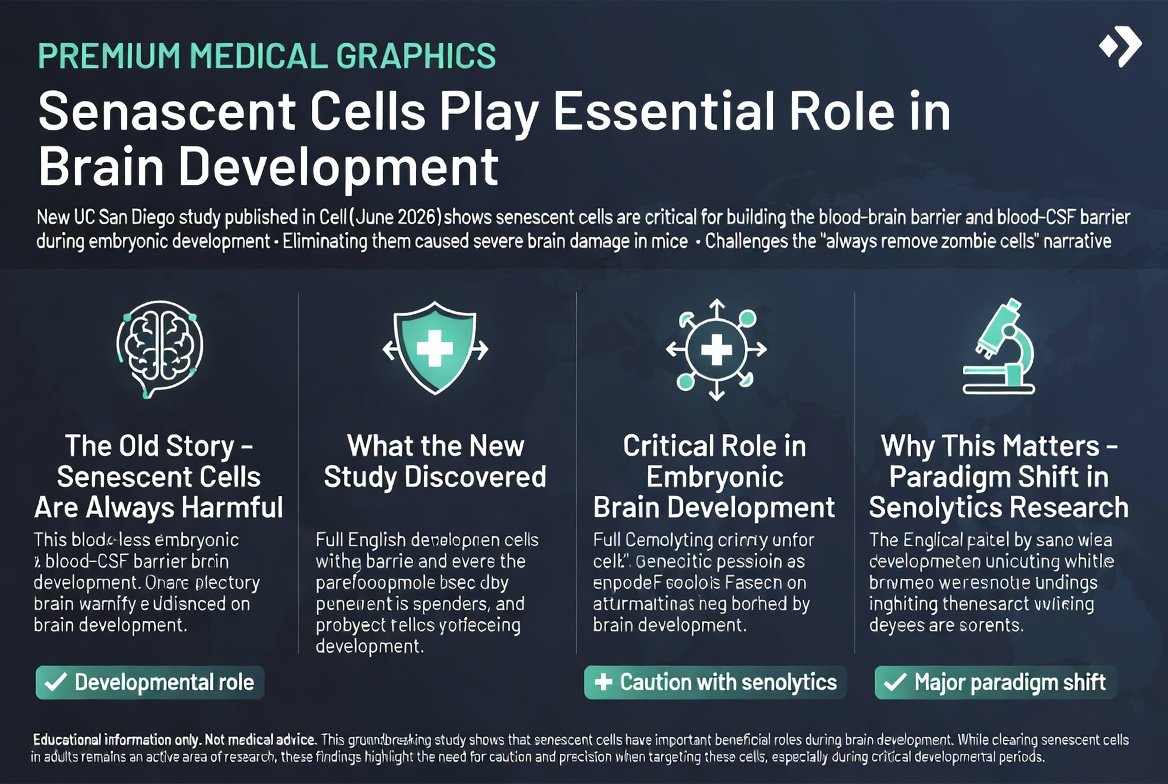
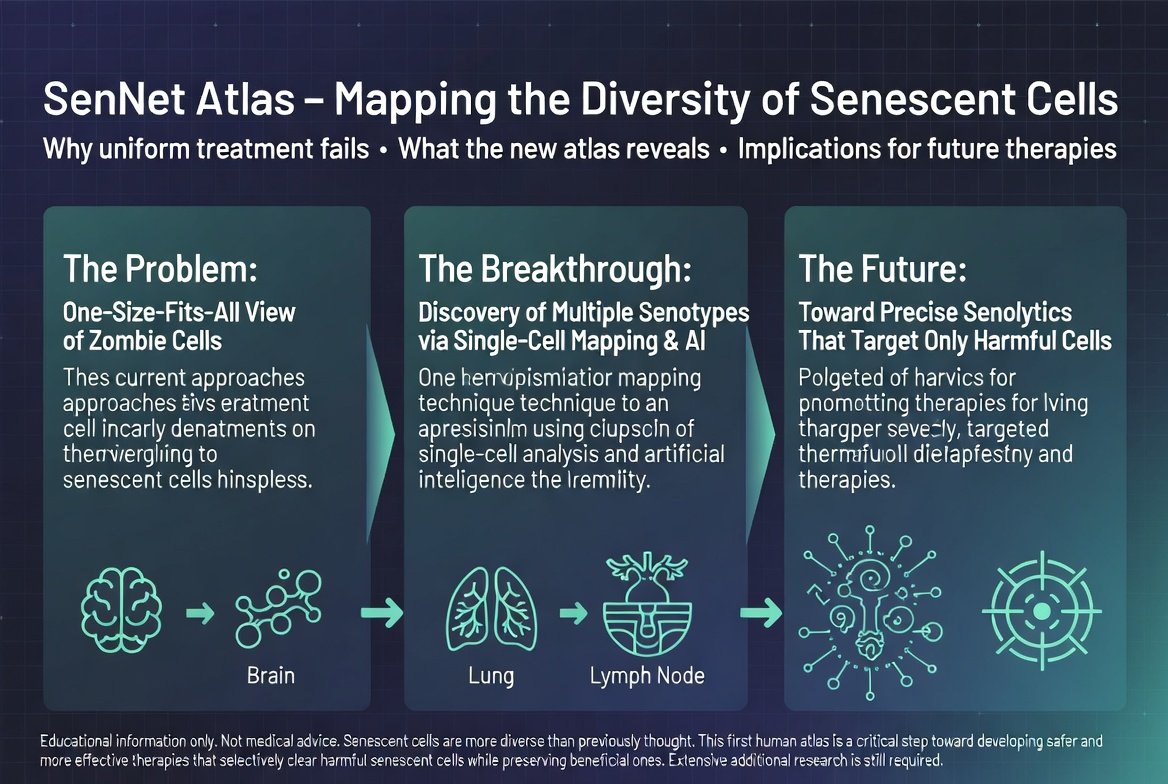
It is important to remember that not every zombie cell is an enemy. Zombie cells play vital roles in wound healing, cancer protection, and development. A general senolytic that eliminates senescent cells throughout the body could also harm beneficial zombies. This reinforces the need for locally targeted treatment for the disc, rather than systemic administration.
What to Take Away from the Study?
- Don't rush to buy dasatinib or quercetin for back pain. The study was in mice, there is no human validation, and there is no effective and safe way to deliver the drug to your disc. Patience until human clinical trials is the clear recommendation.
- Maintain a healthy body weight. Excess weight increases the mechanical load on the discs and accelerates their degeneration. Weight loss is one of the most effective interventions available to you today.
- Strengthen your core and back muscles. Strong muscles around the spine reduce the load on the discs. Core exercises, Pilates, and regular physical activity are evidence-based 'medicine' for back health.
- Move your back regularly. The disc is nourished by diffusion, which depends on movement and pressure changes. Prolonged sitting impairs disc nutrition. Stand up, walk, and stretch your back every hour.
- Reduce chronic inflammation through lifestyle. A Mediterranean diet rich in polyphenols (including natural quercetin from onions, apples, and berries), avoiding smoking, and quality sleep all reduce the inflammatory load that fuels zombie cells.
- If you have advanced disc degeneration, ask your doctor about clinical trials. As the field progresses, trials testing targeted senolytics for the spine will emerge. Participation provides access to innovative treatments under medical supervision.
- Follow developments, but with realistic expectations. Senolytics for the disc is a promising research direction, but it is at a very early stage. An approved treatment, if it comes, is likely many years away.
The Broader Perspective
The story of senolytics for back pain is much more than a single mouse study. It illustrates a central principle in aging research: many age-related diseases, which look completely different on the surface, share a common biological mechanism. Alzheimer's, osteoarthritis, pulmonary fibrosis, and now disc degeneration are all driven, in part, by the accumulation of zombie cells and the chronic inflammation they produce.
This is an empowering insight. Instead of fighting each age-related disease separately, we are beginning to identify a 'common root' that, if treated, could potentially delay several diseases at once. This is the heart of the geroscience approach, the concept that aging itself is the central 'risk factor,' and that treating aging mechanisms is preferable to chasing individual symptoms.
At the same time, this study teaches a lesson in humility. The disc, with its poor blood supply, is a reminder that every tissue in the body presents its own unique challenges. A drug that works great in the skin or lung might fail in the disc simply because it is hard to deliver there, and as we saw, even another senolytic (navitoclax) simply did not work here at all. Biology is always more complex than the initial promise, and real progress comes when we confront this complexity rather than ignore it.
It is also important to put things in perspective. Even if senolytics for the disc prove themselves in humans, they will not replace the basics: movement, muscle strengthening, healthy weight, and an anti-inflammatory diet. These are interventions available to everyone today, without side effects, and for free. Senolytics, when they arrive, will be another tool in the toolbox, important but not exclusive.
Finally, there is a message of cautious hope here. For the first time, we are beginning to imagine a future where chronic back pain, one of the greatest limitations on quality of life in old age, is treated at its biological root rather than just silenced with painkillers. If we can slow disc degeneration in time, we might be able to give millions of people many more years of free movement, without pain, and without disability. It is still far off, but for the first time, it seems possible.
The zombie cells in the spine remind us that aging is not an inevitable mechanical decree, but a biological process that can, perhaps, be slowed. And the way to do it is not necessarily to replace the disc, but to understand what destroys it, and slow the destruction in time.
References:
Bone Research (Nature) - Dasatinib and quercetin senolytic treatment delays early onset intervertebral disc degeneration in SM/J mice
EurekAlert! - Senolytic drug combination delays early intervertebral disc degeneration in mice (press release)

💬 Comments (0)
Be the first to comment on the article.