Every time we think we understand aging, biology reminds us how far we still have to go. For an entire decade, zombie cells (senescent cells that have stopped dividing but refuse to die) have played the role of the absolute villain in the aging story. They secrete a toxic cocktail of inflammatory molecules, poison the surrounding tissue, and are linked to dozens of age-related diseases. The goal was clear: identify them and eliminate them using senolytic drugs.
But on June 16, 2026, a study was published in the prestigious journal Cell that completely complicates this story. A team from the University of California, San Diego, led by Dr. L. Ashley Watson and headed by Dr. Hiruy Meharena, discovered that zombie cells in the brain are not only harmless during embryonic development—they are simply essential. They are the ones that build the blood-brain barrier and the blood-cerebrospinal fluid barrier, the two most critical defense systems of the brain.
And when researchers tried to eliminate them in mouse embryos, the result was not a healthier brain. It was a developmental disaster: brain hemorrhages, deformed blood vessels, impaired production of cerebrospinal fluid, and collapse of the brain's ventricles. This is one of the sharpest demonstrations to date of a principle we repeatedly emphasize on this site: cellular senescence is context-dependent, and not every zombie cell is bad.
What Are Zombie Cells, and Why Does Everyone Want to Kill Them?
Zombie cells, scientifically known as senescent cells, are cells that have undergone a kind of biological "retirement." They have stopped dividing, but the cell death mechanisms (apoptosis) that should have eliminated them were not activated. Instead, they remain in the tissue, sometimes for years, and continue to function.
- They form in response to stress: DNA damage, telomere shortening, or oncogene activation can lead a cell into senescence as a protective mechanism against cancer.
- They secrete the SASP: Short for Senescence-Associated Secretory Phenotype, a cocktail of inflammatory cytokines (like IL-6 and IL-8), tissue-degrading enzymes, and growth factors.
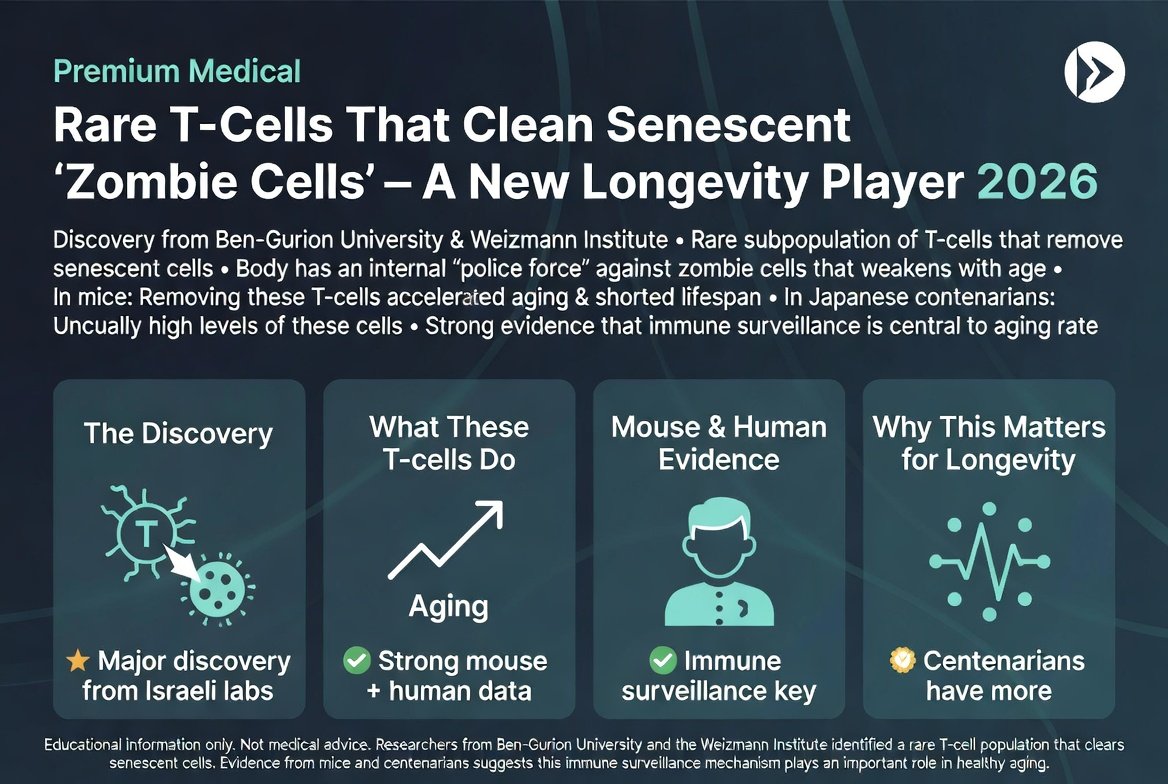
- They accumulate with age: As we get older, the immune system becomes less efficient at clearing them, and they proliferate in various tissues.
- They are linked to age-related diseases: Alzheimer's, Parkinson's, osteoarthritis, fibrosis, and more.
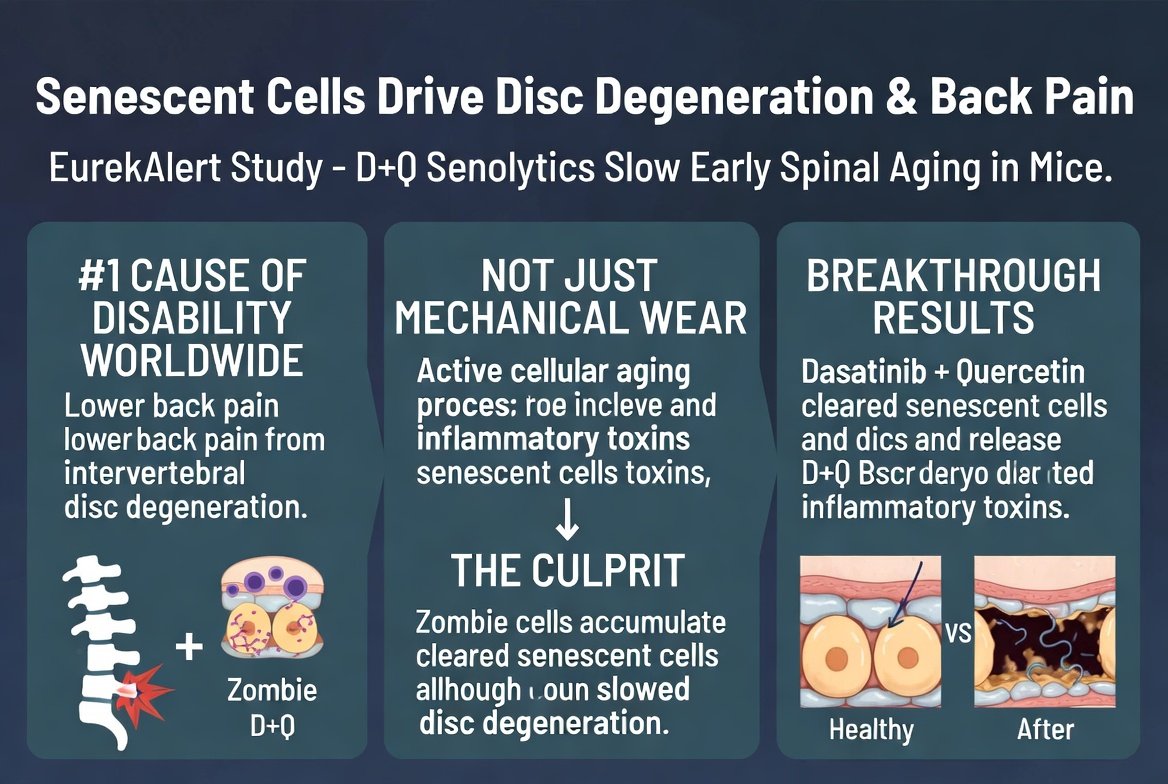
From this, the field of senolytics was born: drugs (like the combination of dasatinib + quercetin, or the flavonoid fisetin) aimed at selectively eliminating zombie cells. Experiments in mice showed that such elimination could extend lifespan and improve function. The marketing narrative built around this was simple: zombies = bad, elimination = good. The new study shows how dangerously simplistic this narrative is.
The Bright Side of Zombies: Developmental Senescence
The point that often falls through the cracks is that senescence is not just a side effect of aging. It is a legitimate biological tool that the body uses throughout life, including before we are even born. This phenomenon is called developmental senescence, and it was first documented in 2013.
During embryonic development, certain cells enter senescence in a programmed and precise manner, not due to damage, but as part of the body's construction plan. They serve as temporary "scaffolds": they secrete signals that guide neighboring cells, shape structures, and are then gently cleared by the embryonic immune system once their role is complete. Developmental senescence is known to contribute to shaping the limbs, inner ear, heart, and kidneys in the embryo.
What the new study added is a surprising missing piece: developmental senescence is also the force that builds the brain's own defenses. And this makes the entire discussion about senolytics much more complex.
The Connection to the Blood-Brain Barrier: A Surprising Mechanism
The blood-brain barrier (BBB) is one of the most sophisticated structures in the body. It is a selective wall of blood vessels that separates the bloodstream from the brain tissue, allowing only certain substances to pass through. Without it, toxins, bacteria, and chemical fluctuations in the blood would fatally damage the brain. Additionally, there is a second barrier: the blood-cerebrospinal fluid barrier (BCSFB), located in the choroid plexus, the structure that produces the cerebrospinal fluid that envelops the brain.
The researchers from UC San Diego examined developing brains of mouse embryos and used a range of advanced methods: single-cell RNA sequencing, advanced imaging, and genetic lineage tracing. They wanted to know exactly which cells enter senescence, when, and for what purpose.
The Three Types of Cells That Become Zombies
The team identified three specialized cell types that enter a senescent state precisely at critical moments of barrier construction:
- Vascular endothelial cells: The cells that make up the walls of blood vessels in the brain, transforming ordinary blood vessels into the selective wall of the blood-brain barrier.
- Brain-resident macrophages: Immune cells residing within the brain that participate in shaping and remodeling the blood vessel network.
- Choroid plexus epithelial cells: The cells that build the blood-cerebrospinal fluid barrier and produce cerebrospinal fluid.
In other words, the zombies were not wandering around the brain as a mistake. They appeared in exactly the right place, at the right time, in the right cells. Their senescence was a biological signal, part of the operating instructions for building the brain.
The Most Unexpected Finding: Zombies That Stay for Life
Here the story gets truly interesting. The researchers observed a critical difference between the cell types. The endothelial cells and macrophages entered senescence only temporarily, during the growth and remodeling of embryonic blood vessels, and were then cleared, exactly as expected from classical developmental senescence.
But the choroid plexus epithelial cells retained their senescence characteristics long after development ended and remained present into adulthood. Dr. Meharena described this as one of the most surprising findings: "Developmental senescence is typically viewed as a temporary process. Here, we identified a population of cells in the brain that appears to maintain senescence characteristics well into adulthood."
This turns a basic assumption on its head. Until now, the assumption was that a "zombie that stays for a long time" is necessarily a harmful zombie that the immune system failed to clear. The new finding suggests that some of the zombie cells found in the adult brain are not harmful invaders, but long-term residents with a function. If we blindly eliminate them, we might damage the structure they support.
The Current Evidence
Study 1: Mapping Zombies in the Developing Brain (UC San Diego, Cell 2026)
This is the foundational study. Using single-cell RNA sequencing, the team mapped all cells in the embryonic mouse brain and identified senescence signatures in the three specialized cell types at defined time points of barrier construction. The finding: senescence in the developing brain is not random, but precisely timed and localized. This is the first direct evidence that senescence contributes to building the brain's barriers.
Study 2: The Elimination Experiment—What Happens When You Remove the Zombies
This is the part that turns the study from descriptive to foundational. The researchers used genetic tools to specifically eliminate the zombie cells in mouse embryos and examined what happened to the brain. The results were severe:
- Impaired blood vessel pattern in the blood-brain barrier, a chaotic and deformed vessel network instead of an organized structure.
- Brain hemorrhages, a direct sign that the barrier was not built properly and was leaking.
- Impaired production of cerebrospinal fluid and fluid and pressure imbalance in the choroid plexus.
- Collapse of the brain's ventricles, damage to the basic structure of the brain.
The conclusion is unequivocal: Without zombie cells, the brain simply cannot build its defenses. They are not a side effect; they are an essential component of the construction plan.
Study 3: The Broader Context of Developmental Senescence (2013 onwards)
The new study did not emerge in a vacuum. As early as 2013, two papers in the journal Cell (from the laboratories of Serrano and Keyes) showed that developmental senescence contributes to shaping structures in the embryo, such as the mesonephric duct and the inner ear. The current study extends this principle to the brain, showing that it is a much more common mechanism than we thought.
Study 4: The Dark Side—Senescence Does Damage the Barrier in Aging
It is important to balance the picture. In the adult brain, senescence does indeed damage the blood-brain barrier. Previous studies have shown that endothelial cells and pericytes that enter senescence in the aging brain contribute to the breakdown of the blood-brain barrier, leakage, and impaired cerebral blood flow. That is, the same process (senescence in the endothelium) can build a barrier in the embryo and destroy it in old age. The difference is the context, timing, and exact type.
What Does This Mean for Senolytics and Brain Diseases?
The implications of this study extend far beyond developmental biology:
- Senolytics during pregnancy: a red line: If zombie cells build the fetal brain, administering senolytic drugs to a pregnant woman could be extremely dangerous. This is a direct warning to anyone considering casual "zombie cleansing."
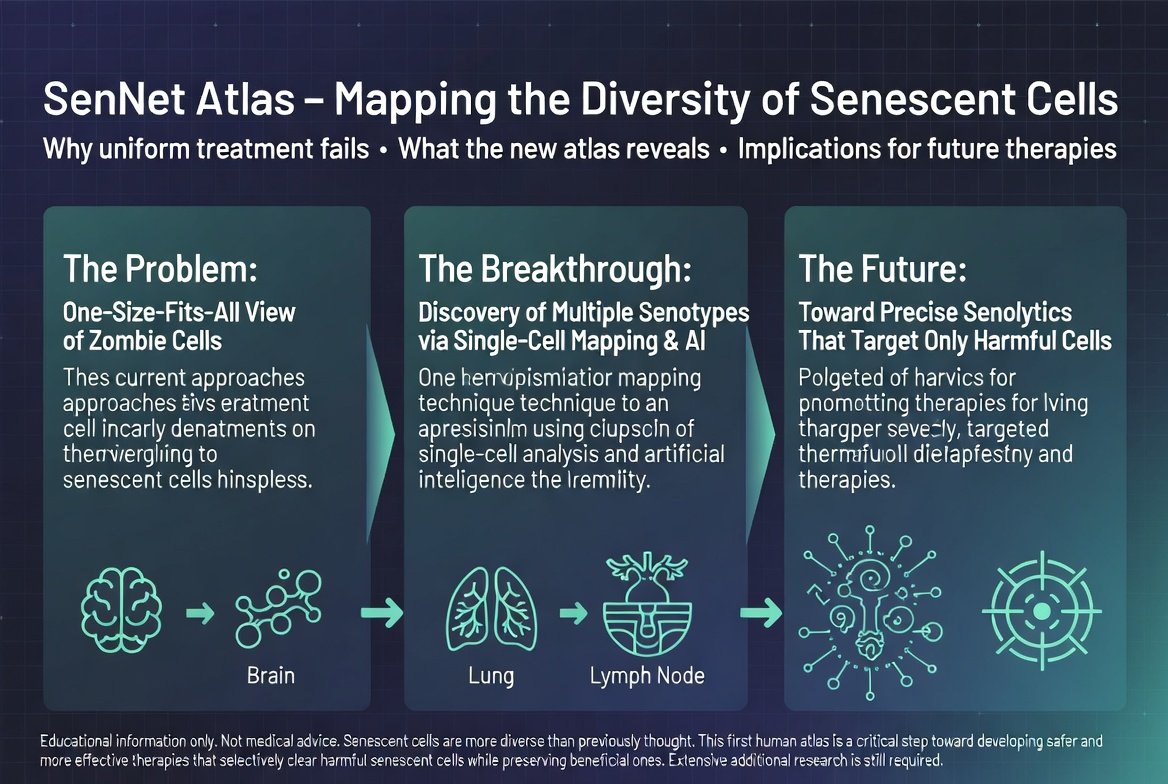
- Need for targeted senolytics: Instead of drugs that eliminate every zombie cell in the body, we will need drugs that distinguish between harmful and beneficial zombies. This is a huge challenge, but critical.
- Understanding congenital brain disorders: Congenital malformations like hydrocephalus (water on the brain) and brain hemorrhages in premature infants may be linked to disruption of the developmental senescence program.
- Caution in neurodegenerative diseases: Before attempting to eliminate zombies in the adult brain to treat Alzheimer's, we must ensure we are not harming essential supporting cells, like those long-term choroid plexus cells.
Does This Mean We Should Stop Researching Senolytics?
Absolutely not, and it is important not to get confused here. The study does not negate the value of senolytics; it sharpens it. Here is the necessary caution.
This is a study in mice, not humans
The findings are based on mouse embryos. Although senescence biology is highly conserved among mammals, we must not directly infer conclusions about the human brain without confirmation in humans, which is nearly impossible to test directly in human embryos for ethical reasons.
Senolytics for the adult world are still promising
In adults, most evidence still supports the idea that eliminating harmful zombies is beneficial. What the study adds is a layer of caution: we need to know which zombie we are eliminating. The distinction between a harmful zombie (to be eliminated) and a beneficial or supportive zombie (to be preserved) is the new frontier of the field.
There is currently no approved senolytic drug for healthy humans
As of 2026, there is no FDA-approved senolytic drug for general use in healthy people. Anyone taking fisetin or quercetin as a supplement is doing so without high-quality evidence of long-term benefit in humans, and without knowing which zombies they are eliminating. This study is a strong reminder for caution.
What Should We Take Away from the Study?
- Don't fall for the simplicity of "all zombies are bad". Senescence is a context-dependent biological tool. It builds organs in the embryo, heals wounds, protects against cancer, and also contributes to aging. The distinction is what matters.
- If you are pregnant or planning a pregnancy, stay completely away from "zombie cleansing" supplements and senolytics. The study raises a real concern that such intervention could harm the construction of the fetal brain. This is a simple precautionary advice.
- Don't rush to buy senolytic drugs for "longevity". There is currently no regulatory approval or high-quality evidence for healthy humans, and now we know that wholesale elimination could also be harmful.
- Focus on what does work. Exercise, intermittent fasting, and quality sleep have been shown in studies to help the body balance the zombie load naturally and intelligently, without the "hammer" of wholesale elimination.
- Follow the distinction between zombie types. The future of the field is not "how many zombies do I have?" but "what type of zombies, in which organ, and what is their role?" This is the question that will shape the senolytics of the next decade.
The Broader Perspective
The story of zombie cells in the fetal brain is a humble reminder for everyone involved in aging research: biology is almost never black and white. The exact same mechanism, cellular senescence, can be the hero that builds the blood-brain barrier in the embryo and the villain that dismantles it in old age. The difference is not in the cell, but in the context: at what life stage, in which organ, and at what timing.
This is a pattern that repeats itself over and over in aging research. Inflammation saves us from infections but slowly kills us as "inflammaging." Autophagy cleans the cell but in the wrong amount damages it. Even free radicals, the classic enemy, turn out to be essential signals in low doses. The body is not a system that can be fixed with a "delete all" button. It is a system of delicate balances.
In a world of senolytic hype, where companies sell "zombie cleansing" like they sell detox cleanses, this study is a clear voice of caution. Wholesale elimination of senescent cells is not a utopian vision; it is a potential for harm if done without discrimination. The future does not belong to the heavy senolytic hammer, but to the precise scalpel that knows how to distinguish between a zombie cell that harms and a zombie cell that saves.
And perhaps this is the most important conclusion: The more we learn about aging, the more we learn humility. Every time we are sure we have found the enemy, it turns out that this enemy also built us. The zombie cells that build our fetal brain are the same cells we want to eliminate in old age. Understanding the difference between the two—that is the whole game.
References:
Watson, L.A. et al., Cell (2026), DOI: 10.1016/j.cell.2026.05.022
Neuroscience News - Senescent Cells Are Essential for Building the Brain's Barriers


💬 Comments (0)
Be the first to comment on the article.