In recent years, every so often a new candidate for the title of 'Fountain of Youth' makes headlines. Resveratrol was the star of 2006. Metformin took the stage in 2014. Rapamycin joined in 2018, and NMN in 2021. Now, in 2026, a new article in SciTechDaily points to a new and unexpected source of the secret to longevity: the tens of trillions of bacteria, viruses, and fungi living in our gut.
This story is not entirely new. Microbiologists have been talking about the link between gut bacteria and health since the 2000s. What is new in 2026 is that research studies are beginning to identify specific bacteria that appear repeatedly in centenarians, as well as initial clinical trials of fecal microbiota transplantation (FMT) showing intriguing results. But there is a vast gap between the hype and clinical reality, and most consumers in Israel and worldwide are paying a high price for supplements that lack solid evidence.
What is the Gut Microbiome?
The microbiome is the totality of microorganisms living in the human body, primarily in the large intestine. Key numbers to remember:
- Approximately 39 trillion bacteria live in the average human body, a number similar to the total number of body cells.
- 1,000-1,500 different species of bacteria are found in each person. Each of us carries a unique profile.
- About 200 grams in weight of these bacteria. Contrary to the common myth of 'two kilograms of bacteria', updated estimates point to only about 0.2 kilograms in an average person, but this is an extremely dense population.
- The ratio between two major phyla, Firmicutes and Bacteroidetes, is considered one of the main markers of metabolic health.
- The microbiome produces thousands of metabolites that affect the brain, immune system, energy, and more, short-chain fatty acids like butyrate, neurotransmitters like serotonin, and signaling molecules that reach every organ.
When the microbiome is healthy, it contributes to maintaining the integrity of the gut barrier (the layer that prevents toxins from entering the bloodstream), trains the immune system, synthesizes vitamins, and protects against pathogenic bacteria. When it is disrupted, a condition called dysbiosis, metabolic, inflammatory, and neurological problems develop.
The Connection to Aging: A Surprising Mechanism
Aging is not just damage to cells; it is also a gradual change in the composition of the microbiome. Studies published in recent years document a fairly consistent pattern:
- Decrease in diversity. Healthy young people carry hundreds of species. People aged 80 and over usually carry fewer, and the composition becomes less stable.
- Decrease in butyrate-producing bacteria. Faecalibacterium prausnitzii and Roseburia intestinalis, bacteria that produce the short-chain fatty acid butyrate, consistently decline with age. Butyrate is the main fuel for colon cells, has an anti-inflammatory role, and is linked to normal brain function.
- Increase in pro-inflammatory bacteria. Certain phyla of Proteobacteria and Enterobacteriaceae expand and produce LPS (lipopolysaccharide), an endotoxin that fuels chronic inflammation throughout the body.
- Increased intestinal permeability. The combination of less butyrate and more LPS leads to 'leaky gut', the mucus layer weakens, and toxins leak into the blood.
- 'Inflammaging'. The low-grade chronic inflammation that characterizes aging is not random; it is largely fueled by the disrupted microbiome.
The interesting story is that centenarians exhibit a different microbial profile. They maintain higher diversity than average for their age, have relatively high levels of butyrate-producing bacteria, and importantly, they often have a significant population of a single bacterium that has received special attention: Akkermansia muciniphila.
Akkermansia: The Star of the Longevity Field
Akkermansia is a bacterium discovered in 2004 by a Dutch-Belgian team. Its name means 'mucus-loving' because it lives in the mucus layer of the gut and feeds on it. Over 20 years, it has become one of the most studied bacteria in the anti-aging field.
Why is it interesting?
- It strengthens the gut barrier instead of breaking it down. The more it thrives, the thicker and healthier the mucus layer.
- It is linked to improved insulin sensitivity. Mouse studies and an initial human trial show that supplementing with Akkermansia is linked to improvements in metabolic markers.
- It is consistently reduced in people suffering from obesity and type 2 diabetes, and tends to be higher in very healthy older adults.
- It activates AMPK, the same 'metabolic switch' that metformin affects.
Current Evidence
Study 1: Akkermansia and Metabolism, Belgium 2019
A team from the University of Louvain, led by Patrice Cani, conducted a randomized, double-blind, placebo-controlled clinical trial (proof-of-concept pilot) in people with overweight and insulin resistance. 40 were recruited and 32 completed the trial. The group that received pasteurized (heat-killed, not live) Akkermansia for 3 months showed an improvement of about 29% in insulin sensitivity and a decrease of about 8.7% in total cholesterol compared to placebo. A trend towards weight loss and fat mass reduction was also observed (about 2 kg in weight and 1.4 kg in fat mass), but these changes were not statistically significant. This is a single small pilot, and it is important to emphasize: there is currently no long-term human follow-up showing a reduction in cardiovascular risk from Akkermansia. Any such claim is purely theoretical inference, not a finding from a trial.
Study 2: Fecal Microbiota Transplantation and Aging, Animal Data and Ongoing Human Trial
In old mice, transplanting the microbiome from young donors improved frailty markers. A study published in 2024 (Aging and Disease) showed that FMT via the 'gut-muscle axis' improved grip strength, physical activity, and frailty index in aged mice. However, it is important not to present mouse data as if it were human data: currently, no large human trial has been completed showing such functional improvement from FMT for frailty prevention. A randomized controlled human trial on this topic, ARMOR (fecal microbiota transplantation from young, physically active donors to promote resilient aging), was registered in late 2024 and its protocol was published in 2025, but results have not yet been published. That is, the direction is promising, but the human evidence is not yet here.
Study 3: Gut-Brain Axis in Parkinson's Disease
A groundbreaking study from the California Institute of Technology (Mazmanian lab, Sampson et al., published in Cell in 2016) showed that gut bacteria are required for the onset of Parkinson's symptoms in a mouse model overexpressing alpha-synuclein, the protein that accumulates in Parkinson's disease. Mice that received a microbiome transplant from Parkinson's patients developed motor impairments, while mice that received a microbiome from healthy people remained more normal. The biochemical pathway involves short-chain fatty acids and the vagus nerve, which directly connects the gut to the brain. This is still a mouse study, but it established the idea that the gut may be a starting point for certain brain diseases.
Study 4: Italian Centenarians
A project from the University of Bologna (Biagi et al., Current Biology 2016) analyzed the microbiome of Italian centenarians. The finding: enrichment of the Christensenellaceae family and the genera Akkermansia and Bifidobacterium in centenarians, alongside a beneficial profile of bacteria linked to health. The researchers describe this as a 'microbial signature of longevity'. It is important to be precise: this refers to a qualitative enrichment of these bacteria in the long-lived individuals, not exact numerical multiples.
Study 5: Systematic Reviews of Probiotics
Systematic reviews and meta-analyses of probiotic supplements (lactobacillus, bifidobacterium, etc.) consistently point to an average effect on health and aging markers that is small and clinically limited. The reason: most supplements on the market contain strains that do not colonize the gut long-term, and the effect is highly strain-dependent.
What About Drugs Like GLP-1 and the Microbiome?
Another fascinating area is the interaction between weight loss drugs like Ozempic (semaglutide) and the microbiome. Studies from 2024-2025 show that people who respond better to GLP-1 have a specific microbiome composition, with higher levels of Akkermansia. That is, the microbiome may mediate the response to life-changing drugs. Equally interesting: GLP-1 itself changes the microbiome in a 'healthier' direction. The connection is bidirectional.
In the context of brain diseases, researchers are investigating whether Alzheimer's and type 2 diabetes share a similar microbial profile. If so, treating the microbiome might offer a new approach for both diseases.
Should We Start Taking Probiotic Supplements?
Here, a careful distinction must be made between three completely different categories:
1. Commercial Probiotic Supplements (lactobacillus, bifidobacterium, etc.)
These make up 99% of the market. The strong evidence for them is mainly in 3 areas: antibiotic-associated diarrhea, mild IBS, and pediatric gut inflammation. For preventing aging or general health boosting? The evidence is very weak. Most strains are killed in the stomach before reaching the gut, or do not colonize at all. Cost: 100-300 NIS per month. Proven benefit for longevity: nearly zero.
2. Akkermansia muciniphila
A Belgian company called The Akkermansia Company markets pasteurized (heat-killed) Akkermansia, the form tested in the clinical pilot. In the United States, an American company called Pendulum Therapeutics markets live Akkermansia as a supplement. This is one of the few supplements with a controlled clinical trial showing some metabolic effect, even if it is a small pilot. Cost: relatively expensive (hundreds of NIS per month). Evidence: moderate for metabolism, less clear for longevity. Availability in Israel: limited.
3. Fecal Microbiota Transplantation (FMT)
The only procedure showing significant functional effects in animals, and with potential in humans. However, it is currently approved only for treating recurrent Clostridioides difficile infections. Use for anti-aging is purely experimental and still being studied. Risks: undetected infections from the donor, autoimmune reaction, unexpected weight changes. 'Tourist' FMT performed in private clinics is dangerous and not recommended.
What to Take Away from the Research?
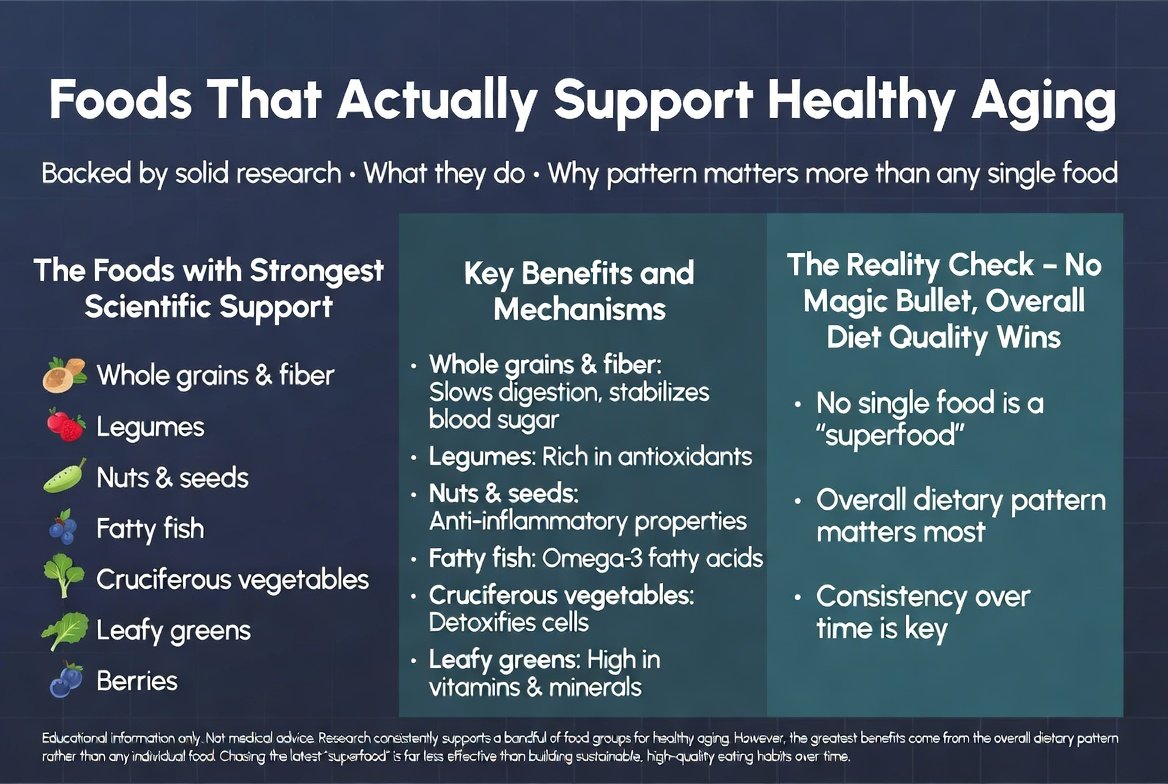
- Eat large amounts of dietary fiber. 30-40 grams per day from diverse sources: vegetables, fruits, legumes, whole grains, nuts. Fiber is the 'fuel' for butyrate-producing bacteria. This is the most powerful intervention for the microbiome, and it costs nothing.
- Add fermented foods. Sauerkraut, miso, kimchi, yogurt with live cultures, kefir. A Stanford study from 2021 (published in Cell) showed that eating 6 servings of fermented foods per day for 10 weeks increased microbial diversity and reduced inflammatory markers.
- Avoid unnecessary antibiotics. Each dose of broad-spectrum antibiotics wipes out parts of the microbiome that take months to recover. Use only when necessary.
- Intermittent fasting. Several studies suggest that intermittent fasting may increase Akkermansia levels, although the extent of the effect varies between studies.
- Let the world in. Children who grow up exposed to microbial diversity (animals, soil, home-cooked food) develop a richer microbiome. For adults: gardening, spending time with animals, and less excessive sanitization.
- Consider a specific Akkermansia supplement only if you have a diagnosed metabolic syndrome, and in consultation with a doctor.
The Broader Perspective
The microbiome story is a clear example of the gap between hype and reality in the anti-aging world. High-quality scientific research, yes. A paradigm shift in understanding the connection between the gut and health, undoubtedly. But a direct leap to a bacteria-based 'longevity pill', absolutely not.
The evidence points to a much more modest and more empowering conclusion: the best thing you can do for your microbiome is not to buy a supplement, but to eat differently, move more, and live in a diverse environment. Your gut reflects your lifestyle, not your supplements. And that is actually good news: the most powerful intervention is also the cheapest.
Until we have large randomized trials showing a significant effect of microbiome supplements on human lifespan, the sensible approach is: a diet rich in diverse fibers, fermented foods, and less antibiotics is the real probiotic. Everything else is marketing.
References:
SciTechDaily, Scientists Think the Real Fountain of Youth May Be Hiding in Your Gut, May 2026

💬 Comments (0)
Be the first to comment on the article.