If we ask a hundred 50-year-olds what they worry about most regarding their future health, most answers would be: cancer, Alzheimer's, heart attack. Almost no one will mention "muscle loss". And that's a strategic mistake. Sarcopenia is one of the world's leading causes of loss of independence in old age, and the chain of events that begins with it - falls, fractures, and hospitalizations - exacts a huge functional and economic toll.
What is Sarcopenia?
Sarcopenia (from Greek: "lack of flesh") is the gradual decline of muscle mass and function with age. The process starts earlier than you think: Starting at age 30, we lose about 3-5% of muscle mass every decade (about 0.3-0.5% per year). That's not much in any single year, so most people don't feel it, and the rate accelerates after age 60. But the cumulative math is harsh:
- Age 30: 100% mass (starting point).
- Age 50: About 90-93%.
- Age 65: About 80-85% (and from here the rate accelerates without active effort).
- Age 80: About 50-70%, meaning a cumulative loss that can reach 30% and even up to 50% of the original mass.
When muscle mass drops below a critical threshold, serious functional problems begin to emerge.
The Hidden Costs
Cost 1: Falls
Sarcopenia reduces balance, strength, and stability. Statistics: One in 4 people over age 65 falls at least once a year. For those with sarcopenia, the risk is even higher.
Cost 2: Fractures
A hip fracture in a 75-year-old is not just an accident - it's a turning point. The mortality rate within one year after a hip fracture is about 20-30%. And less than half of those affected return to their previous function: only about 40-60% manage to regain the mobility level they had before the fracture.
Cost 3: Loss of Independence
Weak muscles mean an inability to climb stairs, get up from a chair, or carry groceries. People who have lost 50% of their muscle mass need daily assistance. Cost of nursing care: 8,000-15,000 NIS per month.
Cost 4: Decreased Metabolism
Muscle does burn calories at rest, but less than commonly thought: each kg of muscle burns about 13 calories per day at rest, so losing 5 kg of muscle lowers the metabolic rate by only about 60-70 calories per day. The more important effect is not direct calorie burning but that muscle is the main consumer of sugar from the blood: less active muscle impairs insulin sensitivity and increases the risk of diabetes and overweight over time.
Cost 5: Weakened Immune System
Muscles produce myokines - proteins that affect the immune system. Weak muscle = weak immunity = more infections, more hospitalizations.
Cost 6: Shortened Lifespan
Grip strength (a reliable marker of overall muscle strength) is one of the strongest predictors of mortality: People with low grip strength have a significantly higher mortality risk than those with high grip strength, even after accounting for age and other variables.
Why Most People Don't Know They Have Sarcopenia
Sarcopenia is a silent disease. The signs are gradual, so we adapt without noticing. We take the elevator instead of the stairs. We ask for help carrying a suitcase. We replace sports with walking. Each of these changes is an adaptation, but together they are a fast track to losing ability.
Signs to Check:
- Poor grip strength - if it's hard to open jars you used to open easily.
- Inability to get up from a chair without using your hands.
- Slower walking speed - less than 0.8 meters/second.
- Unintentional weight loss even when eating normally.
- Increased fatigue in activities you once did without a problem.
4 Steps to Regain Muscle - Science-Based
1. Protein: 1.6 grams per kg of body weight per day
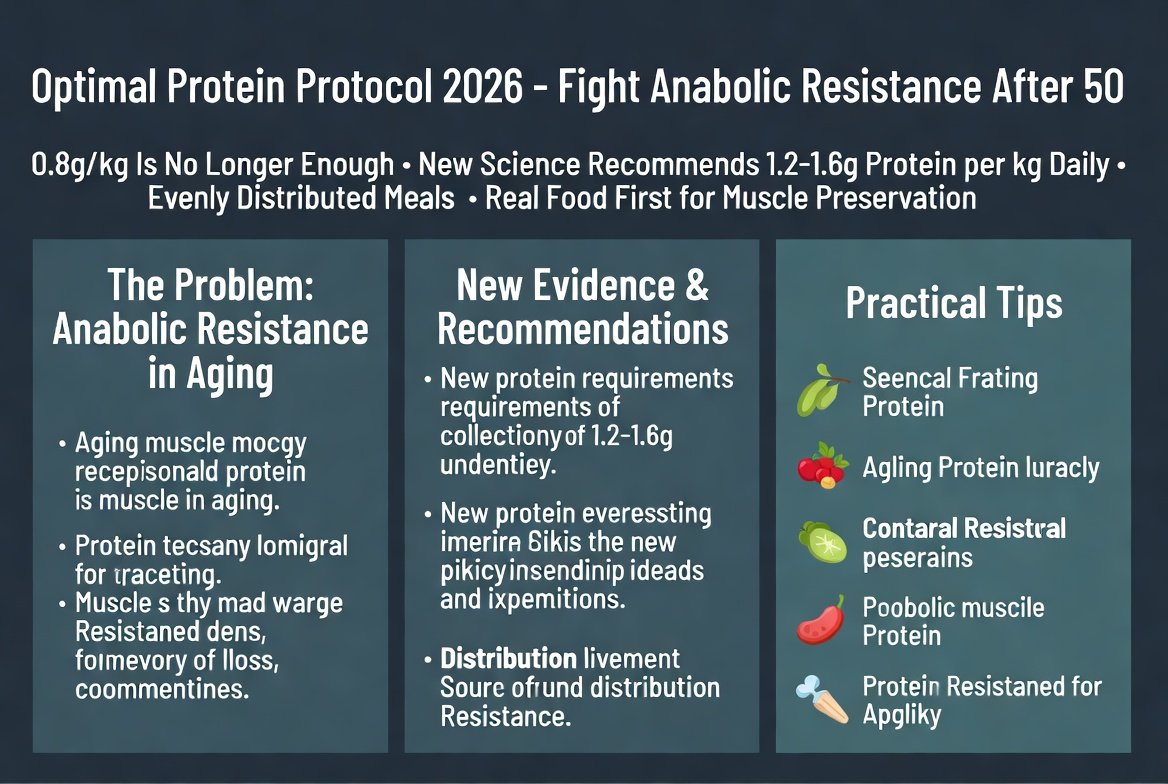
The standard recommendation of 0.8 g/kg is suitable for healthy young people, not for older adults. Studies show that people over 50 need 1.2-1.6 g/kg to maintain muscle. A 65-year-old woman weighing 65 kg needs 78-104 grams of protein per day.
Excellent sources: eggs (6 g), cottage cheese (12 g per 100 g), chicken (25 g per 100 g), lentils (9 g per 100 g). Spread intake over 3-4 meals a day - muscle protein synthesis is optimal with 25-35 g per meal.
2. Resistance Training 2-3 Times a Week
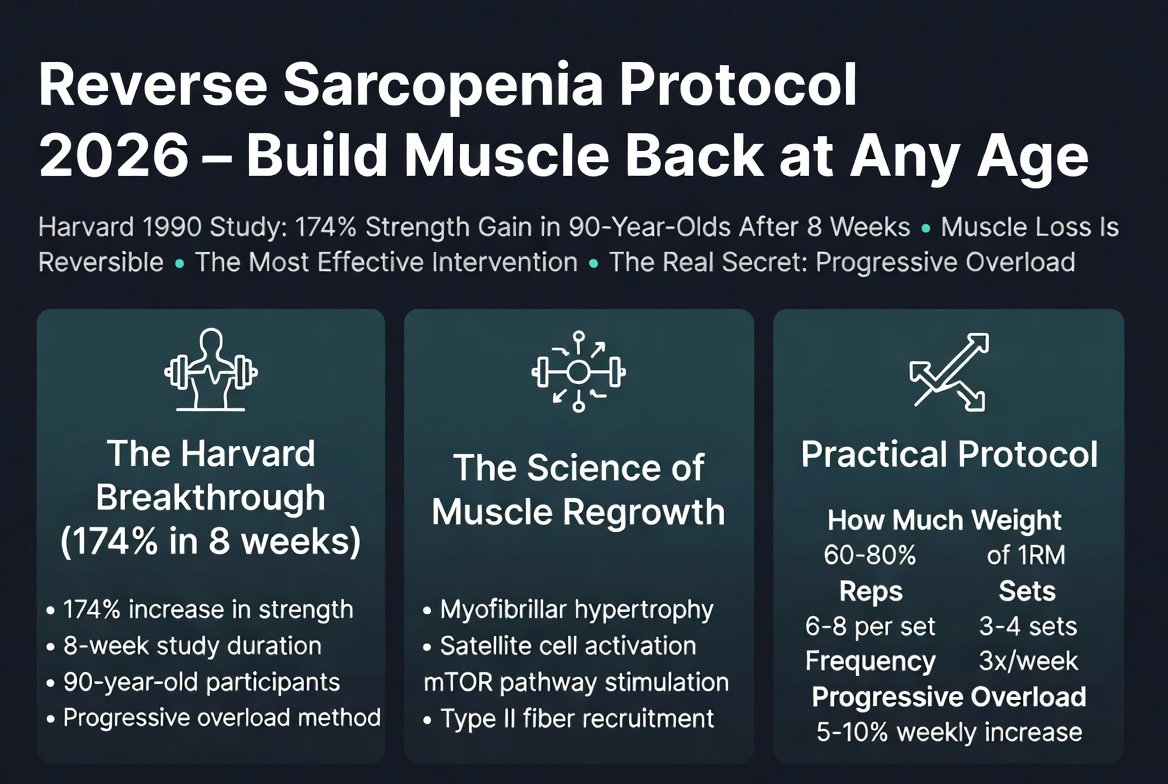
This is the only intervention that truly builds muscle back. Walking alone won't be enough. You need load:
- Compound exercises: Squat, deadlift, bench press, pull-ups.
- Progressive overload: Increase weight every two weeks if possible.
- 3 sets of 8-12 reps.
- Half an hour per session - no more needed.
If you've never been to a gym: start with bodyweight only. Push-ups, planks, bodyweight squats. Within 6 weeks, you'll feel a difference.
3. Vitamin D: 2000 IU per day
Despite the sun in Israel, vitamin D deficiency is common in older adults. Vitamin D is essential for muscle function, calcium absorption, and bone health. Without it, even protein and training are less effective. 2000 IU per day is cheap, safe, and beneficial.
4. Sleep: 7-9 Quality Hours
During deep sleep, the body secretes growth hormone - the main tool for muscle repair and building. Poor sleep = less growth hormone = less benefit from training and nutrition.
- Consistent bedtime and wake-up time.
- Dark room at 18-20 degrees Celsius.
- No screens an hour before bed.
- Treat sleep apnea if present (especially if you snore).
Supplements That Help
- Creatine: 3-5 grams per day. Proven to build muscle even in older adults. Safe, cheap, effective.
- HMB (Beta-Hydroxy Beta-Methylbutyrate): Protects against muscle breakdown. Especially recommended for older adults who can't do full resistance training.
- Whey Protein: When it's hard to reach protein amounts from food alone. 25-30 grams in a shake after training.
When Should You Start?
The best time was 20 years ago. The second best time is today. Even 70-year-olds who start resistance training show significant improvement in muscle mass within 12-16 weeks. The body hasn't lost the ability to build muscle - it just hasn't received the stimulus. Give it, and it will respond.
Sarcopenia is not a decree of fate. It's a choice - once you are aware of it.
References:
BusinessMirror - Sarcopenia Article


💬 Comments (0)
Be the first to comment on the article.