Whenever a discussion arises about cold sores, those painful blisters that appear on the lip before an important event or when the body is exhausted, one name keeps coming up in health groups and on supplement shelves: L-lysine. For some people, it's almost a magic word, the supplement that soothes recurrent outbreaks. For others, it's just another promise that doesn't quite hold up. Who is right?
The truth, as usual, is more complex and interesting than either extreme. L-lysine is a genuine essential amino acid, a necessary component for building proteins in the body, and it has a logical biological mechanism explaining why it might help against herpes. But the clinical evidence is mixed: some trials found fewer outbreaks and milder severity, while others found no significant advantage over placebo. It is precisely this gap, between a convincing mechanism and inconclusive research, that led us to rate L-lysine yellow. In this article, we'll explain what L-lysine does in the body, what is actually known about herpes and collagen, and who it might be suitable for.
What is L-Lysine?
L-Lysine is an amino acid, one of the building blocks of proteins in the body. The most important point to understand about it is that it is an essential amino acid, and this has practical implications:
- The body cannot produce it on its own. Unlike other amino acids, we must obtain L-lysine from food. It is one of the nine essential amino acids that are entirely dependent on diet.
- It is mainly found in protein-rich foods. Meat, fish, eggs, dairy products, and legumes are rich sources of L-lysine. Certain grains are relatively low in it, so vegetarians and vegans who rely mainly on grains need to pay attention to proper protein combinations.
- It is used for building proteins and vital processes. L-lysine is necessary for producing body proteins, absorbing calcium, and the proper functioning of various systems. True deficiency is rare in developed countries but possible in a very low-protein diet.
- It stands out in one special role: collagen cross-linking. L-lysine is a key raw material for creating the bonds that strengthen collagen fibers, the protein that provides structure to skin, tendons, bones, and blood vessels.
But all this nutritional importance is not why people buy L-lysine as a supplement. The vast majority of buyers seek it for one specific reason: cold sores. And this brings us to the truly interesting mechanism.
The Connection to Herpes: Competition with Arginine
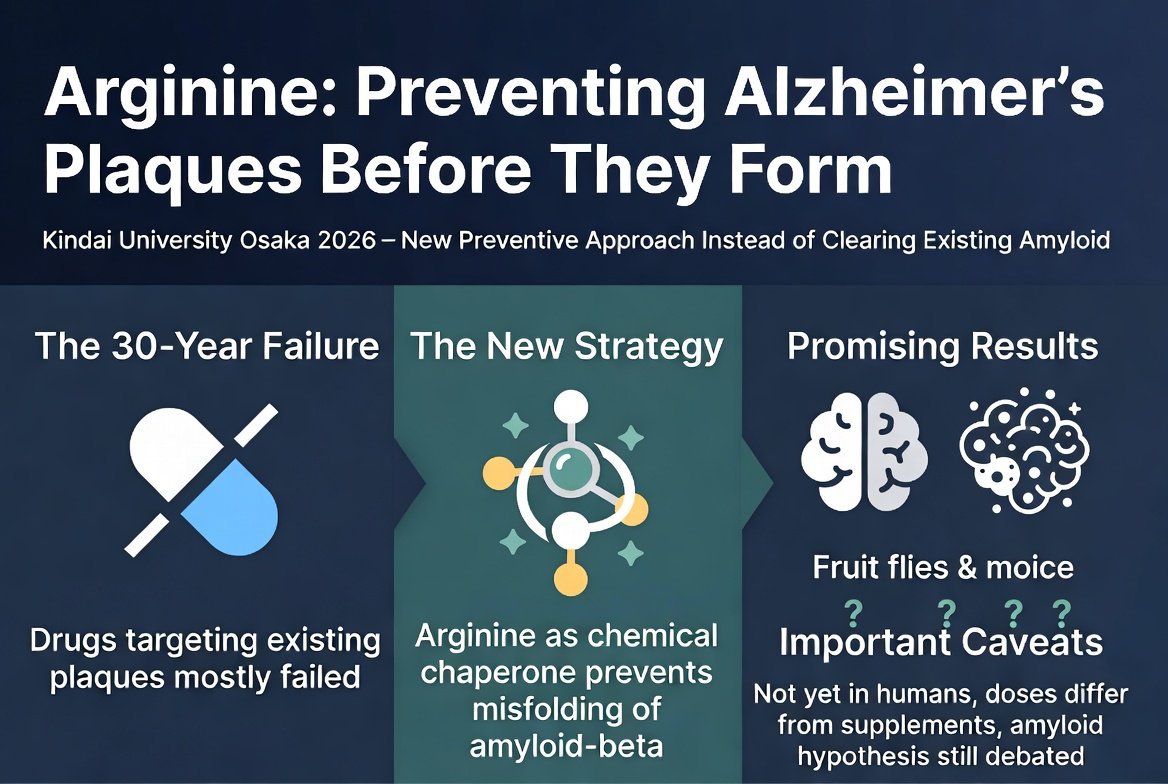
To understand why L-lysine is linked to herpes, we need to know another amino acid: arginine. The herpes simplex virus (HSV), which causes cold sores, needs arginine to replicate. Arginine is a raw material the virus uses to build new copies of itself and spread. Without enough arginine, its replication is impaired.
And here L-lysine enters the picture. L-lysine and arginine are similar in structure, and they compete with each other for the same absorption and transport pathways in the body. The theoretical idea is simple and elegant: by increasing L-lysine levels and decreasing available arginine, you make it harder for the virus to build what it needs. In the lab, on cell cultures, this effect has indeed been demonstrated: a high ratio of lysine to arginine inhibited herpes virus replication.
From this came the common practical recommendation, which is essentially a combination of two steps: increase L-lysine (from food or supplements) and simultaneously reduce arginine-rich foods during sensitive periods, such as nuts, chocolate, and seeds. It's important to emphasize that this is a convincing mechanism on paper and in the lab, but the transition from cell culture to a whole body is not automatic. This is precisely why the clinical evidence is the real story.
Current Evidence
Study 1: Griffith et al., Dermatologica 1987
This is one of the most cited trials in favor of L-lysine, and it also established its reputation. In 1987, Richard Griffith and his colleagues published a double-blind, placebo-controlled trial in Dermatologica, examining L-lysine for the prevention and treatment of recurrent herpes simplex. Participants in the treatment group received 1000 mg of L-lysine three times a day, i.e., about 3 grams per day, for six months.
The results were positive: The L-lysine group experienced an average of 2.4 fewer herpes outbreaks than the placebo group, symptom severity decreased significantly, and recovery time was shortened (all differences statistically significant). The researchers concluded that L-lysine appears to be an effective agent for reducing the frequency, severity, and healing time of recurrent herpes. This is an encouraging result, but as we will see shortly, it is not the whole story.
Study 2: DiGiovanna and Blank, a study that found no benefit
This is the part that explains why we are cautious. Not all trials showed a positive result like Griffith's. In another randomized, placebo-controlled study by DiGiovanna and Blank, participants suffering from frequent recurrent herpes simplex were divided to receive L-lysine or an identical-looking placebo. Participants took L-lysine 400 mg three times a day regularly, both as prevention and for treating active outbreaks, and documented the number, severity, and duration of outbreaks.
The result: The study failed to identify any real or perceived benefit of L-lysine treatment over placebo. A major difference is immediately apparent: the dosage here (about 1.2 grams per day) was significantly lower than in Griffith's study (3 grams per day). One common hypothesis is that dosage is what matters, and that too low a dosage simply doesn't change the lysine-arginine ratio enough to have an effect. In any case, this result reminds us that the evidence is not one-sided.
Study 3: The overall picture from reviews
When looking at the entire body of research together, a mixed but not worthless picture emerges. Some trials, especially those with a higher daily dosage (1-3 grams), found a decrease in outbreak frequency or severity, while others, usually at a lower dosage, found no significant effect. Reviews of the literature generally conclude that the evidence supports some preference for L-lysine in preventing recurrent outbreaks, but note that the studies are relatively small, methodologically inconsistent, and of moderate quality.
The fair conclusion: L-lysine is not a proven antiviral drug, and it is certainly not a substitute for prescription medications like acyclovir or valacyclovir for those who suffer from frequent or severe outbreaks. But for some people with mild, seasonal herpes, it may provide moderate benefit at a low cost and low risk. This is precisely the profile of a yellow supplement.
What About Collagen and Skin Health?
Beyond herpes, L-lysine plays another important biological role worth knowing: it is a necessary component for creating stable collagen. Collagen is the main structural protein in the body, the one that holds together skin, tendons, bones, and blood vessels. For collagen fibers to be strong, cross-links need to be built between them, and a central step in this process depends on L-lysine (along with vitamin C, which acts as a cofactor for the enzymes involved).
The theoretical implication: Adequate supply of L-lysine is important for wound healing, tissue strength, and skin maintenance. However, caution is needed here: the fact that L-lysine is necessary for collagen does not mean that an L-lysine supplement will improve skin or strengthen bones in a healthy person who already consumes enough protein. An essential role in tissue is not the same as a benefit from a supplement. Most people who eat a reasonable diet with protein get enough L-lysine for these needs, and the benefit of an additional supplement on top of an adequate diet is not well proven.
Should You Start Taking L-Lysine?
This is precisely why we rated L-lysine yellow, not green or red. It is not worthless, but it is also not a guaranteed miracle. Here's how to think about it in a balanced way:
- Who it might suit. A healthy person with occasional cold sores, looking for something cheap, available, and relatively safe to try. If it helps, great. If not, you haven't lost much.
- Who it is not suitable for as a solution. Those who suffer from frequent, severe, or complicated outbreaks, or herpes in sensitive areas, should see a doctor and get prescription antiviral treatment, not a supplement.
- Dosage matters. Positive trials typically used 1 to 3 grams per day. Too low a dosage is probably ineffective. It is best taken on an empty stomach for better absorption.
- Safety is generally good, but not perfect. L-lysine is considered relatively safe at common dosages, but high doses can cause gastrointestinal discomfort: abdominal pain, nausea, and diarrhea.
And here is a particularly important warning: People with kidney disease should consult a doctor before taking an L-lysine supplement. As with any protein or amino acid load, damaged kidneys may struggle to handle the dosage, so this is not a decision to make alone. Additionally, pregnant or breastfeeding women and anyone taking regular medications should consult a doctor or pharmacist before starting a supplement. Also remember that the strategy includes not only adding lysine but also reducing arginine during sensitive periods, and any major dietary change should be done mindfully.
What to Take Away from the Research?
- If you have recurrent, mild cold sores, L-lysine is a reasonable experiment. At a dosage of 1-3 grams per day, on an empty stomach. It is cheap, available, and relatively safe. It's worth giving it a chance and seeing if it helps you personally.
- Think about the lysine-arginine pair together. During sensitive periods, alongside the supplement, you can reduce arginine-rich foods like nuts and chocolate. This is the second part of the strategy, not just the pill.
- Don't expect magic, and don't give up on real treatment. L-lysine is not a proven antiviral. If outbreaks are frequent, severe, or spreading, see a doctor for a prescription medication, which is much more effective.
- For kidney disease, pregnancy, or regular medications, consult first. L-lysine is an amino acid load, and those with impaired kidneys or on medications need a doctor's approval before starting.
- For collagen and skin, focus on diet. A balanced diet with enough protein and vitamin C provides the body with the raw materials for collagen. There is no proof that a separate L-lysine supplement improves skin in a healthy, well-nourished person.
For those interested in trying, L-lysine supplements are available in various dosages and forms. But remember: this is a supplement with moderate and unguaranteed benefit, mainly suitable for mild cases. To check which supplements are truly suitable for your goals, including immune system support and skin health, according to your age and personal condition, you can use our supplement checker which rates each supplement based on the quality of evidence.
The Broader Perspective
L-lysine is an excellent example of what a good yellow supplement looks like: a logical biological mechanism, real but mixed evidence, reasonable safety, and a benefit that probably exists but is moderate and inconsistent between people. It is neither a miracle nor a scam, but exactly what it is: an essential nutrient with a specific use that works for some people and not others.
The broader lesson goes beyond herpes. Convincing biology in the lab does not guarantee a clinical result in a whole body, and a single positive study is not equivalent to certainty. The right way to read such a supplement is not in black and white but by looking at the entire body of evidence, the dosage, and personal suitability. For someone suffering from mild, recurrent cold sores, L-lysine is a reasonable and cheap experiment to try on themselves. For serious conditions, it will not replace real medicine. A good supplement starts with a realistic expectation: not what is promised about it, but what the research actually shows, and that is precisely the perspective we hold here.
References:
Griffith RS. et al., Success of L-lysine therapy in frequently recurrent herpes simplex infection. Treatment and prophylaxis, Dermatologica, 1987;175(4):183-90
DiGiovanna JJ, Blank H., Failure of lysine in frequently recurrent herpes simplex infection. Treatment and prophylaxis, Archives of Dermatology, 1984;120(1):48-51


💬 Comments (0)
Be the first to comment on the article.