For decades, olive oil has been considered primarily a heart-friendly oil. It is central to the Mediterranean diet, it lowers bad cholesterol, and it is full of monounsaturated fat. But in recent years, evidence has been accumulating that its effects extend far beyond the blood vessels, all the way to the brain itself. The question the researchers asked was not whether olive oil is good for the brain, but how exactly it gets there.
The new answer, published in January 2026 in the scientific journal Microbiome, is surprising: a significant part of olive oil's brain effect passes through an unexpected station, the trillions of bacteria living in the large intestine. The connection between olive oil and the microbiome turns out to be a central link in the chain leading to memory, language, and decision-making ability. And the difference between extra virgin olive oil and refined olive oil, which most of us barely notice on the shelf, turns out to be critical.
What is the Gut-Brain Axis?
The gut-brain axis is a bidirectional communication system between the gut and the brain. It is not a metaphor, but a real biological wiring that includes several parallel pathways:
- The vagus nerve, the largest nerve cable in the autonomic nervous system, directly connects the gut wall to the brainstem and transmits signals in both directions.
- Bacterial metabolites, molecules that bacteria produce from the food we eat, are absorbed into the bloodstream and reach the brain. The most important among them are short-chain fatty acids (SCFAs) like butyrate.
- The immune system, about 70% of which is located around the gut, translates the state of the microbiome into an inflammatory state that affects the entire body, including the brain.
- Neurotransmitters, a significant portion of the body's serotonin is produced in the gut, and bacteria influence its production.
When the microbiome is diverse and healthy, it produces anti-inflammatory metabolites and maintains the integrity of two critical barriers: the gut barrier (which prevents toxins from entering the blood) and the blood-brain barrier (which protects brain tissue). When the microbiome becomes depleted and changes with age, both barriers weaken, and a low-grade chronic inflammation called inflammaging develops, one of the main drivers of brain aging.
The Connection to Olive Oil: A Surprising Mechanism
Extra virgin olive oil is not just fat. It is a complex compound of hundreds of biologically active molecules, and here begins the big difference between the types of oil:
- Oleocanthal, a polyphenol responsible for the throat-burning sensation in fresh olive oil, acts as a natural anti-inflammatory through a mechanism similar to ibuprofen.
- Oleuropein and its hydrolysis product, hydroxytyrosol, are among the most powerful antioxidants known in nutrition. The European Food Safety Authority (EFSA) has officially recognized that 5 milligrams per day of hydroxytyrosol and its derivatives protect blood lipids from oxidation.
- Oleic acid, the main monounsaturated fat, constitutes about 70% of olive oil and supports the health of cell membranes.
The critical point: the polyphenols are exactly the part that refining removes. Refined olive oil (often marketed as regular 'olive oil' or 'light') undergoes purification with heat and chemicals, producing a stable, tasteless, and cheap oil, but also almost completely stripped of polyphenols. What remains is mostly the fat. In extra virgin olive oil, on the other hand, hundreds to thousands of milligrams of polyphenols per kilogram are preserved.
These polyphenols are hardly absorbed in the small intestine. Most of them reach the large intestine intact, where bacteria break them down and use them as food. The result is twofold: the polyphenols nourish and promote the growth of beneficial bacteria, and the bacteria in turn convert the polyphenols into bioavailable metabolites that affect the body and brain. Without the microbiome, a significant part of the benefit of polyphenols would not be realized at all.
Current Evidence
Study 1: Olive Oil, Microbiome, and Cognition, Spain 2026
This is the study that sparked the whole story, led by Jiaqi Ni from the University of Rovira i Virgili in Spain, as part of the PREDIMED-Plus project. The researchers followed 656 adults aged 55-75 with overweight and metabolic syndrome for two years. They documented the type of olive oil each person consumed (extra virgin vs. refined), analyzed stool samples to map the microbiome, and measured cognitive performance in standard tests of memory, language, and problem-solving.
The results were unequivocal: High consumption of extra virgin olive oil was associated with preservation or improvement in general cognition, executive functions, and language ability, and with higher gut bacterial diversity. In contrast, high consumption of refined olive oil was associated with a decrease in microbiome diversity and faster cognitive decline. This is the first prospective study in humans to link the type of olive oil, microbiome composition, and cognitive function in the same population.
Study 2: Identification of the Bacterium Adlercreutzia
The most interesting finding was the identification of a specific bacterial genus named Adlercreutzia as a key mediator of the connection. In the statistical analysis, this bacterium explained about half of the protective effect of extra virgin olive oil on cognition. Adlercreutzia is known for its ability to break down polyphenols and produce active compounds from them. In other words, the oil did not 'speak' directly to the brain, but spoke to a bacterium, and the bacterium passed the message on. This is a rare proof of concept that food affects the brain through microbial mediation.
Study 3: The Original PREDIMED, Spain
The foundation for all this was laid in the large PREDIMED study, where hundreds of participants at high cardiovascular risk were assigned to a Mediterranean diet enriched with extra virgin olive oil (about 50 grams per day, four tablespoons), a Mediterranean diet enriched with nuts, or a low-fat control diet. After about 6.5 years, the olive oil group showed better cognitive performance on MMSE tests and the clock drawing test compared to the control group. This laid the groundwork: extra virgin olive oil protects the brain over years.
Study 4: Systematic Reviews on Olive Oil and Cognition
A systematic review published in 2023 in the journal Frontiers in Nutrition gathered various studies and pointed to a consistent trend of cognitive improvement or preservation among consumers of extra virgin olive oil, especially when integrated into a Mediterranean diet. The reviews emphasize that polyphenols, not just the fat, are likely the active agent. A separate study tracking dementia-related mortality found that consumption of more than 7 grams of olive oil per day was associated with a lower risk of death from dementia-related causes.
What About Alzheimer's and Other Brain Diseases?
The connection between the gut, inflammation, and the brain is relevant far beyond 'normal cognitive decline'. In neurodegenerative diseases like Alzheimer's and Parkinson's, evidence is accumulating that dysbiosis (microbiome imbalance) and systemic inflammation are part of the pathological process. Oleocanthal, for example, is being studied in the lab for its ability to help clear beta-amyloid plaques, the protein that accumulates in the Alzheimer's brain.
There is even a clinical trial examining the combination of a Mediterranean diet with oleocanthal in patients with mild cognitive impairment (MCI), the stage before dementia. However, it is important to qualify: most of the evidence regarding specific brain mechanisms still comes from lab and animal studies, and it is not yet possible to claim that olive oil 'prevents Alzheimer's'. What is clear is that it is part of a dietary pattern repeatedly linked to better brain health.
Does This Mean Olive Oil is a Miracle Cure?
Here caution is required, and this is the point that separates science from sales. Several important caveats:
- A large part of the evidence is observational or mechanistic. Ni's study is prospective and high-quality, but it examines a correlation, not definitive proof of causation. People who consume extra virgin olive oil also tend to eat healthier overall, move more, and smoke less.
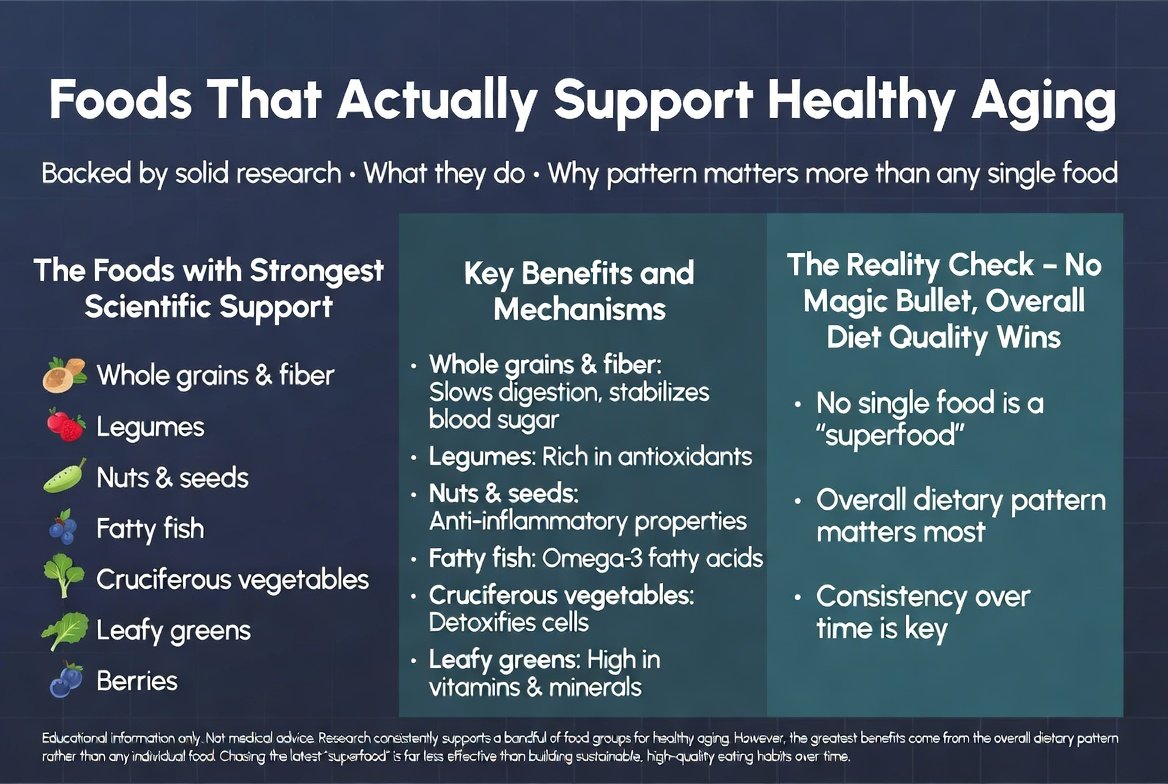
- Olive oil is part of a diet, not a lone hero. All the major studies examined it within the Mediterranean pattern, alongside vegetables, legumes, fish, and nuts. There is no evidence that pouring olive oil over a Western diet high in processed foods would produce the same benefit.
- It is fat, with 120 calories per tablespoon. Four tablespoons a day are about 480 calories. For those watching their weight, it needs to be integrated into the overall balance, not added on top of everything.
- Oil quality varies greatly. 'Olive oil' on the shelf can be almost completely refined, or even adulterated and diluted. The polyphenol content, which is the heart of the story, is usually not labeled on the bottle.
- Polyphenols degrade over time and with heat. Old oil, stored in light or heat, or used for repeated frying, loses a significant portion of its active compounds.
What Can We Take from the Study?
- Buy extra virgin olive oil, not regular or 'light' olive oil. This is the most important practical distinction from the study. Only extra virgin preserves the polyphenols that nourish the microbiome. Look for 'extra virgin' on the label.
- Store the oil properly. In a dark bottle, sealed, away from the oven and direct light. This preserves the delicate polyphenols over time.
- Use a realistic amount. About 2-4 tablespoons per day (30-50 grams) is the range studied. There is no need or evidence for more than that.
- Nourish the bacteria in other ways too. Polyphenols work in synergy with dietary fiber. Olive oil on a plate full of vegetables, legumes, and whole grains is the real combination, not oil on white bread.
- Think about the pattern, not a single ingredient. Olive oil is one brick in the Mediterranean wall. Without the vegetables, fish, and physical activity, a single brick won't hold the wall.
The Broader Perspective
The story of olive oil and the brain is a beautiful example of a principle that recurs again and again in aging science: the body is a network, not a collection of separate parts. What you eat affects who lives in your gut, who lives in your gut affects inflammation, and inflammation affects the brain. The old division between 'food for the stomach' and 'food for the brain' simply collapses.
The empowering lesson is that the most powerful intervention is not an expensive supplement or futuristic technology, but a simple choice sitting on the supermarket shelf: extra virgin instead of refined. But the sobering lesson is equally that no single ingredient, even the best, can beat a lifestyle. Extra virgin olive oil is wonderful precisely because it fits into something larger than itself, not because it replaces it.
If there is one sentence to remember: The healthy gut is the bridge through which your food reaches your brain, and extra virgin olive oil is one of the best fuels you can give that bridge.
References:
Ni J. et al., Total and different types of olive oil consumption, gut microbiota, and cognitive function changes in older adults, Microbiome, 2026
PubMed: PREDIMED-Plus olive oil and gut microbiota study (PMID 41578342)
The effects of olive oil consumption on cognitive performance: a systematic review, Frontiers in Nutrition, 2023


💬 Comments (0)
Be the first to comment on the article.