The medical world is on the verge of a significant revolution in the fight against cancer:
Scientists at Johns Hopkins University have developed an artificial lymph node with immense potential to save lives.
What is the artificial lymph node and how does it work?
Lymph nodes are a vital part of the immune system, responsible for filtering and eliminating bacteria, viruses, and cancer cells.
The artificial lymph node developed by the Johns Hopkins team is a tiny implant placed under the skin, about 150 microns in size – twice the width of a human hair. It is made of hyaluronic acid, a natural substance found in the body, and contains immune system components, including MHC/HLA molecules that stimulate T cells, and antigens characteristic of cancer cells. The T cells themselves are injected separately alongside the implant, and they undergo "education" and activation by the artificial node within the body. Various antibodies can also be added to direct the T cells to the desired target.
The node works on several levels:
- It "teaches" T cells to recognize and attack cancer cells: By adding molecules and antigens specific to different cancer types, the node causes T cells to respond against these cells.
- It recruits additional immune cells: The node serves as an "immunological activity center," attracting a stream of additional immune cells and encouraging them into action.
- It stimulates the immune system: The node causes the secretion of cytokines, substances that stimulate the activity of the entire immune system.
What are the advantages of the artificial lymph node?
The artificial lymph node approach has several significant advantages over existing cancer treatments:
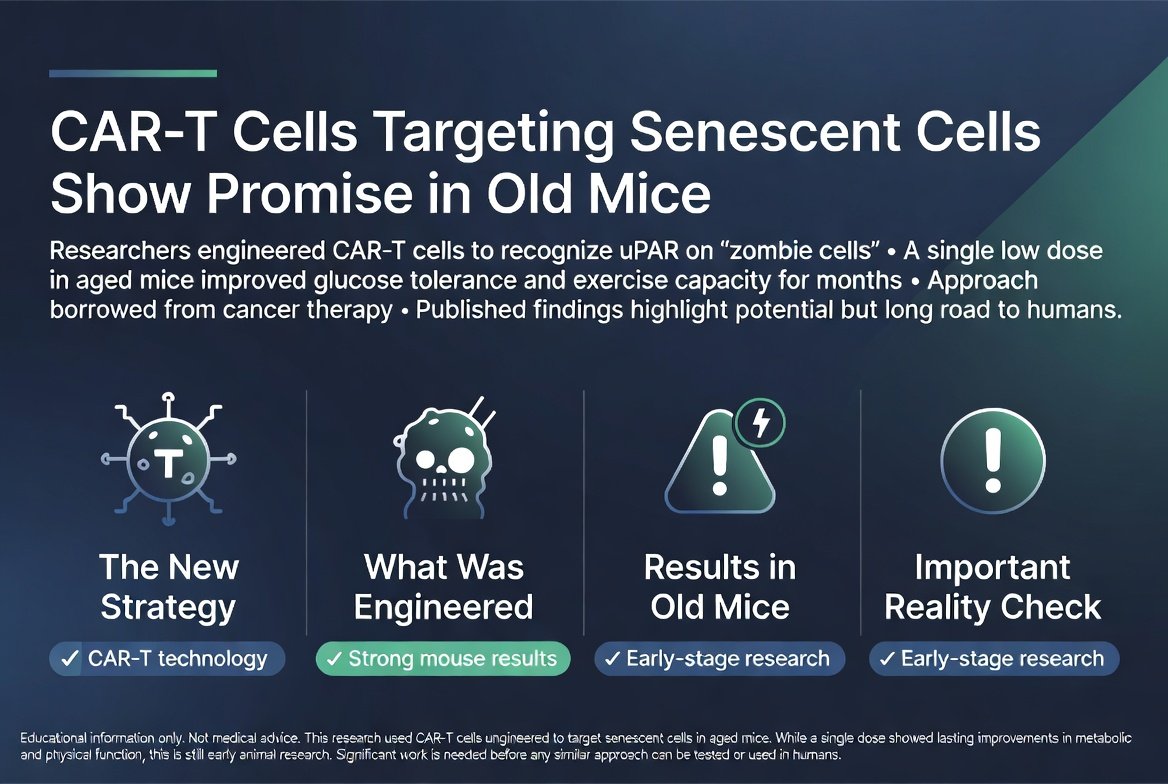
- Ease of use: Unlike other cell-based treatments, such as CAR-T, which require complex manipulation of the patient's cells outside the body, the artificial lymph node is simply implanted under the skin.
- Effectiveness: In studies conducted in mice, the artificial lymph node demonstrated high effectiveness in reducing cancerous tumors and extending lifespan.
- Versatility: The node can be adapted to treat different types of cancer by adding molecules and antigens specific to each type.
- Fewer production steps: Compared to CAR-T treatments, preparing the artificial lymph node involves fewer production steps. Researchers hope this approach will also be safer with fewer side effects, but this advantage has not yet been proven and further studies will be needed to examine it.
Preclinical research (in mice):
The Johns Hopkins research team conducted preclinical experiments in mice and human cells to test the effectiveness and safety of the artificial lymph node.
In these experiments, the node was implanted in mice with melanoma or colorectal cancer. Subsequently, T cells were injected into the mice.
Research results:
The research results were very encouraging:
- Survival: Mice with melanoma and colorectal cancer that received a combination of the artificial lymph node, T cells, and the anti-PD-1 drug had the best survival rates.
- Tumor growth: The rate of tumor growth in mice that received the artificial lymph node was significantly slower compared to other groups.
- Immune system activity: The node caused a significant increase in the number of T cells in the mice.
The next step:
The Johns Hopkins research team plans to continue with further studies to test the safety and effectiveness of the artificial lymph node in humans.
If the trials are successful, we may soon see this innovative and effective treatment available to cancer patients worldwide.
The implications of this breakthrough are immense:
- It offers new hope to many cancer patients: The development of the artificial lymph node may lead to a significant breakthrough in treating various types of cancer and save the lives of millions of people worldwide.
- It brings us a significant step forward in the fight against this deadly disease: This breakthrough greatly contributes to understanding the immune system and developing other innovative cancer treatments.
Future treatment possibilities:
In addition to treating existing types of cancer, the development of the artificial lymph node opens up many future treatment possibilities:
- Cancer prevention: It may be possible to use the artificial lymph node to vaccinate people against certain types of cancer by "training" the immune system to recognize and attack cancer cells before they develop.
- Treatment of other diseases: It may be possible to use a similar approach to treat other diseases related to the immune system, such as autoimmune diseases or severe infections.
The development of the artificial lymph node is a significant breakthrough in the fight against cancer.
This technology offers new hope to many cancer patients and may lead to the development of additional innovative treatments in the future.
However, it is important to continue comprehensive scientific research to test the safety and effectiveness of the artificial lymph node, as well as to address the ethical challenges associated with its development and use.





💬 Comments (0)
Be the first to comment on the article.