In 1961, Yuri Gagarin became the first human to fly into space. He returned after just 108 minutes and survived. But when longer flights began, researchers discovered something troubling: the human body was not built for life without gravity. After a few months in space, astronauts return with atrophied muscles, bones that have lost 1-1.5% of their density per month, impaired vision, and blood full of inflammatory markers. In some ways, they bear signs of wear and tear that resemble a body much older than their chronological age.
This paradox has turned space into one of the most interesting laboratories in the world for studying aging. If processes that take years on Earth happen in space within days and weeks, they can be observed in real time. Cedars-Sinai researchers launched organ chips and tiny organoids with living human cells to the International Space Station, specifically to study the process known as inflammaging.
Aging in space is not just an academic question. NASA is planning longer missions to Mars, which involve prolonged stays in weightlessness. If we do not understand how to halt this accelerated aging, astronauts will not return in reasonable condition. But much more importantly: the same mechanisms operate in us, only slower. Space illuminates them.
What Are Organ Chips and Why Are They Groundbreaking?
An organ-on-a-chip is a tiny device that simulates the function of a human organ on a chip roughly the size of a credit card. The device contains:
- Living human cells: Typically epithelial, endothelial, and organ-specific cells, arranged in a three-dimensional structure.
- Microfluidic channels: Tubes tens of microns wide, through which cell culture fluids, nutrients, and drugs flow.
- Sensors: Measure pH, oxygen, gene expression, and inflammatory markers in real time.
- Pressure and movement system: Simulates blood flow, breathing, heartbeats, or other physiological activity.
- Connection between chips: Several chips can be connected together for a more complex model.
The technology began in 2010 at Harvard's Wyss Institute: Dan Huh and Donald Ingber published in Science the first lung-on-a-chip, demonstrating lung physiology and an inflammatory response on a chip. Since then, the technology has matured, and chips can mimic the heart, lungs, liver, kidneys, intestine, and even immune system tissues. In addition to chips, researchers also grow organoids: three-dimensional clusters of cells that organize like miniature tissue.
The critical advantage: it is possible to study human aging processes without testing on humans, and without the limitations of animal models that do not always resemble humans.
What Is Inflammaging and Why Does Space Amplify It?
Inflammaging is a term coined by researcher Claudio Franceschi and his team around the year 2000. It describes a phenomenon that appears in almost every elderly person: chronic low-grade inflammation, not caused by infection or trauma. Levels of inflammatory cytokines (IL-6, TNF-α, CRP) rise slowly but steadily with age. This inflammation is linked to a significant portion of age-related diseases: Alzheimer's, type 2 diabetes, heart disease, cancer, and immune decline.
In space, these inflammatory processes appear accelerated. According to Cedars-Sinai researchers, changes that take years on Earth may appear in space within days and weeks. Here are some of the proposed mechanisms:
1. Changes in the Cytoskeleton
Cells on Earth are constantly in a struggle with gravity. The cytoskeleton, a network of proteins like actin and tubulin, is constantly stretched against the force. In microgravity, the tension disappears, and cells lose some of their normal three-dimensional shape. Researchers suggest that this physical structural change affects intracellular signaling pathways, including the NF-kB pathway, a central regulator of inflammation in the body.
2. Disruption of Immune Signaling
Immune cells, especially T cells and macrophages, are particularly sensitive to microgravity. Studies on astronauts indicate changes in immune cell function and an increase in the expression of inflammatory genes during and shortly after flight. Some of these changes resemble the pattern seen in immune aging, even in relatively young individuals. This is one reason space serves as a rapid model for studying immune system aging.
3. Increased Oxidative Stress
Space is full of cosmic radiation: high-energy particles from the sun and other galaxies. Outside Earth's magnetic shield, radiation exposure can be significantly higher than on the ground, depending on the orbit and duration of stay. This radiation generates free radicals that damage DNA, lipids, and mitochondria. Chronic oxidative stress is one of the known factors contributing to inflammaging.
4. Impaired Mitochondrial Function
Studies on cells in space indicate impaired mitochondrial function, including reduced energy production efficiency and increased electron leakage that generates more free radicals. Dysfunctional mitochondria send distress signals that activate the innate immune system, even without a real pathogen. This is "sterile" inflammation, a known mechanism in aging on Earth as well.
5. Accumulation of Zombie Cells
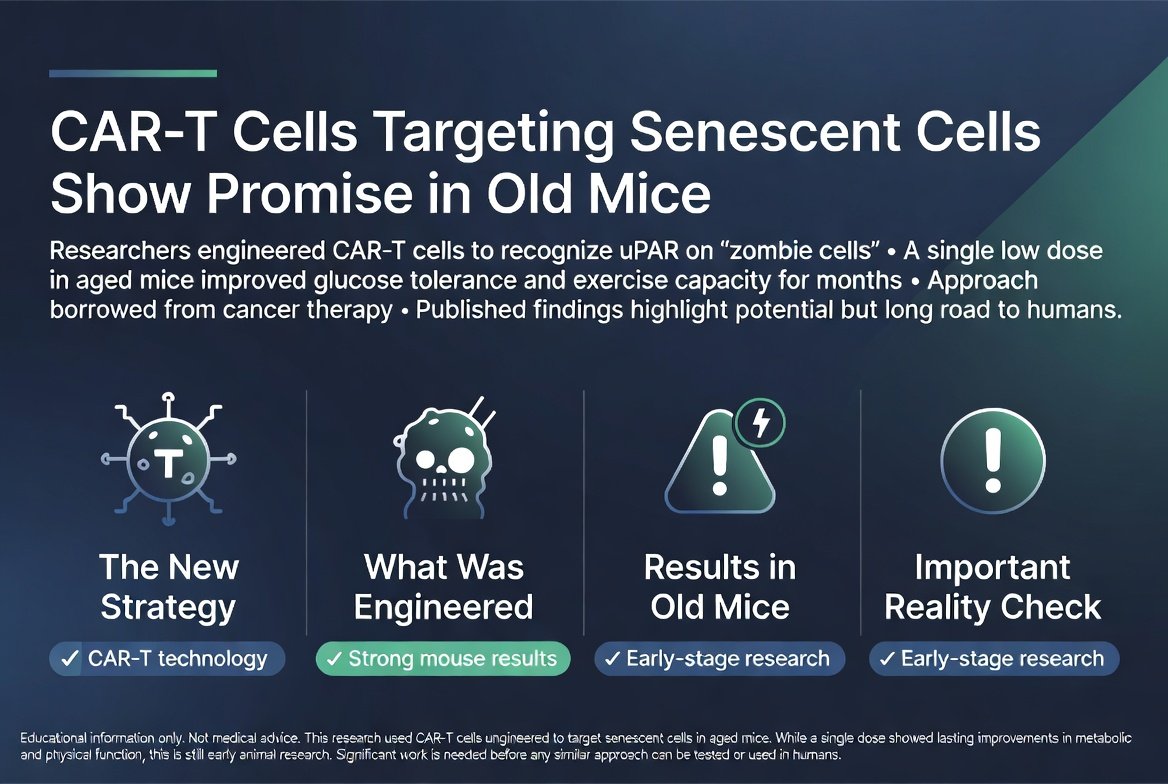
Cells under stress often do not die or regenerate; they become zombie (senescent) cells. These cells secrete the SASP, a mixture of cytokines and inflammatory factors that put neighboring cells into an inflammatory state. The space environment may accelerate the accumulation of zombie cells, creating a feedback loop of aging. This is precisely where senolytic drugs come in, aiming to eliminate senescent cells.
The Evidence and Plan of Cedars-Sinai
The Organoid and Organ Chip Program in Space
On August 24, 2025, Cedars-Sinai researchers, as part of the institution's Regenerative Medicine Institute, launched stem cells and organ chips to the International Space Station. The goal: to create for the first time heart and brain organoids in space, and to operate organ chips of the heart, brain, and intestine to study inflammaging and senescent cells. The experiment was supported by NASA and the NIH.
The researchers used cell lines from the Allen Institute, engineered to carry fluorescent markers that signal when cells become heart or brain cells. The rationale: in microgravity, cells float and naturally organize into a three-dimensional structure, which is difficult to replicate on Earth where cells tend to flatten into a two-dimensional layer. Dr. Clive Svendsen, the senior director of the institute, leads the work on brain organoids, and his lab focuses on neurodegenerative diseases like ALS, Huntington's, and Parkinson's.
Testing Senolytic Drugs Against Inflammaging
A central part of the program is testing senolytic drugs, which eliminate senescent cells, against inflammaging in the space models. The team works with Dr. James Kirkland, director of the Center for Advanced Gerotherapeutics at Cedars-Sinai, a pioneer in the field of senolytics. The idea: if aging processes are accelerated in space, it is possible to quickly test whether an intervention can halt or reverse them.
NASA Twins Study: What Was Actually Found
In NASA's classic twin study, astronaut Scott Kelly spent about a year in space while his twin brother Mark remained on Earth. The findings were published in Science in 2019. Contrary to what one might think, Scott's telomeres actually lengthened during his stay in space, not shortened. Upon returning to Earth, they shortened rapidly and returned roughly to baseline within about six months.
The researchers also found changes in gene expression and epigenetic markers, but most changes, though not all, returned to normal after return. About 50 out of 62 measured cytokines changed in some way related to the flight, about half of them increased. The balanced conclusion: prolonged stay in space is accompanied by oxidative stress, increased inflammation, and metabolic changes, but the body shows remarkable flexibility and many of the changes are reversible. The study did not show "7 years of epigenetic aging" nor were cytokines measured at 2.5 times those of the brother.
What About Other Models of Accelerated Aging?
Space is not the only model for accelerated aging. Researchers compare it to several other models:
- Progeria: A rare genetic disease where children show signs of accelerated aging. A rare model but does not allow extensive experiments.
- Radiation: Cancer patients who have undergone radiation may show signs of accelerated aging processes. Similar to space, but without the microgravity component.
- Chronic disease: HIV, diabetes, autoimmune diseases. All are associated with accelerated inflammaging.
- Simulated microgravity on Earth: Continuous bed rest or parabolic flight. Similar but not identical to real space.
- Organ chips and organoids in space: A rare combination of high control, human relevance, and accelerated processes. This is the most interesting pairing.
The advantage of the new model: it is possible to test interventions in human models under controlled conditions and get indications faster. On Earth, tracking the same processes would require much longer time.
Can the Findings Be Translated to Earth?
A fair question: if the mechanisms are artificially accelerated in space, are they relevant to "normal" aging? The answer is complex:
- Advantage: Pathways like NF-kB, mTOR, and AMPK involved in the response to space are also central pathways in normal aging.
- Disadvantage: The intensity of radiation in space can be very different. Some changes may stem from DNA damage that is not representative of everyday aging.
- Advantage: Organ chips allow direct comparison between human cells in space and on the ground in the same experiment.
- Disadvantage: The model lacks a central nervous system or full, integrated organ systems.
- Advantage: An intervention that successfully halts inflammatory processes in the accelerated model can be a promising candidate for testing on the ground as well.
The researchers propose the new model as a screen for testing senolytics and anti-inflammatory drugs. If a drug shows an effect on the space models, it is an encouraging indication that it is worth continuing to test it in studies on Earth. However, it is important to remember that a model is a model, and a laboratory result is not a guarantee of a result in humans.
What Can Be Taken from the Research?
This research is not directly accessible to most of us, but there are several practical insights that emerge from it:
- Inflammaging is not a decree of fate: It is an active process that can be influenced. It is worth checking CRP levels in blood tests. Consistently elevated levels may indicate systemic inflammation, and in that case, it is advisable to consult a doctor.
- Physical activity is a weapon against atrophy and degeneration: One reason astronauts lose muscle and bone in space is lack of load. Regular resistance training helps preserve muscle and bone and has been linked to a decrease in systemic inflammatory markers.
- Intermittent fasting activates autophagy: Cellular waste cleanup may help deal with damaged cells. Time-restricted eating patterns are being studied in this context, but adapt them to your personal health.
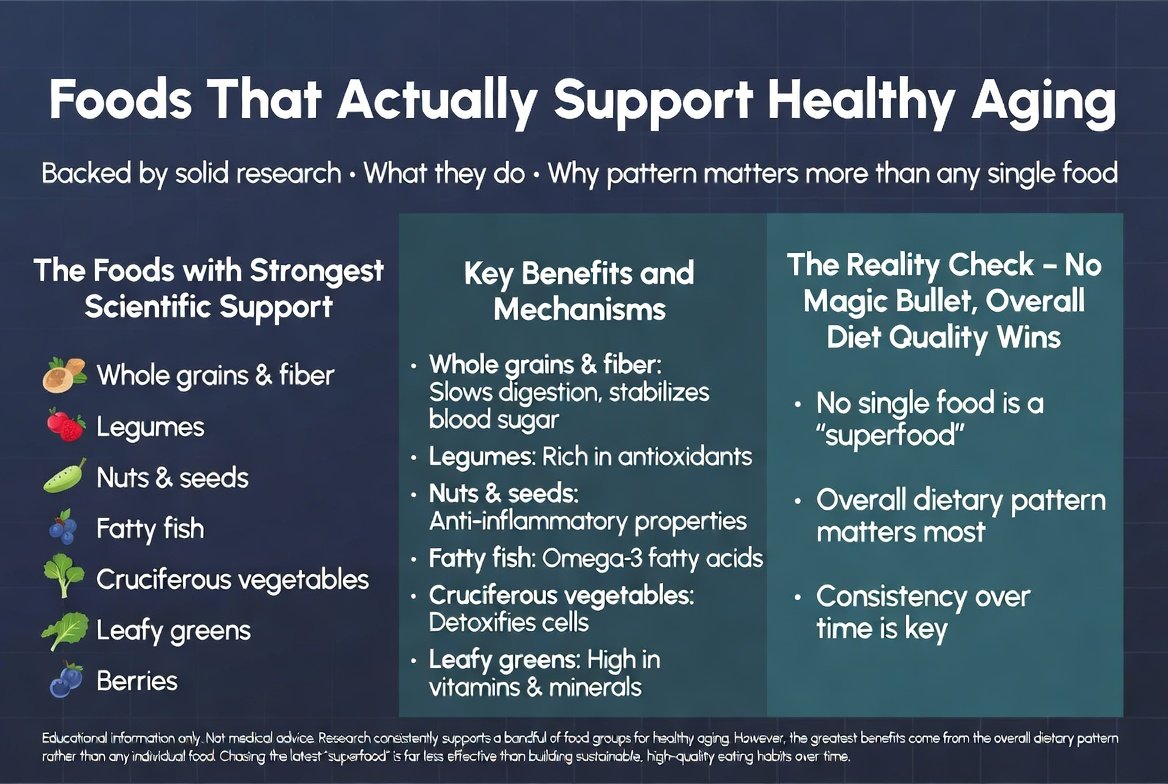
- Omega-3 and polyphenols: Fish oil, curcumin, colorful vegetables and fruits have been linked to lowering inflammatory markers like IL-6 and TNF-α. It is best to get them from a varied diet.
- Adequate sleep is anti-inflammatory: 7-9 hours of quality sleep have been linked to lower levels of inflammatory markers. Sleep studies in astronauts show that adequate sleep is a real challenge in space.
- Follow research progress: The field of senolytics (like fisetin, or the combination dasatinib + quercetin) and metformin are being studied in clinical trials. Do not start drugs or supplements on your own, consult a doctor.
The Broader Perspective
Space offers a strange mirror: it takes the slow processes of human life, aging that develops over decades, and may accelerate them into days and weeks. This is no coincidence. Gravity has been part of the human evolutionary environment since time immemorial. Our body cells, their cytoskeleton, and their signaling pathways were adapted to it. Without gravity, some systems begin to malfunction faster.
But this is exactly what helps us. If aging processes can accelerate in one environment, they may be more dynamic than we thought, sensitive to the environment and amenable to intervention. Cedars-Sinai's organ chips and organoids allow testing in space whether senolytic and anti-inflammatory drugs can slow the process, and return with useful clues for us on the ground as well.
The big message is that aging is not an event, it is an active and regulated process. The better we understand the mechanisms, the greater the chance of finding ways to curb them. Space is not just a destination, it is a research tool. It illuminates mechanisms that are hard to see on Earth and allows testing interventions under unique conditions.
References:
Cedars-Sinai - Inflammaging in Space: Studying Aging on Organ Chips
Cedars-Sinai Newsroom - Pioneering Creation of Organoids in Space (Aug 24, 2025)
The NASA Twins Study, Science 2019


💬 Comments (0)
Be the first to comment on the article.