Every few months, the same headline appears in a new variation: 'Scientists have reversed aging'. An old mouse that restored its black fur, a drug that doubled the lifespan of worms, a wealthy tech entrepreneur injecting himself with the plasma of his 17-year-old son as part of a rejuvenation protocol. The headlines are dizzying, and it's easy to believe the revolution is already here. By the way, that same entrepreneur reported himself that no benefit was detected from his son's plasma transfusion and stopped the experiment, a good reminder of how easy it is to jump from a single measurement to a dramatic conclusion.
Amid the sea of media and scientific coverage in 2026, it's worth doing something rare in a field full of excitement: take a step back and calmly ask, can aging truly be reversed, or are we confusing the lab with the headline? Not with a cynical approach, nor a marketing one. An honest attempt to paint the state of science as it is in 2026: real progress, enormous funding, and still no working pill.
What does 'reversing aging' even mean?
Before arguing whether it's possible, it's important to distinguish between two things that are constantly mixed up:
- Slowing aging, making the body age more slowly. Stretching the line of functional decline. This we already know how to do, through lifestyle, physical activity, and nutrition.
- Reversing aging, returning cells and tissues to a younger state than they are now. Turning the clock back, not just slowing it. This is the real dream, and this is the part that is still mostly experimental.
Most of the exciting headlines deal with the second category, but most of the strong evidence belongs to the first. This is the central gap that any sober analysis of the field must reveal. When someone claims to have lowered their biological age, they are usually talking about an improvement in health markers, not a fundamental reversal of cellular aging.
The scientific definition of aging has crystallized around what are called the 'hallmarks of aging': DNA damage, telomere shortening, epigenetic changes, loss of proteostasis, disrupted nutrient sensing, poor mitochondrial function, accumulation of zombie cells, and chronic inflammation. Each research stream tries to attack one or more of these hallmarks.
The Four Major Streams: Where Science Really Stands
The field can be mapped into four central directions, and this is perhaps the most important way to understand it. Instead of 'one big revolution', there are several separate fronts, each at a different stage of maturity.
1. Partial Reprogramming, Yamanaka Factors
This is the direction closest to the word 'reversal' in the literal sense. In 2006, Shinya Yamanaka discovered that four genes (known as OSKM factors, or Yamanaka factors) can revert a mature cell to an embryonic stem cell state. The question that ignited the field: Can a cell be returned to its epigenetic youth without erasing its identity?
In mouse studies, controlled doses of these factors restored tissues to a younger profile, repaired vision after optic nerve damage, and healed tissues faster. In 2026, companies like Altos Labs and Retro Biosciences are advancing the technology toward first human trials, often for specific eye diseases where the risk is local. But the real danger is clear: too much reprogramming turns cells into uncontrolled stem cells, meaning cancer. This is the most exciting and most dangerous direction simultaneously.
2. Senolytics, Eliminating Zombie Cells
Zombie cells (senescent cells) are cells that have stopped dividing but refuse to die, instead secreting inflammatory substances that poison the environment. As we age, they accumulate. Senolytic drugs try to eliminate them in a targeted manner.
In mice, eliminating zombie cells extended healthy lifespan and reversed aging symptoms. In humans, the combination of dasatinib and quercetin is in clinical trials for diseases like pulmonary fibrosis and kidney disease. Results are mixed: encouraging signs, but still no definitive proof that they extend life or rejuvenate healthy humans. This is a promising direction that needs more human evidence.
3. Metabolic Interventions, Rapamycin, Metformin, GLP-1
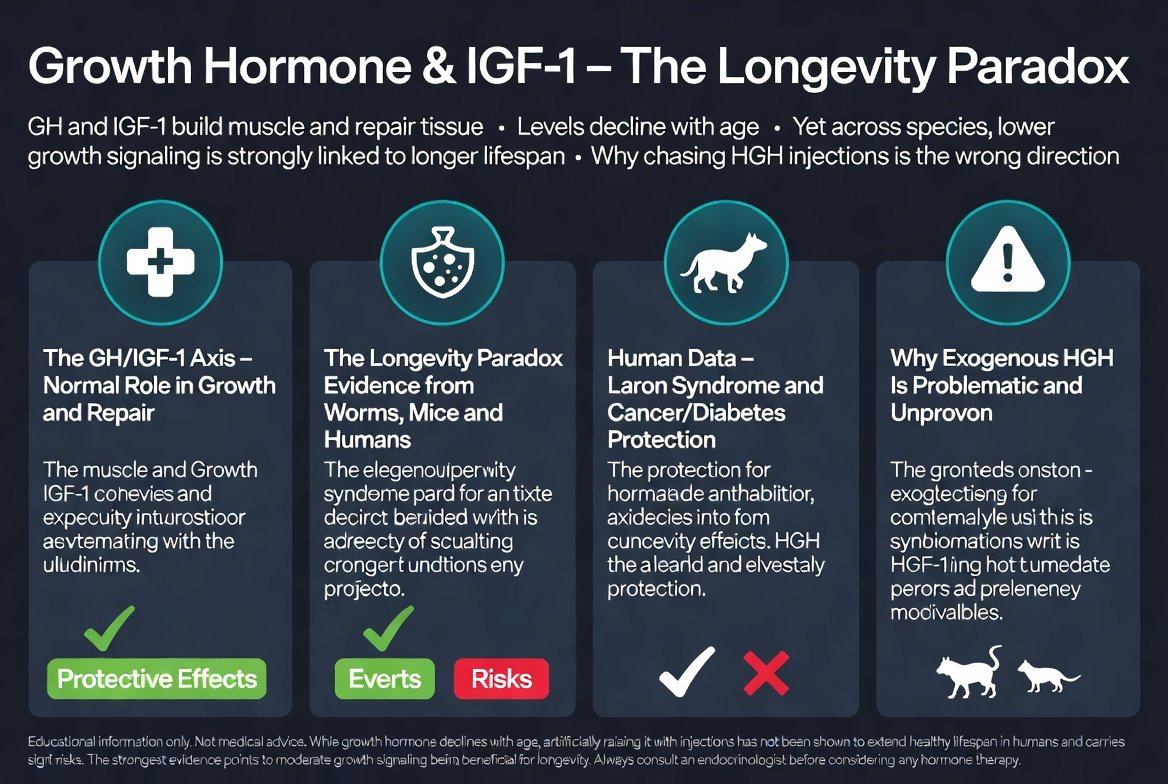
This is perhaps the direction with the strongest evidence base, and at the same time the most 'boring' from a media perspective. Rapamycin is the only drug that has consistently extended lifespan across a variety of species, including mammals, by inhibiting the mTOR pathway. In humans, it is in trials at low doses, and the community is cautious due to side effects on the immune system.
Metformin, an old and cheap diabetes drug, is at the center of the landmark TAME trial, which aims to test whether it delays age-related diseases in healthy humans. GLP-1 drugs (Ozempic and its peers) have surprised the field: beyond weight loss, they show anti-inflammatory signals and protection for the heart and brain. But they also cause muscle mass loss, highlighting that there is no free lunch.
4. Epigenetic Clocks, The Measurement Tool
You can't reverse something you can't measure. Epigenetic clocks like Horvath, PhenoAge, and GrimAge measure biological age through DNA methylation patterns. They have become the standard by which researchers test whether an intervention 'rejuvenates' someone.
But an important warning must be remembered: an epigenetic clock is a correlation, not necessarily a cause. A decrease in the clock reading does not necessarily prove that actual lifespan has increased. The tool is excellent for research, but it has also become a marketing engine for companies selling biological age tests directly to consumers.
The Billion-Dollar Longevity Boom
One of the things that has made the field so noisy is the money. Recent years have been characterized by an unprecedented wave of funding:
- Altos Labs, raised about $3 billion, funded in part by Jeff Bezos, and recruited Nobel laureates to study reprogramming.
- Retro Biosciences, funded by Sam Altman, focuses on reprogramming and extending healthy lifespan.
- Calico, Alphabet's (Google) subsidiary, operating in relative quiet for over a decade, with few published results.
This money accelerates real research, but also creates pressure for headlines. When a wealthy private entity funds a field, it expects media returns, and this tilts the field's discourse toward being overly optimistic. It's important to distinguish between the science in labs (cautious, slow, controlled) and the marketing that wraps it (exciting, accelerated, sometimes disconnected).
What is Truly Promising vs. What is Inflated?
This is the heart of the matter, and the distinction the Israeli reader most needs:
- Truly promising: Partial reprogramming for targeted diseases, low-dose rapamycin, senolytics for specific diseases, and the use of epigenetic clocks as a research tool.
- Mostly inflated: Young blood transfusions, most 'stacks' of expensive supplements, biological age tests sold as 'proof' of rejuvenation, and any promise that a single pill will reverse aging in healthy humans within the next decade.
The dividing line is simple: what has worked in humans, in a controlled trial, with a real clinical endpoint, versus what has worked in a mouse or in a cell in a dish. Most hype is born from the unjustified leap from mouse to human.
Should I Wait for the Pill, or Act Now?
This is the practical question. The answer is sober but not discouraging. Until the science matures, here is what you can do today, backed by strong evidence:
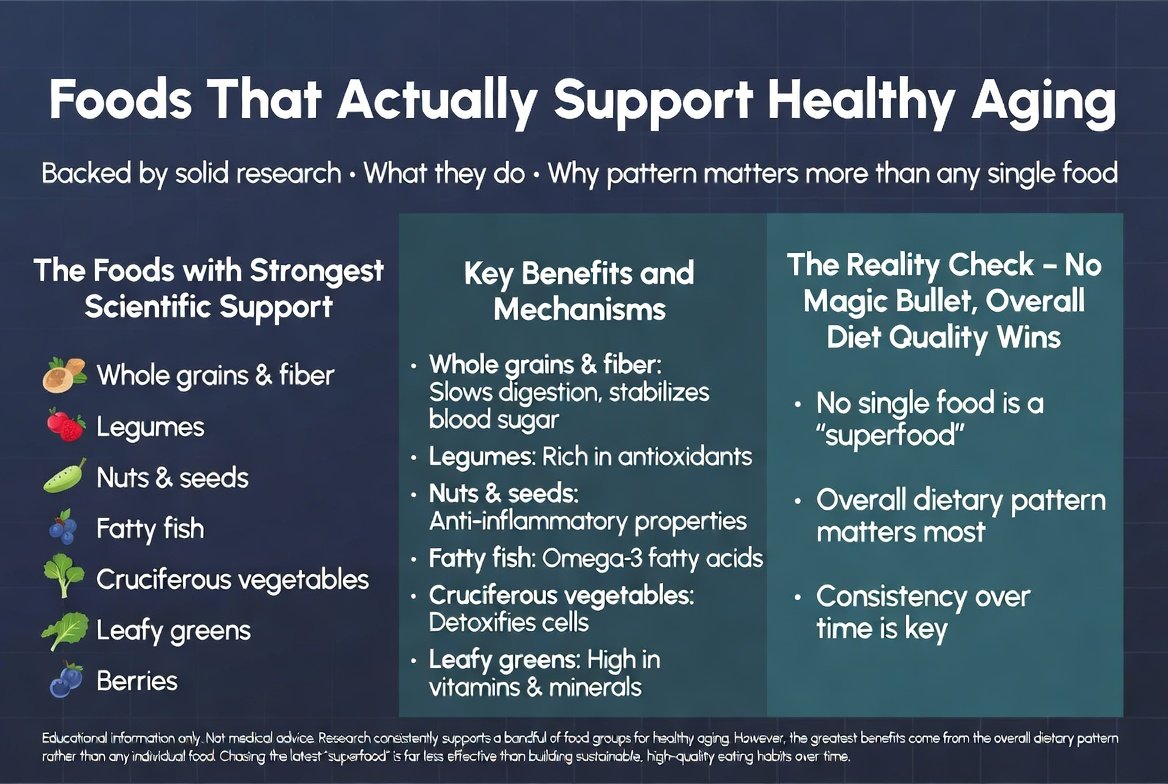
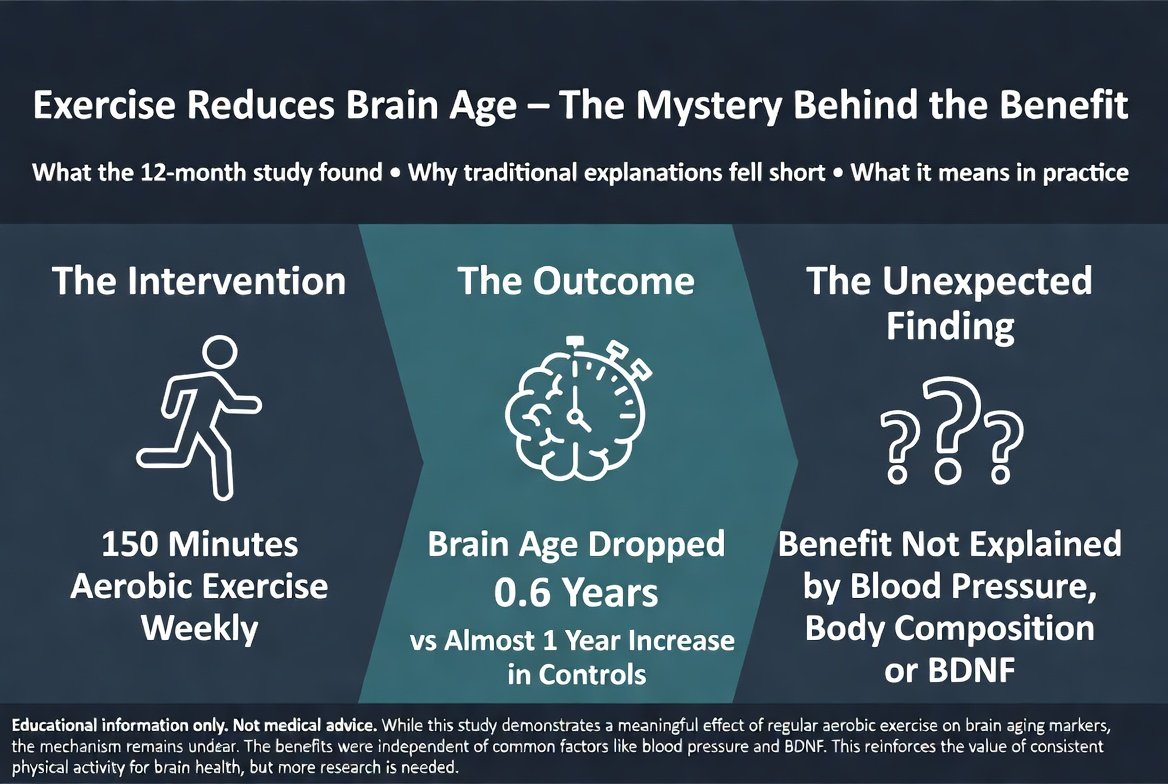
- Regular physical activity, the intervention closest to a 'miracle drug' that exists. Resistance training preserves muscle, cardio preserves the heart and brain. It affects almost all hallmarks of aging simultaneously.
- Quality nutrition and avoiding excess calories, moderate caloric restriction and fasting periods activate autophagy, the same pathway that drugs try to mimic.
- Quality sleep, 7 to 9 hours. Sleep clears brain waste and allows DNA repair.
- If you have a specific disease, talk to your doctor about whether a metabolic drug like metformin is relevant to your condition, not as a self-experiment.
- Caution with expensive supplements, don't pay thousands of shekels a month for stacks not proven in humans. The money is better spent on a gym membership and quality food.
In other words: The only intervention proven today to slow aging in humans is lifestyle, not a miracle molecule.
The Broader Perspective
The question 'can aging be reversed' is actually two questions. Is it possible in principle? Here the answer is more positive than ever: mice rejuvenated by reprogramming, zombie cells eliminated, clocks turned back. The biology of aging is not as one-directional as we thought. Is it possible for me, today, safely? Here the answer is still no, and anyone promising otherwise is selling you something.
The lesson is not cynical but balanced: the field is real, advancing quickly, and worthy of cautious excitement. But between a headline about a mouse and an approved treatment for humans, there is a long road, paved with quietly failing trials. Scientific patience is not a weakness; it is what will distinguish a real revolution from a bubble.
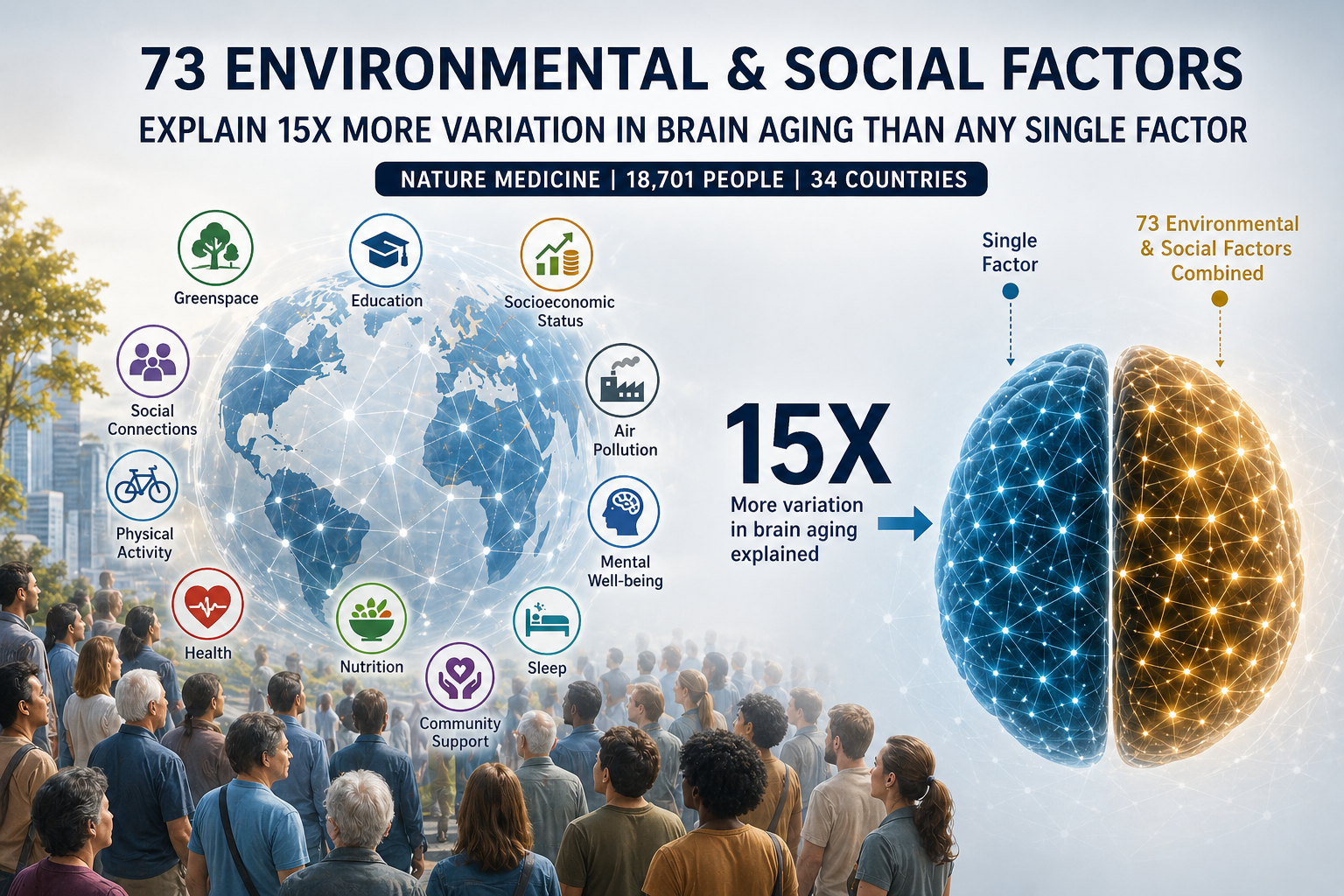
And perhaps this is the most important point: while we wait for the science to mature, the best intervention is already in our hands, and it's free. Movement, sleep, and real food rejuvenate you measurably, today, without a pill and without a billion dollars.

💬 Comments (0)
Be the first to comment on the article.