Imagine a city where garbage is never collected. At first, no one notices, but over time, the streets become clogged, infrastructure collapses, and everything slows down. A living cell is exactly such a city, and it produces waste non-stop: misfolded proteins, aged organelles, broken mitochondria, and accumulated molecular debris. If the cell does not clean them, it will age and become diseased. Fortunately, the cell has a highly sophisticated disposal and recycling system, and it is called autophagy.
The name comes from Greek, auto (self) and phagein (to eat), meaning "self-eating." It sounds frightening, but it is one of the most vital processes for life. So vital that in 2016, the Nobel Prize in Medicine was awarded to Yoshinori Ohsumi for deciphering the genetic mechanism that activates it. Since then, autophagy has become one of the hottest words in the longevity world, and along with it came a lot of noise. The questions everyone asks, and which we will answer here honestly, are two: what exactly is autophagy, and what is the real connection between autophagy and fasting.
What is Autophagy?
Autophagy is a cellular process in which the cell wraps damaged or unnecessary components in a membrane sac, breaks them down into their raw materials, and recycles them for rebuilding and energy production. In simple terms, it is the cellular cleanup and the body's internal recycling system.
- The cell creates a spherical structure called an autophagosome, which surrounds the cellular "trash": damaged proteins, exhausted mitochondria, and even invading bacteria.
- The autophagosome fuses with the lysosome, an organelle filled with digestive enzymes, which breaks down the contents into basic amino acids, fats, and sugars.
- The recycled parts return to circulation and are used by the cell to build new proteins and generate energy, especially when food is scarce.
- This is a continuous but controlled process. It runs at a low background rate all the time and accelerates under stress conditions like starvation, exertion, or lack of oxygen.
What Ohsumi discovered in the 1990s, through experiments on yeast, was the genes that control this entire mechanism, known as ATG genes. This understanding turned autophagy from a vague theory into a molecular process that could be studied, measured, and potentially targeted. That is why the prize was so significant: it gave us a map of one of the most fundamental maintenance mechanisms of life.
The Connection Between Autophagy and Aging: The Maintenance Mechanism That Tires
Why is autophagy so important for longevity? Because it is at the heart of what is known as loss of proteostasis, one of the recognized hallmarks of aging. As we age, the efficiency of autophagy declines. The disposal system slows down, cellular waste accumulates, and damaged proteins and exhausted mitochondria remain in the cell, causing damage.
This accumulation is not a theoretical matter. It is directly linked to several severe diseases of old age. In neurodegenerative diseases like Alzheimer's and Parkinson's, aggregates of toxic proteins accumulate that normal autophagy should clear. In heart disease, poor clearance of damaged mitochondria accelerates damage to the heart muscle. Even in mechanisms of cancer and chronic inflammation, autophagy plays a dual and complex role.
The encouraging side: in animal models, enhancing autophagy extended lifespan. Mice engineered for more active autophagy lived longer and healthier lives. This is what made autophagy a sought-after target: if we can preserve the efficiency of cellular cleanup over the years, we might be able to slow down some aging processes themselves. But, and this is a critical point, what works in a mouse does not always translate directly to humans, and we will return to this later.
Autophagy and Fasting: Why Hunger Triggers Cleanup
Here comes the most popular question. The connection between autophagy and fasting is real and based on beautiful evolutionary logic. When food is abundant, the cell is in "building" mode: it grows, divides, and stores. When food is scarce, the cell switches to "survival mode," and the most logical thing to do is recycle what is already inside. Instead of receiving raw materials from the outside, the cell breaks down its damaged components and reuses them. Thus, hunger becomes a natural trigger for cellular cleanup.
At the molecular level, the key player is a sensor called mTOR. When you eat, especially protein and carbohydrates, mTOR is active and suppresses autophagy (building mode). When you fast, insulin levels drop, mTOR is turned off, and another energy sensor called AMPK is activated. This combination releases the brake and turns on autophagy. The breakdown of glycogen stores and the shift to fat burning (ketosis) also strengthen the signal.
This is where we need to be honest. Most of the numerical claims you encounter online, like "a 16-hour fast turns on autophagy" or "after 24 hours autophagy peaks," are primarily based on mouse studies. A mouse fasting for a few hours is not a human who hasn't eaten since lunch. A mouse's metabolism is much faster, and the threshold at which autophagy awakens in it comes earlier. The exact threshold in humans simply has not been determined, for the simple reason that it is very difficult to measure autophagy in a living human body without taking a tissue biopsy. So yes, prolonged fasting likely increases autophagy in us as well, but anyone promising you an exact number of hours is selling certainty that science does not yet have.
What Else Activates Autophagy? Not Just Fasting
The common mistake is to think that fasting is the only way. In fact, some of the strongest triggers of autophagy are not related to giving up food at all.
1. Physical Exercise
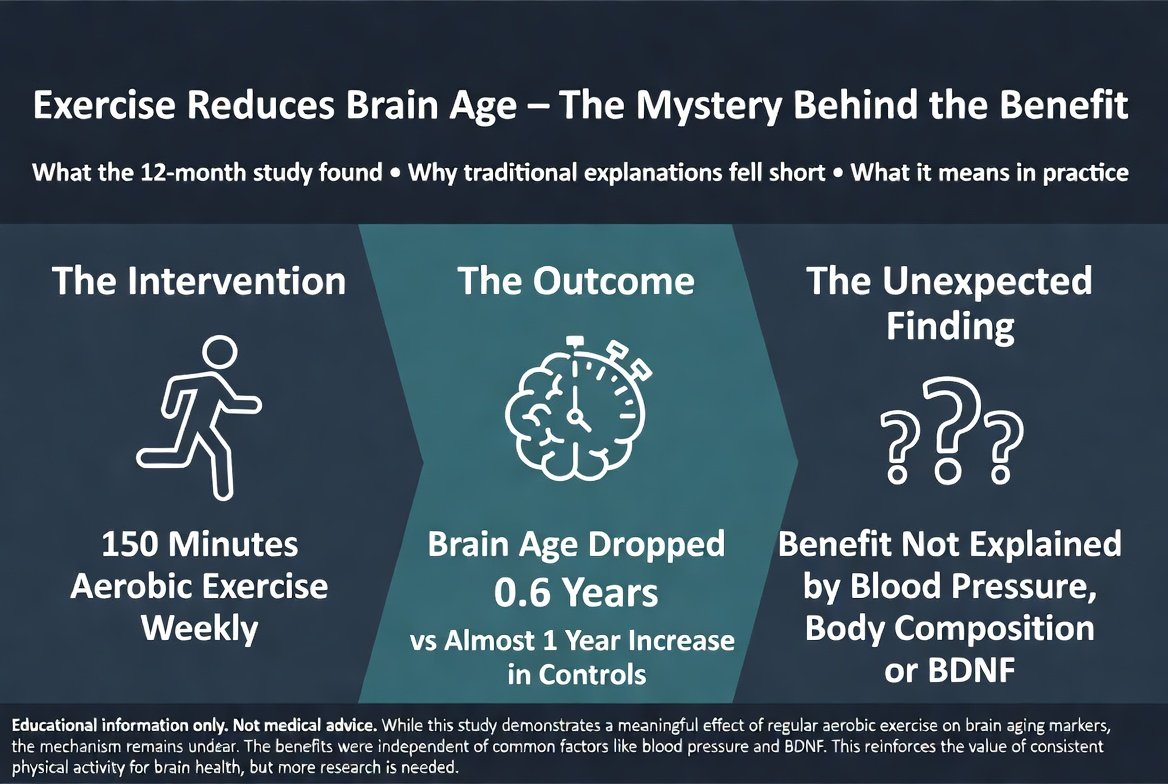
Physical exercise is perhaps the most powerful and safest natural stimulator of autophagy. Exercise creates metabolic stress in muscles, depletes available energy, and activates AMPK, just like fasting, thereby increasing autophagy in muscle, heart, and even the brain. The big advantage: you get the cellular cleanup without giving up food, and as a bonus, a host of other proven longevity benefits. If you are looking for one lever that combines everything, this is it.
2. Caloric Restriction and Dietary Patterns
Sustained caloric restriction, even without complete fasting, lowers mTOR activation and encourages autophagy. Dietary patterns low in animal protein or certain amino acids (like leucine and methionine) also weaken the mTOR signal. This is one reason a rich and balanced plant-based diet is linked to healthier aging markers.
3. Spermidine (Eisenberg, 2016)
This is one of the most intriguing discoveries in the field. Spermidine is a natural compound from the polyamine group, found in foods like wheat germ, fermented soy (natto), mushrooms, aged cheeses, and legumes. In a landmark study published in the prestigious journal Nature Medicine in 2016, a team led by Tobias Eisenberg and colleagues showed that spermidine extends lifespan in mice through the activation of autophagy and improved heart function. In observational studies in human populations, higher dietary intake of spermidine was associated with lower mortality. Spermidine is a rare example of an autophagy-inducing compound that comes directly from the plate.
4. Other Compounds Under Investigation
Other compounds are being studied as autophagy inducers, but with weaker or earlier evidence in humans. Resveratrol (from grapes and red wine) and EGCG (from green tea) activate AMPK and sirtuin pathways in the lab. Curcumin (from turmeric) has shown autophagic effects in cells. Drugs like rapamycin and metformin potently induce autophagy by inhibiting mTOR, but they require a prescription and medical supervision and are not intended for self-use for "cellular cleansing."
Should You Chase Autophagy? The Critical View
The internet has turned autophagy into a product: fast for an exact number of hours, take a supplement, and get a guaranteed "cleanse." The reality is more complex and modest, and there are several important caveats.
First, it is very difficult to measure autophagy in humans. There is no simple blood test that says "your autophagy is currently 70 percent active." Most of what we know comes from cells in a dish, from animals, and from indirect markers. Therefore, any promise of an exact threshold or precise dosage is speculation.
Second, and often forgotten, more autophagy is not always better. Autophagy is a tightly controlled process, and there is a time for building (anabolism) and a time for breakdown (catabolism). Older adults trying to build muscle, for example, need a window of active mTOR and adequate protein intake. Too aggressive or prolonged fasting can harm muscle, the immune system, and hormones. The wise body balances the two, and trying to permanently suppress building in favor of breakdown is a mistake.
Third, fasting is not suitable for everyone. People with diabetes, pregnant or breastfeeding women, those with eating disorders, underweight individuals, or those taking certain medications should consult a doctor before embarking on prolonged fasting. "Cellular cleansing" is not worth the risk if it destabilizes another system.
What Should You Take from the Science?
So how do you translate all this into sensible action, without the exaggerations? Here are the practical steps, from strongest to safest:
- Move. Regular physical exercise is the most powerful and safest way to increase autophagy, and as a bonus, it improves every other health metric. Combine aerobic training with strength training.
- Try a restricted eating window, gradually. Eating within an 8 to 12-hour window per day (meaning 12 to 16 hours without food, including sleep hours) is a moderate and relatively safe way to give the body a metabolic break. Start gently, and do not chase extreme numbers.
- Eat spermidine from your plate. Incorporate foods rich in spermidine into your diet: wheat germ, legumes, mushrooms, fermented soy, and aged cheeses. This is a natural way to encourage the pathway, backed by observational evidence.
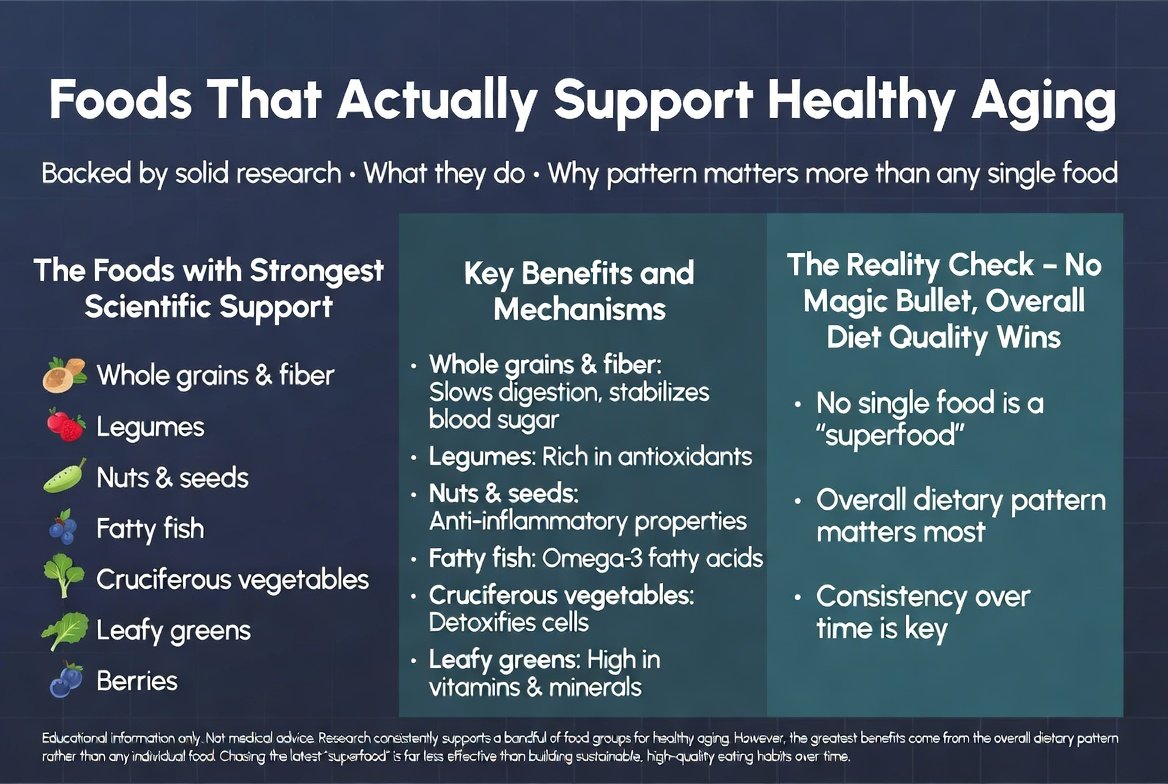
- Build a rich, plant-based dietary pattern. Less ultra-processed food, more vegetables, legumes, and olive oil, with adequate protein intake to maintain muscle. You can learn more in our guide to nutrition for longevity.
- Do not buy magic promises. No supplement "turns on autophagy" at the push of a button. If you are still considering evidence-based compounds, do so with open eyes. Our supplement selector ranks compounds honestly, including those that boast autophagic effects.
Frequently Asked Questions
What is autophagy in simple terms?
Autophagy is the cell's self-cleaning and recycling system. Under stress or starvation, the cell wraps damaged components, like broken proteins and exhausted mitochondria, breaks them down into their raw materials, and recycles them for rebuilding and energy production. In short, it is the body's internal garbage disposal, and when efficient, it is essential for healthy aging.
How many hours of fasting are needed to activate autophagy?
There is no exact answer, and this is the truth the internet does not like. Autophagy runs in the background all the time and strengthens as fasting lengthens and insulin and mTOR levels drop, but the exact threshold in humans has not been determined. Most popular numbers, like "16 hours" or "24 hours," are based on mouse studies, whose metabolism is very different from ours. Prolonged fasting likely increases autophagy in humans as well, but any exact number of hours promised to you is speculation.
Which supplements increase autophagy?
The compound with the best evidence is spermidine, which extended lifespan in mice through autophagy and is found in foods like wheat germ, legumes, mushrooms, and fermented soy. Resveratrol, EGCG from green tea, and curcumin are also being studied but with weaker evidence in humans. Rapamycin and metformin potently induce autophagy, but they are prescription drugs and not intended for self-use. The bottom line: no supplement comes close to the power of physical exercise.
The Broader Perspective
Autophagy teaches us a profound principle about healthy aging: a long life is not just about building, but also about maintenance. The body does not only need raw materials to renew itself; it also needs a disposal mechanism to remove what no longer works. When this cleaning system slows down with age, waste accumulates and diseases arrive. When it is active, cells stay younger for longer.
But do not let the marketing noise replace logic. Autophagy is a real, important, and influenceable process, but not a button you press with a fast of an exact number of hours or with a magic supplement. The levers that truly activate it are those same familiar foundations: movement, wise nutrition, and moderate metabolic breaks. Remember this principle: the body knows how to clean itself; your job is simply not to interfere, and occasionally give it the conditions to do its work.
References:
Eisenberg T et al., Nature Medicine 2016 - Cardioprotection and lifespan extension by the natural polyamine spermidine
The Nobel Prize in Physiology or Medicine 2016 - Yoshinori Ohsumi, for discoveries of mechanisms for autophagy
Rubinsztein DC, Marino G, Kroemer G, Cell 2011 - Autophagy and Aging

💬 Comments (0)
Be the first to comment on the article.