Organ growth is a groundbreaking research field that aims to grow healthy human organs and cells in the laboratory for transplantation into the human body.
This field holds immense promise for treating a variety of serious diseases, including chronic illnesses, severe injuries, and congenital conditions.
The idea of growing human organs in the laboratory has existed for many years, but only in recent years has significant progress been made in the field.
The early stages were characterized by attempts to grow individual cells in the lab, and later, scientists progressed to growing simple tissues.
A major breakthrough in tissue engineering occurred in the 1990s. 3D printing itself was invented as early as 1984 (stereolithography, Charles Hull), and printing living cells (bioprinting) was first demonstrated in 2003. The combination of these technologies enabled the creation of more complex three-dimensional structures.
Tissue Engineering:
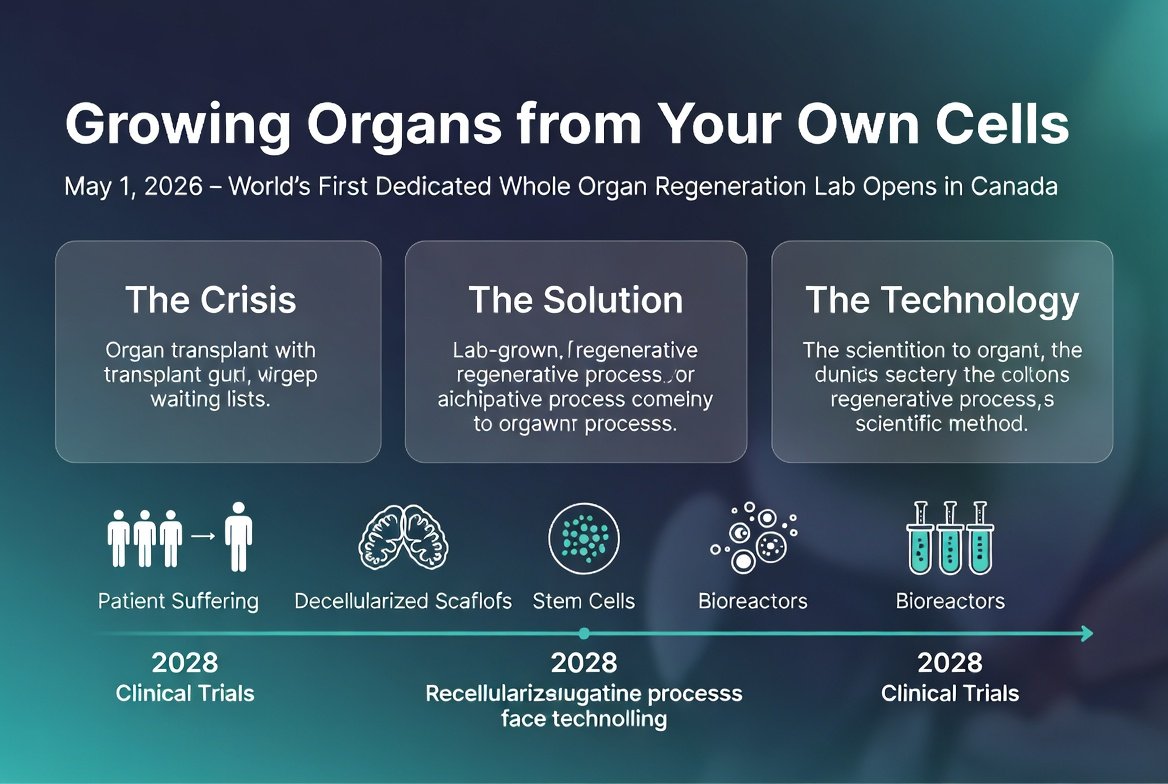
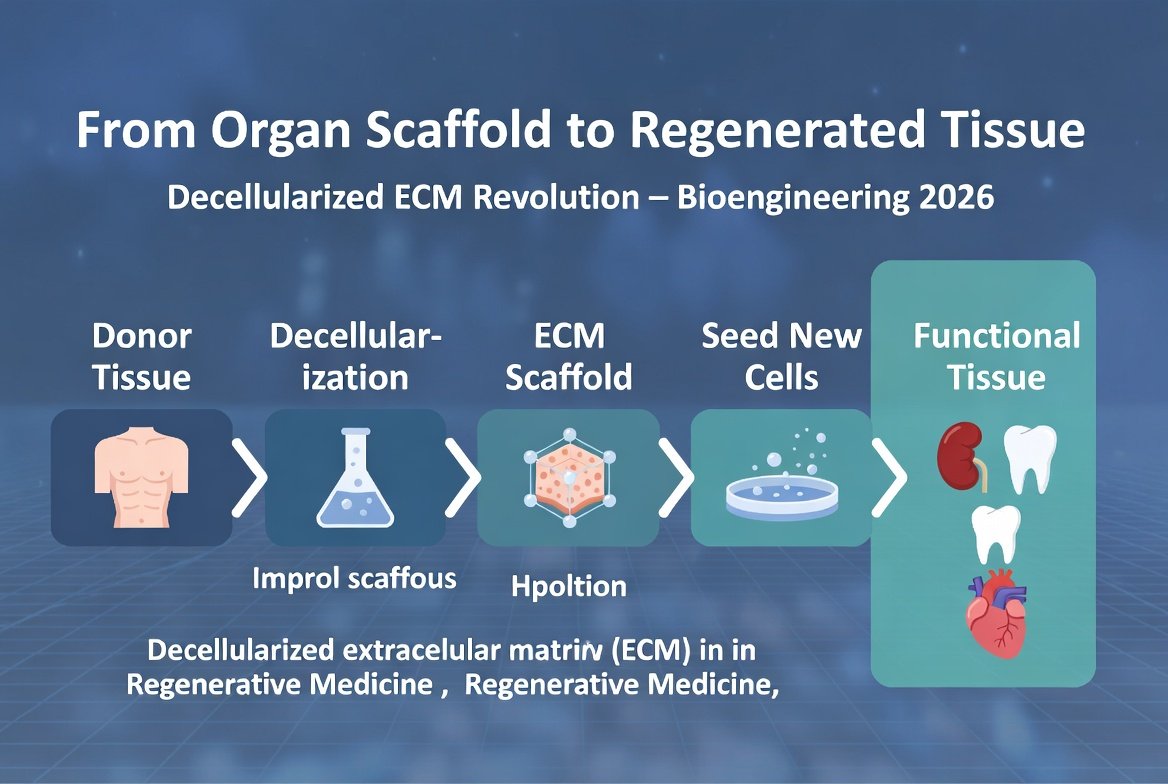
This technology focuses on growing human cells on three-dimensional scaffolds, creating a structure and function similar to an organ. This process is carried out in several stages:
- Cell Selection: Suitable human cells are taken from various sources, such as a biopsy from the patient, stem cells, or embryonic cells.
- Cell Proliferation: The cells multiply in the laboratory under controlled conditions.
- Scaffold: Creation of a three-dimensional scaffold from biological or synthetic materials, serving as a base for tissue growth.
- Seeding: The cells are deposited onto the scaffold.
- Maturation: Creating optimal conditions for tissue growth, providing nutrients and oxygen.
- Transplantation: After the tissue has grown and developed sufficiently, it can be transplanted into the patient's body.
Tissue engineering enables the growth of a wide variety of tissues, including:
- Skin: For treating burns, chronic wounds, and plastic surgery.
- Bone: For treating fractures, injuries, and orthopedic surgeries.
- Muscle: For treating muscle injuries, muscular dystrophy, and muscle degeneration.
- Cartilage: For treating arthritis, cartilage injuries, and orthopedic surgeries.
- Blood Vessels: For treating cardiovascular diseases, organ transplants, and complex surgeries.
Main challenges in the field of tissue engineering:
- Creating Blood Vessels: Supplying oxygen and nutrients to all parts of the tissue is essential for its success.
- Neural Integration: Establishing proper neural connections between the transplanted tissue and the patient's body.
- Immune Rejection: Preventing the rejection of the transplanted tissue by the body's immune system.
3D Printing of Organs:
This groundbreaking technology enables the creation of artificial organs by printing human cells and biological materials. The printing process is done in layers, using specialized 3D printers.
Advantages of 3D Printing:
- Precision: Creating organs with a complex and accurate structure.
- Customization: Printing organs tailored to the patient, using their own cells.
- Availability: Potential to increase the supply of organs available for transplantation.
Main challenges in the field of 3D printing:
- Materials: Developing suitable biological materials for printing and for the proper function of the organ.
- Blood Vessels: Creating an efficient blood vessel system within the printed organ.
- Maturation: Creating optimal conditions for the development of the printed tissue.
Stem Cell Transplantation:
Stem cells are undifferentiated cells with a high capacity for differentiation. These cells can develop into a wide variety of cell types, making them a potential solution for treating various diseases.
Challenges facing the field:
- Engineering Complex Tissues: Creating organs with full function, such as a system of blood vessels and nerves. So far, scientists have only managed to grow relatively simple organs, and a way to create complex organs with full function is still lacking.
- Immune Rejection: Preventing the rejection of the transplanted organ by the body's immune system. A possible solution to this problem is growing organs from cells genetically matched to the patient, or using immunosuppressive drugs.
- Ethical Considerations: Growing human organs in the laboratory raises complex ethical questions, such as:
- Organ Allocation: How will it be determined who receives a transplanted organ and who remains on the waiting list?
- Organ Marketing: Will organs be available to everyone, or only to those who can afford them?
- Creating "Human Pets": Is it appropriate to grow human organs for transplantation into animals?
Scientific Progress in the Field:
In recent years, significant progress has been made in the field of organ growth. Scientists have managed to grow relatively simple organs in the lab, such as bladders and urethras, and even successfully transplant them into patients. Additionally, significant advances have been made in growing more complex tissues, such as heart and liver.
The Future of Organ Growth:
The field of organ growth is expected to revolutionize medicine.
In the future, it may be possible to grow organs and cells for every person in a customized manner, thus curing serious diseases and improving the quality of life for millions of people worldwide.
Groundbreaking Experiments in the Field:
Tissue Engineering:
- A team of scientists from Wake Forest University (led by Dr. Anthony Atala) succeeded in growing a human bladder in the lab from the patient's own cells and successfully transplanting it into patients (2006).
- A team of scientists from the Wake Forest Institute for Regenerative Medicine (research led by Dr. Atlantida Raya-Rivera, conducted in Mexico City) succeeded in growing a human urethra in the lab from patients' cells and successfully transplanting it into five boys (2011).
3D Printing of Organs:
- A team of scientists from the Wyss Institute at Harvard University succeeded in 3D printing human kidney tubules connected to blood vessels, simulating the kidney's absorption function (2019).
- A team of scientists from Tel Aviv University succeeded in 3D printing a tiny human heart the size of a cherry, from a patient's cells. This was only a proof of concept: the cells contracted but the heart was not yet able to pump blood (2019).
- A team of scientists from the University of California, Los Angeles (UCLA) succeeded in growing a three-dimensional lung organoid ("lung on a plate") from stem cells, a tiny structure simulating the air sacs of the lung (this is cell growth, not 3D printing).
Stem Cell Transplantation:
- A team of scientists from Japan (Riken Institute, led by Dr. Masayo Takahashi) performed the world's first transplantation in 2014 of cells derived from induced pluripotent stem cells (iPS) into the eye of a patient with age-related macular degeneration (AMD). The trial's main goal was safety testing, and it succeeded in halting the progression of the deterioration (no significant improvement in vision was proven).
- A team of scientists from the United States succeeded in transplanting stem cells into a patient with spinal cord paralysis, aiming to improve motor function.
- In the United States (UCSF, led by Dr. Tippi MacKenzie), the world's first clinical trial was conducted transplanting stem cells into the uterus of fetuses suffering from severe alpha thalassemia, using the mother's bone marrow cells. The trial (Phase 1) demonstrated safety and feasibility but did not lead to a complete cure of the disease.
.
References:
https://newsroom.wakehealth.edu/news-releases/2006/04/wake-forest-physician-reports-first-human-recipients-of-laboratorygrown-organs
https://www.cnbc.com/2016/02/16/wake-forest-university-scientists-print-living-body-parts.html
https://school.wakehealth.edu/research/institutes-and-centers/wake-forest-institute-for-regenerative-medicine
https://healthland.time.com/2011/03/08/scientistis-grow-a-new-urethra-and-possibly-many-other-human-organs-in-the-lab/
https://www.ynet.co.il/articles/0,7340,L-5494600,00.html
https://wyss.harvard.edu/news/a-step-forward-in-building-functional-human-tissues/
https://news.harvard.edu/gazette/story/2019/03/harvard-scientists-bioprint-3-d-kidney-tubules/
https://www.ft.com/content/5bb992ca-5390-11e4-929b-00144feab7de
https://www.ncbi.nlm.nih.gov/pmc/articles/PMC9537826/

💬 Comments (0)
Be the first to comment on the article.