In recent years, the narrative has been clear: zombie cells (senescent) are bad. Eliminate them, and the body will become young again. But a new study published in Wiley's Aging Cell presents a much more complex picture: zombie cells in the right amount and at the right time are actually essential for healing. And in the elderly, the problem is that there are too few of them, not too many.
The new study challenges
The team studied wound healing in mice, comparing young to old. Results:
- In young mice: wounds closed within a standard time
- In old mice: wounds had difficulty closing
The surprising finding: temporary senescence helps!
In young skin, after injury, the team identified a temporary wave of senescent cells:
- Senescence markers (p16, p21) temporarily increased
- Beneficial SASP was secreted (tissue repair factors)
- After the wound closed, the senescent cells disappeared
In other words: temporary senescence was part of the solution.
What happened in old skin?
In old skin, this response was impaired: fewer senescent cells, and those present acted differently. More chronic inflammation, less tissue repair.
The nuance: senescence is not one thing
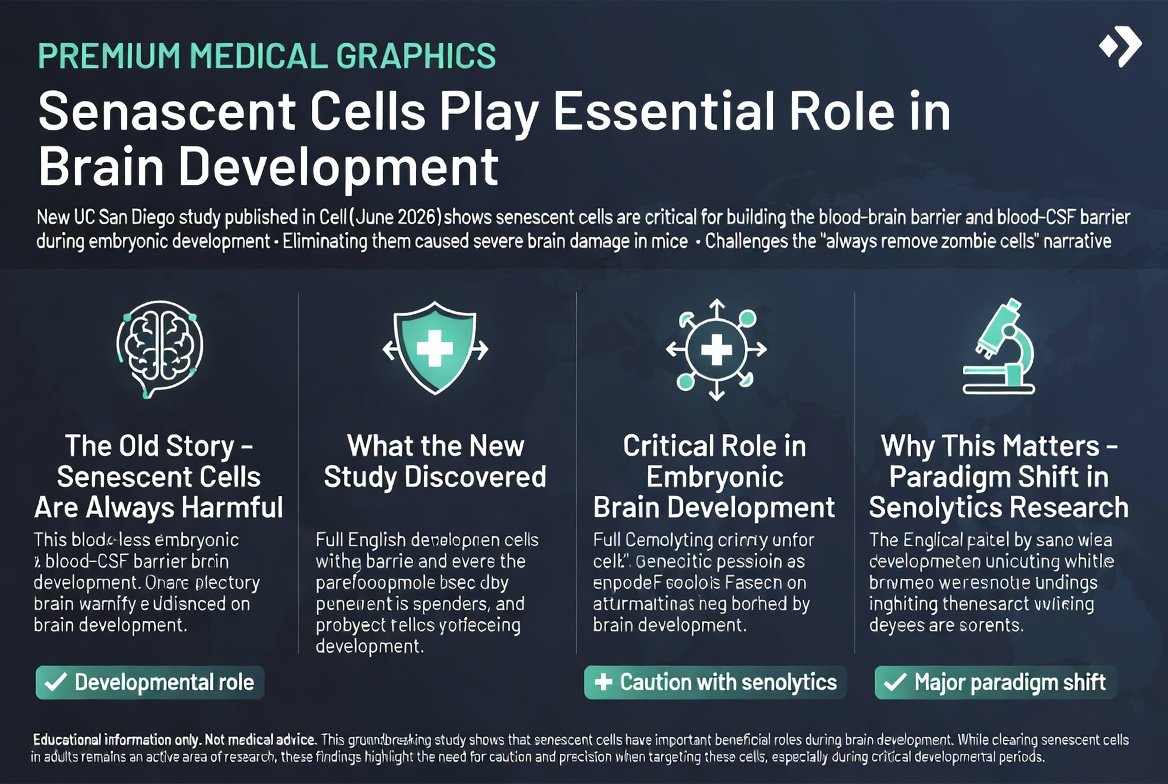
There are two types of senescence: temporary beneficial (tissue repair, immunity, development) and chronic harmful (inflammation, damage). General senolytics kill them all, including the beneficial ones.
Practical implications
- Based on this logic, it may be advisable to avoid senolytics (fisetin, D+Q) close to surgery or injury and let the body heal first. This is a cautious inference from the study, not a directly tested finding
- Chronic wounds require a nuanced approach, not wholesale killing
- The new approach: "Senomorphics," drugs that alter senescent cell behavior, not kill them
The bottom line
Science is moving from simple models ("good vs. bad") to nuanced models. Biological complexity requires a nuanced approach. This is the next step in personalized medicine.



💬 Comments (0)
Be the first to comment on the article.