Whenever anti-aging is discussed in the media, the conversation drifts to familiar topics: intermittent fasting, metformin, resveratrol, spermidine. But behind the scenes, far from consumer headlines, an entire industry is quietly being built: longevity biotech. Billions of dollars flow from venture capital funds to startups trying to crack aging in molecular terms and translate that breakthrough into drugs that will pass FDA regulatory review.
In a publication by Longevity.Technology from April 17, 2026, the spotlight was turned on one of the most interesting players in the field: Rubedo Life Sciences, a Silicon Valley-based startup specializing in developing senolytic drugs using an AI platform. The company is leading an experimental drug called RLS-1496, the first drug from a new class that targets zombie cells through a mechanism called ferroptosis, and uses an AI platform called ALEMBIC that identifies which harmful senescent cells to eliminate and what their unique molecular vulnerability is.
This article is not just about Rubedo. It is a glimpse into an entire industry. When you see a small startup raising tens of millions of dollars just to kill senescent cells, and when you discover that dozens of other companies of similar size are operating in parallel, you begin to understand that the aging field has passed a tipping point. It has left academia and entered the commercial world. The question is no longer 'whether aging can be treated,' but 'who will bring the first drug to market, and when.'
What is Rubedo Life Sciences?
The name Rubedo is derived from classical alchemy. In the mystical tradition of the Middle Ages, rubedo (red) was the final stage of the alchemical process, the transformation of base metal into gold, or of the soul into purity. The choice of name is no coincidence. The company sees itself as translating the principle of transformation: turning senescent and harmful cells into healthy, functional tissue.
- Founded in 2018 by Dr. Marco Quarta, a scientist specializing in the biology of aging and stem cells in the lab of Prof. Thomas Rando at Stanford University. Quarta currently serves as the company's Chief Scientific Officer (CSO).
- The CEO is Dr. Frederick Beddingfield III, a physician and veteran biotech entrepreneur, formerly a senior executive at the pharmaceutical company Allergan, appointed to the role in late 2024.
- Based in Sunnyvale, California, in the heart of Silicon Valley, with a team of about 34 employees, mostly cell biologists, medicinal chemists, and AI experts.
- The ALEMBIC platform, a computational system that combines machine learning with single-cell RNA sequencing (single-cell RNA-seq) and spatial omics to identify populations of disease-specific zombie cells and their molecular weak points.
- A drug pipeline centered on RLS-1496, a topical drug for the skin that has entered human clinical trials.
- Total investment of approximately $53.5 million: a $12 million seed round in 2020 (led by Khosla Ventures), a $1.45 million research grant from CIRM in 2023, and a $40 million Series A round in April 2024 (led by Khosla Ventures and Ahren Innovation Capital).
Dr. Quarta left academia after seeing in the lab that the bottleneck in developing senolytic drugs was not the biology itself, but the ability to precisely identify which zombie cells drive a specific disease and what their unique vulnerability is. Choosing which target among many would allow killing a zombie cell without harming a healthy cell was then a task requiring years of manual work. Combining single-cell biology with artificial intelligence changed the equation.
The Connection to AI: A Surprising Mechanism
What makes Rubedo different from the first generation of senolytics companies like Unity Biotechnology is the hybrid approach: combining deep biological expertise with advanced artificial intelligence. Instead of mapping zombie cells through slow manual work, ALEMBIC enables the identification of which populations of senescent cells are responsible for a disease and what target can be directed at them.
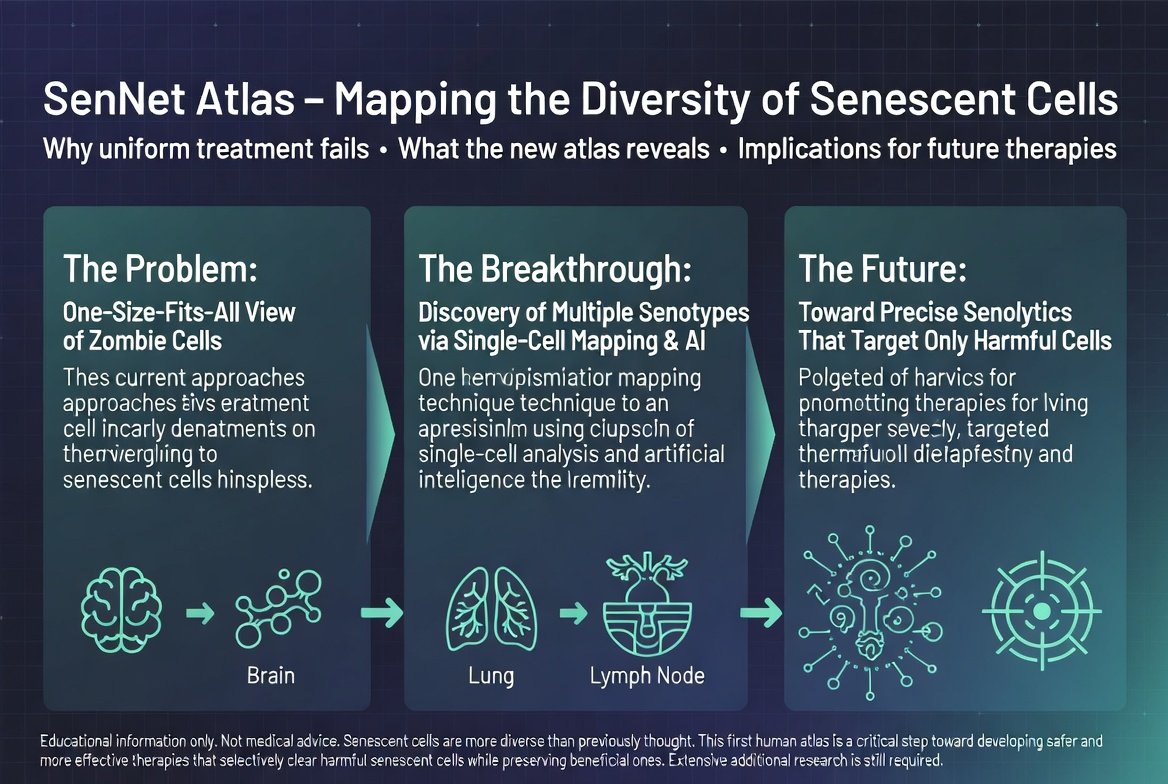
The name ALEMBIC is an acronym for 'Algorithms for Longevity Medicine with Biology, Informatics, and Chemistry.' The method works in several stages. The first stage: mapping zombie cells at single-cell resolution. The company uses single-cell RNA sequencing and spatial omics to precisely characterize the differences between harmful senescent cells and healthy cells, and in which tissue they reside. This identifies molecular signatures unique to the cells that need to be eliminated.
The second stage is integrating machine learning with multi-omics data to identify the molecular target that will make zombie cells vulnerable, without harming the healthy cells around them. This approach seeks to exploit a unique weakness of the senescent cell, rather than attacking a mechanism common to all cells.
The third stage is laboratory validation of the leading candidates and developing a molecule that acts on the identified target. Only the directions that pass the computational and biological filter reach actual drug development. This is intended to save the company years of work and focus the effort.
This approach is essentially similar to what other AI companies in the pharma field are doing, but focused on cellular aging. It is worth noting that the ALEMBIC platform has already been used in a study that identified 'zombie' neurons and linked them to neuropathic pain, a study published in the journal Nature Neuroscience. This is the transition of the biotech field to an era where data analysis, not just chemistry, is the bottleneck of innovation.
Current Evidence
RLS-1496: Rubedo's Lead Drug
RLS-1496 is an experimental drug from a new class of seno-therapies, and according to the company, it is the first modulator of the GPX4 protein that targets pathological zombie cells and has entered a human clinical trial. The mechanism is surprising: instead of blocking a protein that keeps the cell alive, RLS-1496 acts through a pathway called ferroptosis, a type of programmed cell death dependent on iron and lipid peroxidation in the cell membrane.
The GPX4 protein protects the cell from this iron-based death by neutralizing lipid peroxidation. Zombie cells are particularly sensitive to this pathway, and this is their 'Achilles heel.' By modulating GPX4 in senescent cells sensitive to ferroptosis, the drug targets them for death, while healthy cells, less sensitive to the pathway, remain alive. This way, at least in theory, it is possible to clear the harmful cells and allow the healthy tissue to resume function.
It is important to clarify a point that confuses many. Another well-known class of senolytics works not through GPX4 and ferroptosis, but through BCL family proteins and disruption of apoptosis-type cell death. In this context, it is worth mentioning venetoclax, an approved drug for blood cancer: it is a selective inhibitor of BCL-2 only, and deliberately spares the BCL-XL protein, which protects platelets and reduces toxicity. RLS-1496 belongs to a completely different mechanistic family, not this BCL group. It is worth remembering this distinction to avoid confusing two separate senolytic approaches.
The current clinical trial is a Phase 1 in dermatology, not an orally administered drug. The company has developed RLS-1496 as a topical formulation applied to the skin, and is testing it in several skin indications: plaque psoriasis, atopic dermatitis (eczema), and skin aging, as well as in a separate study for actinic keratosis (precancerous skin lesions). This is a logical choice: the skin is an accessible tissue where effects can be seen and measured directly.
In March 2026, the company reported positive interim results from the first phase. The trial, conducted in Europe and randomized, double-blind, and placebo-controlled, was primarily designed to test safety, tolerability, absorption, and markers of activity. According to the report, promising results were observed in several measures, including histological and cellular measures. In psoriasis patients, a reduction of about 20% in epidermal thickness was observed after one month of treatment, compared to an increase in placebo-treated patients. More complete data were planned for presentation at a professional conference later in 2026. However, these are early interim results from a small sample in Phase 1, not final proof of efficacy.
Funding Rounds and Investor Backing
In total, Rubedo has raised approximately $53.5 million over several rounds. The $40 million Series A round in April 2024 marked a significant change for the company, allowing it to advance RLS-1496 into the clinic. The round was led by Khosla Ventures and Ahren Innovation Capital, with a host of other investors. It was preceded by a $12 million seed round in 2020, also led by Khosla Ventures, and a $1.45 million public research grant from CIRM in 2023.
What is particularly interesting is that investors are insisting on clinical milestones, not just research ones. The previous generation of anti-aging companies raised funds based on a 'vision' of longevity. The current generation, including Rubedo, must show safety data, activity markers, and results in real patients. This is a sign of the field's maturity.
Academic and Research Collaborations
Rubedo's ALEMBIC platform has already contributed to academic research published in a peer-reviewed scientific journal, a study that identified senescent neurons and linked them to age-related neuropathic pain. The close connection to academia and peer-reviewed research is what distinguishes the new generation of anti-aging biotech: not as a commercial black box, but as an industrial offshoot growing from serious scientific research.
What About the Other Giants in the Field?
Rubedo is not the only startup in anti-aging, far from it. In 2026, the field consists of a variety of companies with very different approaches. Understanding the full landscape is essential to assess Rubedo's position.
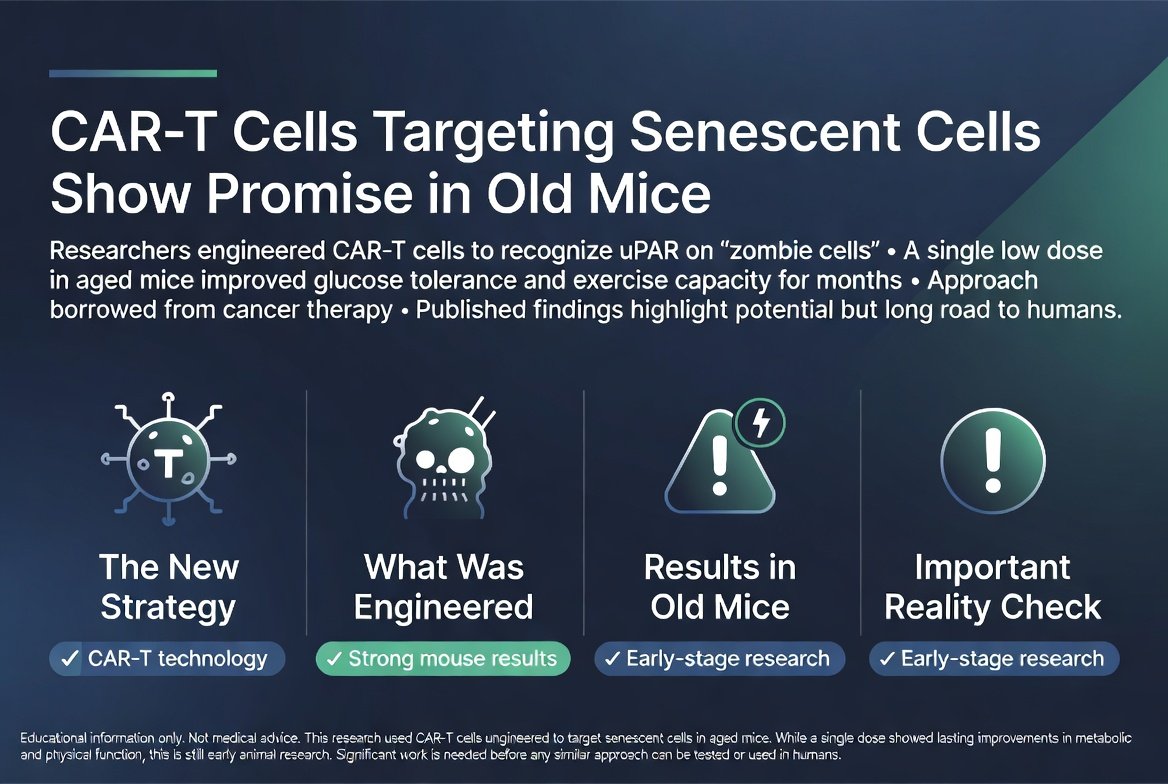
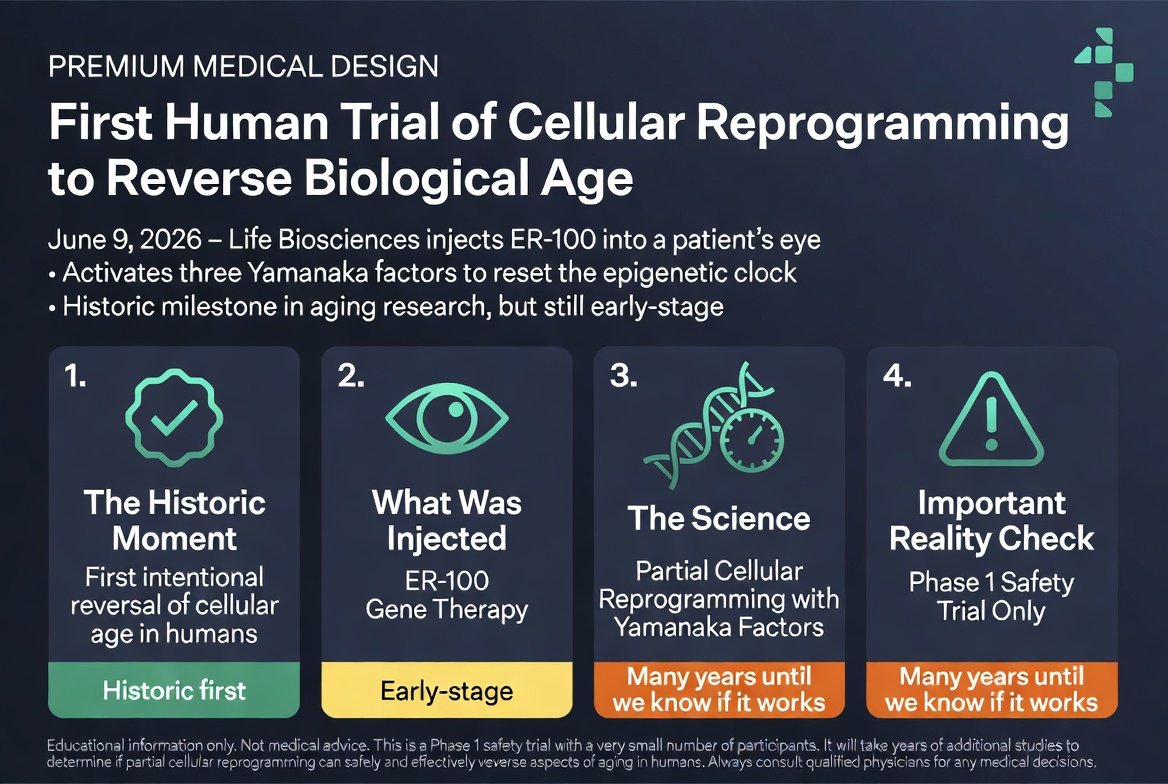
- Altos Labs: The most well-funded startup in the world in the field, raised $3 billion in 2022 from investors including Jeff Bezos and Yuri Milner. Focuses on cellular reprogramming using Yamanaka factors. The approach: not to kill zombie cells, but to 'reboot' them to a younger state. Still in early research stage, with no drugs in trials.
- Calico Labs: Alphabet's (Google) longevity arm, founded in 2013, funded with billions, but suffers from a reputation of 'more words than results.' Works on searching for basic mechanisms of aging.
- Retro Biosciences: A startup that emerged in 2022 with $180 million in funding, almost all of which came personally from Sam Altman (CEO of OpenAI). Focuses on cellular reprogramming and age-related diseases. Stands out due to its connection to Altman and the AI world.
- BioAge Labs: A California startup working on metabolic drugs and body composition modification, one of the companies that has advanced relatively far in the clinical process.
- Unity Biotechnology: The first generation of senolytics, suffered a resounding loss in 2020 when its lead drug failed in a trial for osteoarthritis. The company has optimized and is working on drugs for the eyes. Considered a cautionary tale for the field.
- Loyal: A startup developing a drug for canine longevity. The lead drug (LOY-002) received FDA acceptance of two out of three required technical segments, for efficacy and safety, but it is not yet approved: the final stage is expected to be examined around 2027. The logic: prove it on dogs before humans.
- Life Biosciences: Works on a combination of approaches, primarily a drug for age-related vision loss.
What is particularly interesting is that Rubedo is in a sweet spot: not an inflated giant like Calico, nor an early bet like Altos, but a company that already has a drug in the clinic. This is where investors like to be, because the statistical chance of a positive outcome is highest.
Should We Start Investing in Rubedo or Buying RLS-1496?
This question requires a clear distinction. RLS-1496 is not available to the public. It is in a Phase 1 clinical trial, meaning it is only given to participants in the company's specific skin trials. There is no way to buy it, no way to take it as a dietary supplement, and no expectation of FDA approval in the coming years.
Even if the trials succeed, the path to approval is long. Phase 1 primarily tests safety. Phase 2 tests initial efficacy. Phase 3 tests large-scale efficacy. Only after all this comes FDA approval, and years after that it reaches Israel. The reasonable expectation: RLS-1496 will not be available to Israeli citizens before 2030, and in all likelihood only after 2032.
Investment Risk
Rubedo is not a public company. You cannot buy its shares on the stock exchange. Investment is only available to institutional investors in its funding rounds. Even if the company goes public in the future, statistically, most biotech startups fail. 9 out of 10 experimental drugs do not reach FDA approval. Investing in individual companies in the anti-aging field is a high-risk bet.
What About the Expected Price?
Even if RLS-1496 succeeds and reaches the market, the price is expected to be significant. Advanced targeted drugs can cost a fortune, and insurance coverage will typically only be given for an approved medical indication, such as psoriasis or eczema, not for general 'anti-aging treatment.' The expectation that it will become accessible to the general public as an anti-aging product is not realistic in the coming decade.
Open Questions About the Mechanism
Despite the expectations, there are question marks regarding the scientific approach as well. Modulating a cell death pathway, even if targeted at zombie cells, requires careful long-term safety testing to ensure that healthy cells dependent on the same mechanisms are not harmed. The fact that it is a topical formulation for the skin reduces some systemic exposure, but the clinical trials will examine this in depth, and there is no guarantee yet of long-term efficacy and safety.
The Risk of 'Commercial Anti-Aging' is Unrelated
It is important not to confuse Rubedo, a serious biotech company with controlled clinical trials, with hundreds of wellness companies selling 'senolytic supplements' for thousands of dollars without clinical validation. Most of these supplements have not been proven effective, and some are even dangerous. The Israeli consumer looking for 'anti-aging' must distinguish between the gray market and serious research.
What Should We Take from This Research?
- Understanding the industry is a first step. Follow professional journals like Longevity.Technology, STAT News, and Endpoints to understand which startups are advancing, which drugs are in the clinic, and which approaches are gaining traction.
- Do not buy 'senolytic supplements' from wellness companies. If a company sells a product and offers longevity without controlled clinical trials, it is a red flag. A real drug goes through the FDA, not sold on Instagram sites.
- If you have a specific disease being treated in a trial, consider participating. Patients with diseases being treated in active trials can find them on clinicaltrials.gov. Participation sometimes provides access to cutting-edge treatments under medical supervision.
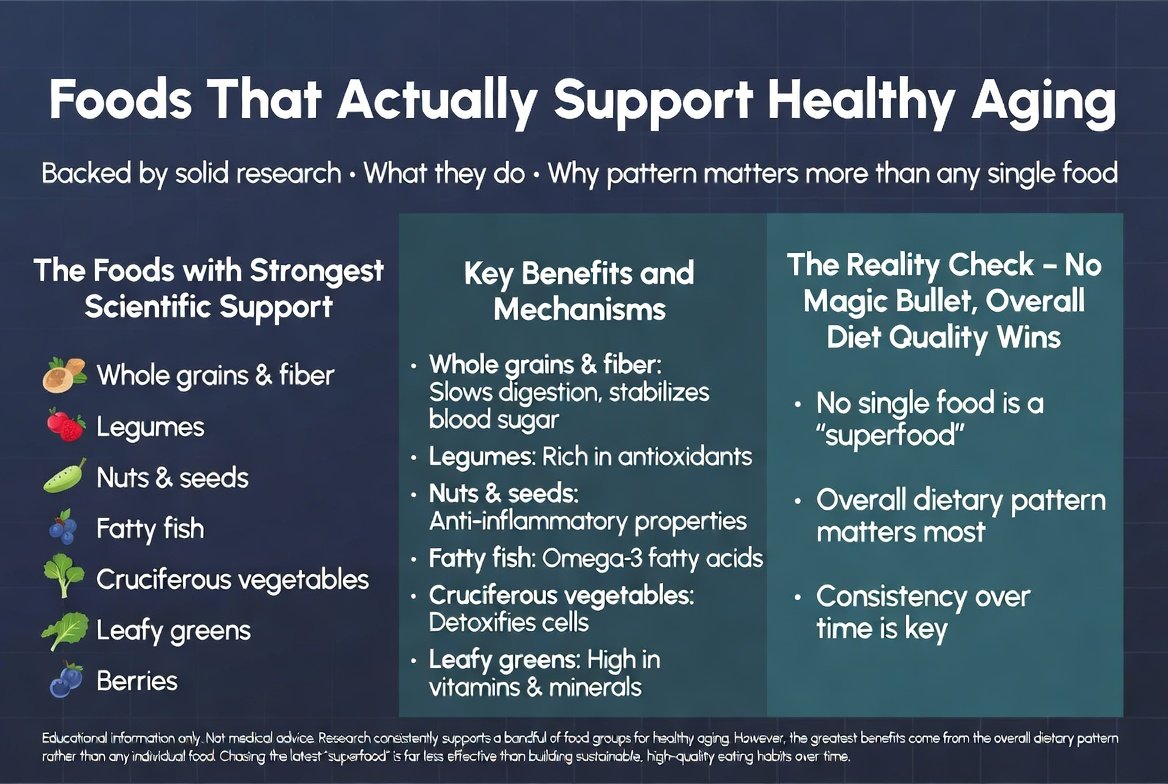
- Invest in yourself, not in a startup. Until anti-aging drugs reach the market, the interventions with the strongest scientific basis are basic: physical activity, quality sleep, a Mediterranean diet, stress management, and social connections. These will give you most of the benefit at a fraction of the cost.
- Be skeptical but not cynical. The longevity field is a mixture of real science and marketing hype. An approved anti-aging drug will come, the question is only when. Healthy skepticism, but scientific openness, is the right approach.
- Strengthen your immune system. A strong immune system removes zombie cells naturally. Vitamin D, sleep, physical activity, and intermittent fasting all help processes that clear senescent cells. This is the tool available to everyone today.
- Understand the difference between 'research' and 'drug'. An interesting biological discovery in the lab is not a drug. Between discovery and approved drug, 10-15 years and billions of dollars pass. Do not rush your expectations because of media headlines.
The Broader Perspective
The story of Rubedo Life Sciences is much more than about one company. It is a marker of the maturity of an entire field. A decade ago, senolytics was an academic idea studied at conferences. Today, it is a multi-billion dollar industry with AI platforms, peer-reviewed research, and documented clinical trials.
This is also an opportunity to see the field honestly. Longevity is not a 'dietary supplement' industry, it is a real drug industry, with all the difficulties and costs that entails. A serious senolytic drug goes through many years of development, requires enormous investment, and has a relatively low chance of reaching the market. This is not something that can be advanced by extreme diets or wellness companies.
Think about the history of cancer drugs. In the 1960s, cancer was often a death sentence. Today, some types of cancer can be cured at very high rates. This change did not happen overnight; it happened thanks to tens of thousands of researchers, hundreds of companies, and tens of thousands of clinical trials. Longevity may undergo a similar process, only we are still at its beginning.
Rubedo, and similar companies, are the 'first generation' of longevity biotech. They are creating an infrastructure of knowledge, platforms, and trials, upon which the next generation and the one after that will be built. Even if RLS-1496 fails, the learning from it will benefit future drugs. Even if Rubedo closes, the knowledge accumulated in ALEMBIC may accelerate further developments.
It is also important to understand the geopolitics of the longevity field. Most serious startups operate in the United States, with some spread in Europe. China invests heavily in the field but focuses more on basic research. Israel, despite its general technological strength, has not yet managed to build a prominent longevity biotech startup on a global scale. This is a future opportunity for Israeli investors and entrepreneurs.
And finally, let's return to the human point. An anti-aging drug, even when it arrives, will not be a magic pill. It will be one tool in a toolbox. Lifestyle, genetics, environment, stress, and social connections will continue to be the decisive factors in personal longevity. The role of the biotech industry is to add another option, not to replace the basics.
Rubedo Life Sciences, in its alchemical name, reminds us of the great promise: turning our zombie cells back into young tissue, turning aging from hopelessness into a treatable target, turning science from promise into reality. The road is still long, but the labs are working, the trials are running, and the capital is flowing. The era of reversible aging is being built, brick by brick, by startups like Rubedo. And that, in itself, is a reason for cautious optimism.
References:
Longevity.Technology - Rubedo: The Senolytic Alchemist of Aging Biology
Rubedo Life Sciences - Official Website

💬 Comments (0)
Be the first to comment on the article.