Every winter, worldwide, the same phenomenon repeats itself. Seasonal influenza affects everyone, young and old alike, but most deaths are concentrated in one population: adults over 65. In the US alone, influenza kills between 12,000 and 52,000 people each year, and the vast majority, about 70-85%, are elderly. This statistic hasn't changed much despite vaccines, antivirals, and sophisticated intensive care units.
The classic question—why does a 75-year-old's body struggle to cope with a virus that a 25-year-old's body defeats in a week—has received an interesting biological answer in recent years. A new study published in April 2026 in the journal Aging Cell by Wiley, by Delval and colleagues, under the title "Senolytic Treatment Reduces Acute and Chronic Lung Inflammation in an Aged Mouse Model of Influenza", directly examined this idea. The hypothesis: zombie cells that accumulate in the lungs with age turn the aged lung into a chronically inflamed tissue, and when influenza attacks, the inflammation spirals out of control.
But, and this is the crucial point of this article, the results were more complex than the title promises. Clearing zombie cells did reduce lung inflammation, but it did not improve survival, reduce viral load, or prevent fibrosis. The combination of senolytics and influenza remains a promising mechanism, but is still far from a proven treatment. Let's see what the study actually found, without embellishment.
What are Senolytics and Why Are They Relevant to Flu Season?
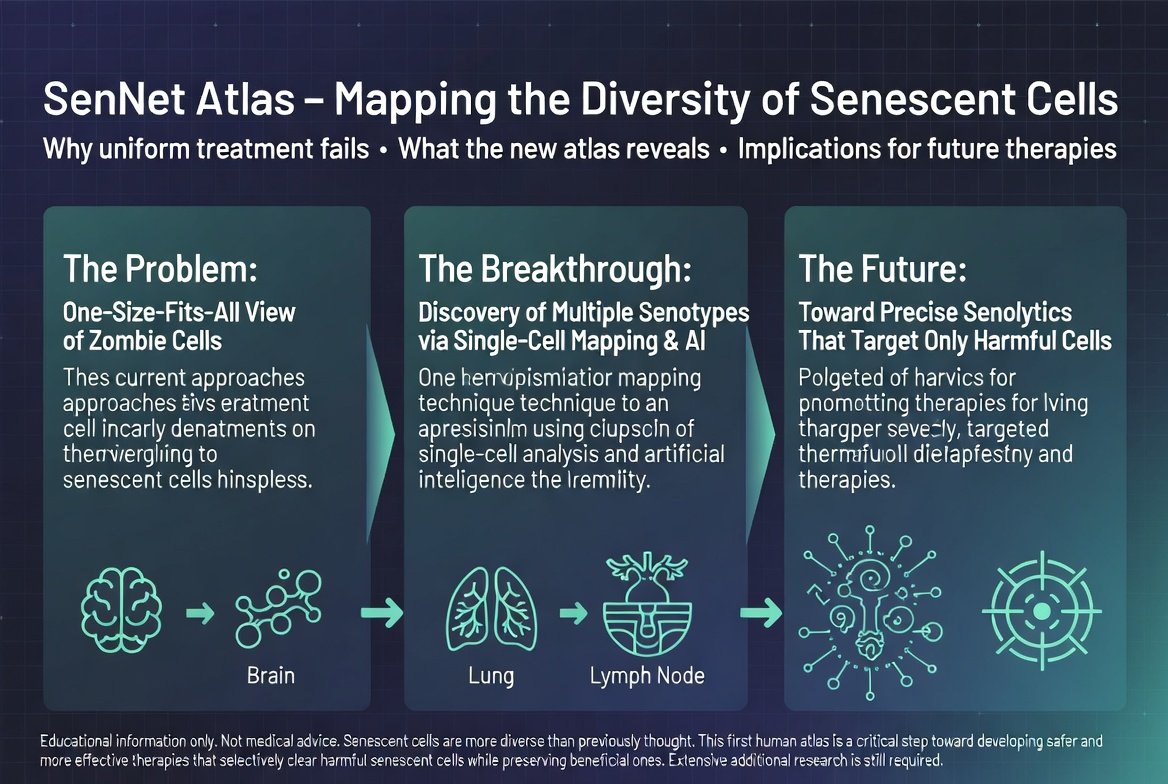
Senolytics are a class of drugs that selectively target senescent cells, those zombie cells that have stopped dividing but haven't died, and chronically secrete inflammatory molecules. The connection to influenza is biological, not just theoretical.
- Zombie cells in the elderly lung: With age, some lung epithelial cells and other cells enter senescence. They don't divide and continuously secrete SASP (Senescence-Associated Secretory Phenotype).
- SASP in the aged lung: A cocktail of inflammatory cytokines (IL-6, TNF-alpha, IL-1beta), metalloproteases, and growth factors. The result: chronic baseline inflammation in the lung tissue, even without disease. This phenomenon is sometimes called inflammaging.
- ABT-263 (navitoclax): This is the senolytic drug tested in this study. It inhibits the Bcl-2 and Bcl-xL proteins and triggers apoptosis (programmed cell death) in senescent cells. Note: This is not D+Q (Dasatinib + Quercetin), the more familiar senolytic cocktail, but a completely different compound.
- Fisetin: A natural flavonoid found in strawberries and apples, studied as a senolytic at a dose of about 20 mg/kg. Considered relatively safe, with several clinical trials in humans underway.
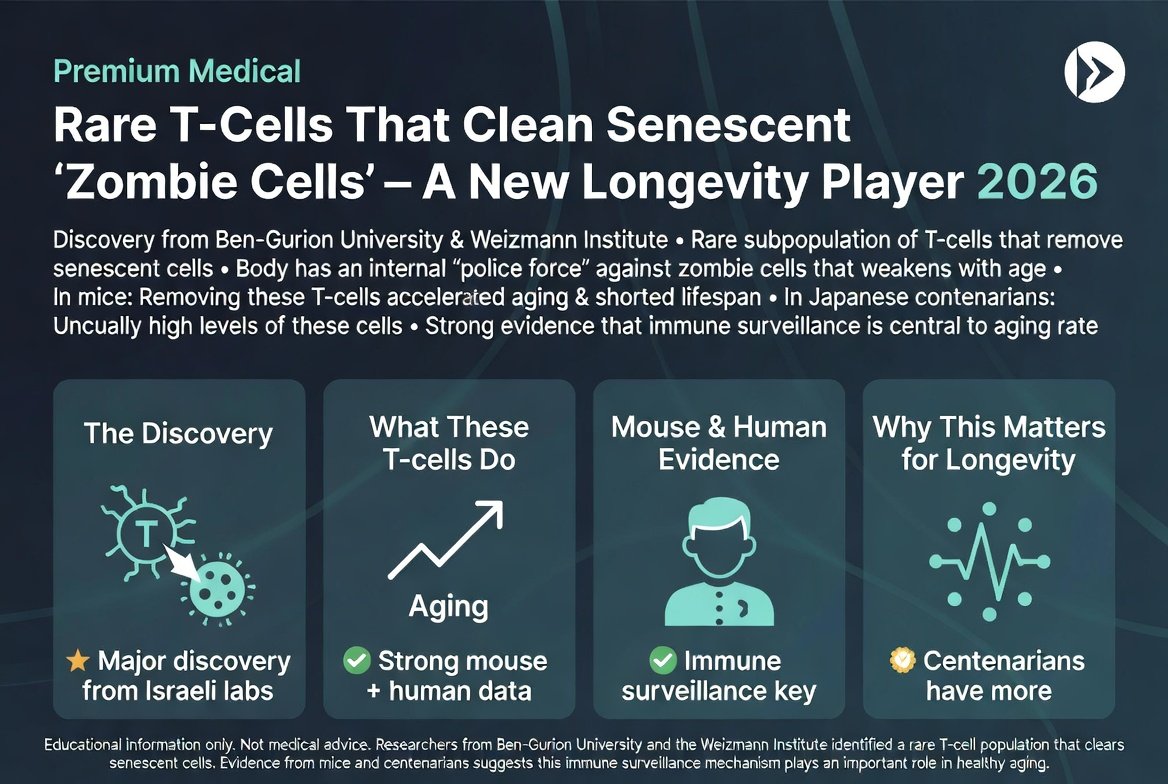
- Immunosenescence: The broader phenomenon of declining immune system function with age. Zombie cells are a central component, but not the only one.
The logic of the study was simple. If the aged lung is already "on fire" at baseline, a virus that adds new inflammation causes a storm. If we reduce the baseline inflammation beforehand, perhaps the storm will be calmer. This is a prophylactic approach, an attempt to prepare the terrain before the disease. The question is whether it actually works, and for that, we need to look at the data.
The Connection to Senolytics and Influenza: Why an Aged Lung is More Vulnerable
The researchers relied on several principles that explain why the difference between a young and an aged mouse infected with the same virus is dramatic, and why an aged lung responds differently.
Increased Zombie Cell Burden with Age
With aging, some lung cells accumulate senescence markers and secrete SASP. This accumulation contributes to persistent background inflammation. When influenza arrives, the pre-inflamed tissue reacts more intensely, and can shift to hyper-inflammation instead of a measured immune response.
Less Precise Immune Response
The aged immune system often reacts in a less focused manner. Instead of a precise and controlled response against the influenza virus, a broad release of cytokines sometimes occurs that damages the tissue itself. This is one reason why flu vaccines are less effective in the elderly, and why the disease is more dangerous.
Inflammation That Doesn't Always Subside After Recovery
An important topic in the article. Even after the virus is cleared, inflammation in the aged lung can remain at a high level for a long time. This is "post-viral chronic inflammation," and it has been linked to decreased lung function and an increased risk of further infections. A similar phenomenon was documented in severe COVID-19 survivors, especially the elderly. The current study examined whether senolytics could curb both acute and chronic inflammation.
The Evidence: What the Study Actually Found
Study Design (Delval et al., Aging Cell, April 2026)
This is the leading study on which the article is based. The researchers used aged mice aged 20-21 months (roughly equivalent to elderly humans) and young mice aged two months as a comparison group. The sample size was small, about 5 mice per group, a fact important to remember when interpreting the results.
Treatment protocol: ABT-263 (navitoclax) was given orally at a dose of 50 mg/kg, starting one day before infection and continuing until day 7 after infection with influenza A virus, strain H1N1 (A/California/04/2009). The researchers measured viral load, cytokine levels in the lung and plasma, inflammatory cell infiltration, weight loss, and later-stage inflammation and fibrosis.
What Improved: Inflammation
The positive finding: ABT-263 significantly reduced lung inflammation in aged mice. Levels of the cytokines IL-6 and IFN-gamma decreased, both in the lungs and plasma, consistent with changes in senescence marker expression. Additionally, the treatment reduced intestinal inflammation and minimized the disruption of gut bacteria (dysbiosis) caused by the virus. That is, the core mechanism—reducing zombie burden lowers inflammation—did work.
What Did Not Improve: And This is the Main Point
And here comes the part that must not be skipped. Despite the reduction in inflammation, ABT-263 did not improve the clinical outcomes of the infection in aged mice:
- Viral load: The treatment had no significant effect on the amount of virus in the lungs, in either young or aged mice. Senolytics did not help the body clear the virus.
- Weight loss: The treatment did not prevent weight loss, and in fact, there was a trend towards slightly worse weight loss in treated mice.
- Pulmonary fibrosis: The percentage of collagen staining in the alveolar walls (Sirius Red) was identical between mice treated with ABT-263 and the control group. That is, no change in collagen deposition, no protection against fibrosis.
- Clinical score: No improvement was recorded in general clinical measures of disease severity.
The fair conclusion: Senolytics reduced inflammation and pathology, but failed to improve survival, viral clearance, or long-term damage in this model. It is a promising mechanism, not a winning treatment.
Supporting Study with a Similar Conclusion (Luna et al., Aging Cell, 2025)
It is important to note that this is not an isolated case. A separate study published in 2025, by Luna and colleagues in the same journal, reached a very similar conclusion: senolytics reduce immune cell infiltration into the lung, but without improving influenza (IAV) infection outcomes in aged mice. When two independent studies point in the same direction, the picture is clear: the anti-inflammatory effect is real, but its translation into clinical benefit is not automatic.
Relevance to COVID-19 (Pastor-Fernandez et al., Aging Cell, 2023)
An earlier study, by Pastor-Fernandez and colleagues published in *Aging Cell* in 2023, examined the D+Q (Dasatinib + Quercetin) cocktail against SARS-CoV-2 in mice. There, it was found that senolytic treatment reduced coronavirus-related mortality, delayed symptom onset, and reduced signs of lung disease in a mouse model of COVID. This is an encouraging finding, but it pertains to a different virus (coronavirus, not influenza), a different drug (D+Q, not ABT-263), and a different mouse model. The two must not be conflated, nor should one assume that what worked there will also work for influenza.
What About Other Infections and Vaccines in the Elderly?
The idea behind the study—that immunosenescence weakens protection against infections—is broader than just influenza and is part of an active research field. However, it is important to distinguish between a theoretical mechanism and clinical proof:
- Vaccine response in the elderly: Vaccines against influenza, pneumococcus, COVID, and shingles are less effective in the elderly, and immunosenescence is suspected as a cause. Can senolytics improve vaccine response? This is an open question under investigation, with no proven answer in humans.
- Bacterial pneumonia: A major infectious cause of death in the elderly. The connection to senescence is being studied, but still at a basic level.
- Herpes zoster (shingles): A disease that increases in the elderly due to declining T-cell response. Here, a proven solution exists: a highly effective recombinant vaccine.
- General recovery: The idea that reducing zombie burden will improve overall resilience in the elderly is theoretically compelling, but has not yet been clinically proven.
The perspective here should be cautious. If immunosenescence is part of the reason the elderly are more vulnerable to infections, senolytics are an intriguing research direction, but not a promise. The current study reminds us how long the road from mechanism to benefit is.
Should You Start Taking Senolytics Before Flu Season?
The short answer: No, not based on this study. Here's why.
The Evidence is in Mice, and It's Not Even Unambiguous
It is important to remember: All of this main research was on mice, with a small sample of about 5 animals per group. Aged mice are not identical to aged humans, and a small sample severely limits the conclusions. And more importantly, even in mice, the treatment did not improve survival or viral clearance. There is no basis here for a human recommendation.
ABT-263 and D+Q Are Not Approved for Prophylaxis
ABT-263 (navitoclax) is an experimental agent with known side effects, primarily a decrease in blood platelets (thrombocytopenia). Dasatinib is approved for treating leukemia. Using either of these in a healthy person as prophylaxis is completely off-label and not recommended. These are not drugs to be taken lightly.
Fisetin: Accessible, But Also Unproven
Fisetin is available as a dietary supplement and is considered relatively safe. But the dose studied as a senolytic is about 20 mg/kg of body weight, meaning about 1400 mg for a 70 kg person, much higher than the dose in regular supplements. Such use has not been tested for long-term safety, and there is still no proof of senolytic efficacy in humans.
Risks of Drug Interactions
The elderly often take multiple prescription medications. Quercetin, for example, inhibits the CYP3A4 enzyme in the liver, which can increase levels of many drugs, including statins, blood thinners, and blood pressure medications. A significant interaction is possible. Only a doctor can assess the individual risk.
Who Might Consider a Clinical Trial
If you or your parent is 70+, seeking out controlled clinical trials in the field of senolytics is a legitimate option, but only within a research framework with medical supervision. You can search for active trials on clinicaltrials.gov. This is completely different from independently taking experimental drugs.
What Should You Take Away from the Study?
- If you or your parent is over 65, the annual flu vaccine is still the best and most proven tool. The vaccine is not perfect in the elderly (partial efficacy), but it saves lives. Don't skip it. Also make sure to get the pneumococcal vaccine and the RSV vaccine if available and recommended for you.
- Eat a diet naturally rich in flavonoids. Strawberries, apples, onions, grapes, and dark chocolate. Safe, cheap, and healthy regardless, even if it's far from a therapeutic dose and won't replace any treatment. Don't expect strawberries to mimic the senolytic effect in the lab.
- Regular moderate-intensity physical activity supports lung health and the immune system. Brisk walking for about 30 minutes, five times a week, or swimming. This is one of the most proven interventions for healthy aging.
- Do not take ABT-263 or dasatinib off-label, regardless of what is written online. These are drugs with significant side effects, and their anti-aging use is experimental. Use them only within a supervised clinical trial.
- Maintain sleep and stress management. Both affect immune system function. 7-9 hours of sleep and managed stress support the body's resilience at any age.
- Avoid smoking. Smoking accelerates lung damage and aging. Quitting smoking, at any age, is one of the most significant steps for lung health.
- Be a critical consumer of science news. A headline like "Senolytics Reduce Lung Inflammation" is true, but it doesn't tell you that survival didn't improve. It's always worth reading beyond the headline.
The Broader Perspective
This study on senolytics and influenza is an excellent example of how real science works, and why it's worth reading carefully. It provides support for the mechanism: zombie cells contribute to inflammation in the aged lung, and clearing them reduces that inflammation. This is a real and valuable insight. But it also teaches a lesson in humility: reducing inflammation is not the same as saving lives. The virus continued to replicate, weight continued to drop, and fibrosis was not prevented.
Think about the scale of the problem. Influenza alone causes 290,000 to 650,000 deaths per year worldwide, most of them in the elderly. The need for a better tool is real and urgent. But precisely because of the urgency, it is important not to get ahead of ourselves and not to present early mouse research as a therapeutic breakthrough.
The direction is nonetheless intriguing. If immunosenescence is part of the reason an aged body is more vulnerable to infections, then targeting zombie cells is a research path worth pursuing. It is possible that future senolytics, perhaps in combination with other treatments, at a different dose or timing, or in a specific subpopulation, will yield clinical benefit. It is also possible they won't. That is exactly what follow-up studies are supposed to determine.
There are many open questions. Would a different senolytic compound work better? Would a different timing of treatment change the outcome? How do we measure zombie burden non-invasively? And is there any translation to humans at all? All of these need answers before senolytics can be considered a relevant tool for flu season.
In the meantime, the humble and correct recommendation: Get vaccinated against the flu, eat fruits and vegetables, exercise, sleep well, don't smoke, and follow the research with a critical eye. Zombie cells are a real and exciting research target for aging medicine, but as of today, the flu vaccine is still the best protection available for the elderly. Science is advancing, but it is advancing cautiously, and so should we.
References:
Delval et al., Aging Cell (Wiley) 2026, "Senolytic Treatment Reduces Acute and Chronic Lung Inflammation in an Aged Mouse Model of Influenza", DOI 10.1111/acel.70480
Luna et al., Aging Cell 2025, "Senolytic treatment attenuates immune cell infiltration without improving IAV outcomes in aged mice"
Pastor-Fernandez et al., Aging Cell 2023, "Treatment with the senolytics dasatinib/quercetin reduces SARS-CoV-2-related mortality in mice", DOI 10.1111/acel.13771
ClinicalTrials.gov - Active senolytic trials


💬 Comments (0)
Be the first to comment on the article.