Thirty years after HAART (Highly Active Antiretroviral Therapy) drugs transformed HIV from a terminal illness to a chronic disease, medicine has discovered something troubling: People living with HIV, even with a fully suppressed virus, age faster than the general population. They develop heart disease at age 50 instead of 65, diabetes at age 45 instead of 60, and osteoporosis, which usually appears after age 70, appears in them at age 55.
For years, this was considered a side effect of the drugs themselves. Now, a new study reported in April 2026 and presented at the ESCMID Global conference in Munich points to a different picture: accelerated aging is part of the disease itself, not the treatment. And this has enormous implications for all of us, not just people with HIV. Because HIV is emerging as an accelerated model of normal aging processes. What happens to people with HIV at age 50 will happen to all of us at age 70.
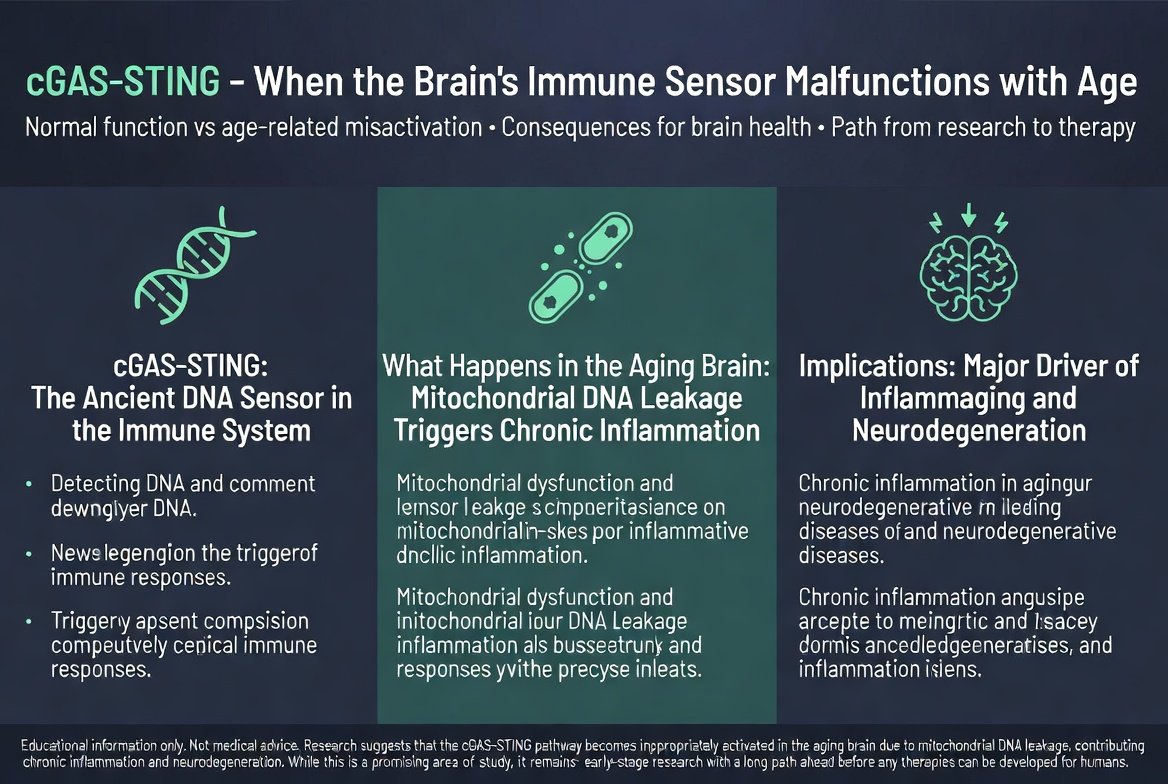
The central factor, and this is what interests aging researchers: chronic low-grade inflammation. A phenomenon called inflammaging. A combination of inflammation and aging. Researchers describe HIV as a window through which we can learn how to stop aging in everyone.
What is inflammaging?
Inflammaging is a phenomenon first described in 2000 by Italian researcher Claudio Franceschi. The basic idea:
- In young age, the immune system functions in a focused manner: acute inflammation when there is an infection, then complete silence.
- With age, the system loses the ability to turn off inflammation. A chronic, low-grade, hidden inflammation develops throughout the body.
- This inflammation slowly damages every tissue: arteries, brain, bones, muscles, skin.
- It is the main driver of all known age-related diseases: heart disease, cancer, Alzheimer's, type 2 diabetes.
Inflammaging is measured through blood markers: IL-6, TNF-alpha, CRP, sCD14, sCD163. When one or more of these is chronically elevated, it predicts mortality and age-related diseases with high accuracy. Higher than chronological age itself.
Why does HIV specifically accelerate this aging?
Even with drugs that suppress the virus to undetectable levels in the blood, several processes continue in the background:
1. Hidden reservoirs of the virus
HIV can hide in quiescent CD4 cells (latent reservoirs) throughout the body, lymph nodes, intestines, brain, testes. Even with drugs, the virus continues to produce, at a low level, proteins that stimulate the immune system. It's like an alarm that won't stop ringing.
2. Permanent damage to the gut barrier
In the first weeks of infection, HIV destroys CD4 cells in the gut lining. The damage is never fully repaired. Gut bacteria leak into the bloodstream, stimulate the immune system, and create constant inflammatory stimulation. This is called microbial translocation.
3. Zombie cells in the immune system
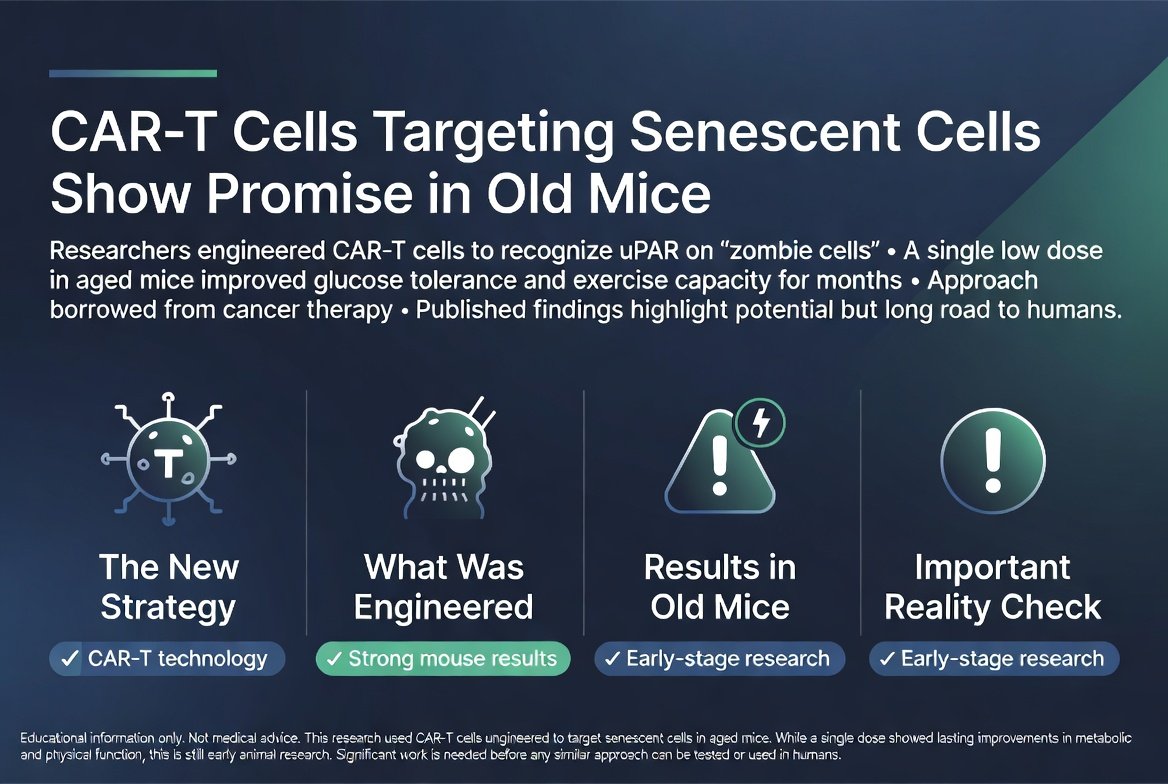
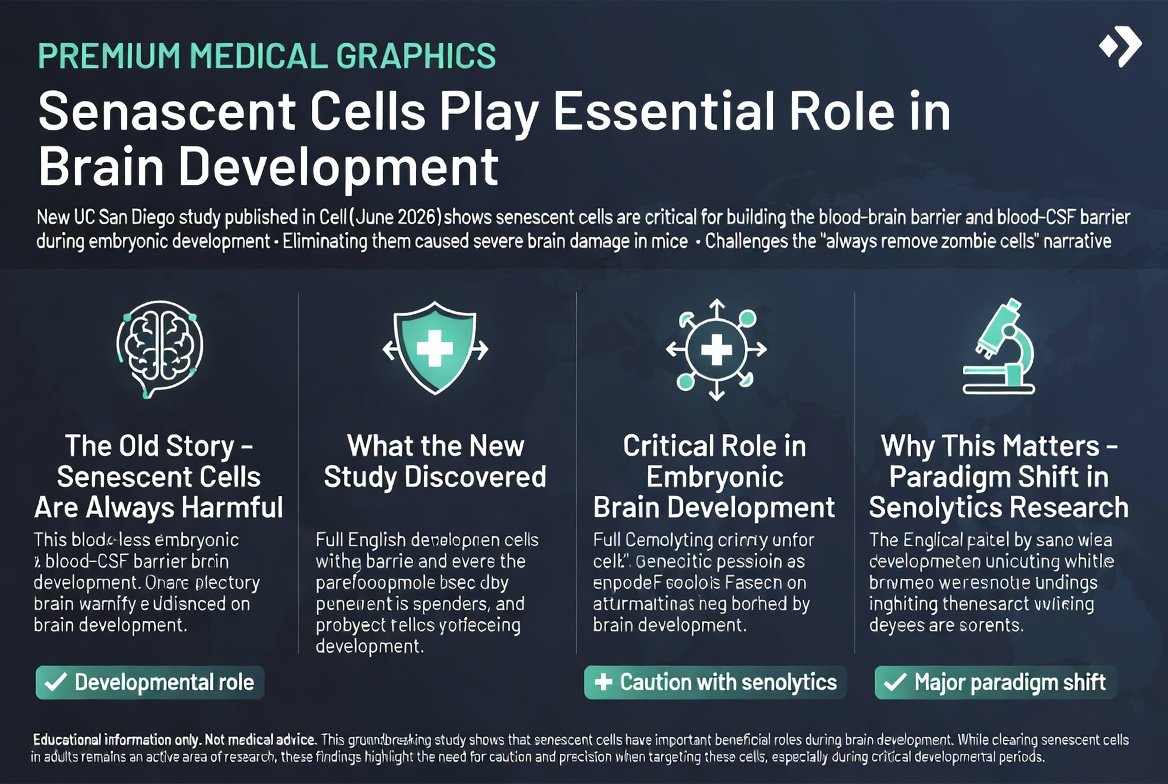
HIV accelerates the accumulation of senescent cells (zombie cells) in the immune system. Cells that have stopped dividing but haven't died, and continue to secrete inflammatory substances. This is a process that happens to all of us with age, but in people with HIV, it occurs 15-20 years earlier.
4. Persistent biological changes in immune cells
HIV leaves a lasting biological signature on the immune system. Biological clocks, which measure age by molecular markers rather than birth date, show that people with HIV carry a biological age higher than their chronological age, even after years on medication.
Current evidence
Study 1: Proteomic biological clock (April 2026)
The latest study, reported in April 2026 (CIDRAP, the Center for Infectious Disease Research and Policy at the University of Minnesota, covered the report) and presented at the ESCMID Global 2026 conference in Munich, developed a new tool: a Proteomic Aging Clock (PAC), which estimates biological age based on patterns in hundreds of plasma proteins. The model was trained on blood samples from the Swiss HIV Cohort Study and applied to carriers before and after starting antiretroviral therapy (ART).
The lead researcher, Barry Ryan, PhD, from EPFL (Swiss Federal Institute of Technology Lausanne, Switzerland), found two main findings:
- During untreated HIV infection, biological age was accelerated by a median of 10 years compared to chronological age.
- After antiretroviral therapy, an average decrease of 3.7 years in proteomic age was observed, after a median treatment duration of only about 1.55 years.
As treatment continued, the proteomic age continued to approach chronological age, suggesting ongoing biological recovery. The clock primarily reflected changes in inflammatory signaling pathways, i.e., inflammaging itself. The researchers' conclusion: early initiation and adherence to treatment are critical.
Study 2: SMART trial, what happens when treatment is stopped
A historic study published in the NEJM in 2006 compared 5,472 carriers: a group treated continuously versus a group that stopped ART intermittently based on CD4 count. In the group that stopped treatment, the risk of opportunistic disease or death was approximately 2.6 times higher (hazard ratio 2.6), and the risk of heart, kidney, and liver disease was 1.7 times higher. The study was stopped early due to the risk found in the group that stopped treatment. The conclusion: continuous viral suppression, not intermittent, is what protects the body.
Study 3: REPRIEVE, statins in people with HIV
The REPRIEVE study, published in the NEJM in 2023, on 7,769 people with HIV aged 40-75 at low-to-moderate cardiovascular risk. Half received a statin (pitavastatin), half a placebo. The statin reduced major cardiovascular events by 35%. The interesting point: this reduction is about twice as large as expected (about 17%) based on the statin's effect on LDL cholesterol alone. The likely explanation: statins also have a direct anti-inflammatory effect, contributing beyond cholesterol lowering.
Study 4: canakinumab, direct inflammation blockade in carriers
It was tested whether direct blockade of an inflammatory pathway could help. Canakinumab (an anti-IL-1β antibody, an approved anti-inflammatory drug) was tested in treated and suppressed people with HIV. In a small pilot phase (10 participants, single dose), a decrease of about 41% in hsCRP and about 30% in IL-6 was observed after 8 weeks, as well as evidence of reduced arterial inflammation. A subsequent randomized, placebo-controlled study (about 100 participants) continued to examine the effect. Importantly: the treatment was well tolerated, except for a temporary decrease in neutrophil count that returned to normal within weeks. (This is an experimental drug in this context, not an approved anti-aging treatment.)
What does this mean for aging in everyone?
The data from people with HIV provide biological proof for the inflammaging theory:
- Chronic inflammatory stimulation accelerates aging according to biological clocks.
- Reducing the stimulation (via ART) slows the process.
- Anti-inflammatory drugs (statins, canakinumab) also slow inflammatory markers.
- Zombie cells are a central part of the mechanism.
This is relevant to everyone who does not have HIV. Because the sources of inflammaging in the general population are poor oral bacteria, gut leakage from processed food, visceral obesity, poor sleep, chronic stress, and latent infections (CMV, EBV, HSV). Each of these is similar in mechanism to the stimulation created by HIV: chronic, low-grade inflammatory stimulation that doesn't stop.
What to take from the research?
Even if you are completely healthy, the following recommendations are based on current evidence:
- Check your CRP in a routine blood test (hs-CRP). A value above 3 mg/L indicates chronic inflammation. Aim for 1 or below.
- Treat oral bacteria: brushing, flossing, visiting a hygienist every 6 months. Gum disease is a major source of inflammaging.
- Avoid processed food with additives (emulsifiers, colors, preservatives) that damage the gut barrier.
- Reduce visceral obesity: belly fat is an endocrine organ that secretes inflammatory cytokines. Even a 5% weight loss significantly lowers CRP.
- If you have cardiovascular risk factors, ask your doctor about a statin. The REPRIEVE study provides evidence that statins have an anti-inflammatory effect beyond cholesterol lowering.
- Quality sleep (7-9 hours) is a powerful anti-inflammatory medicine. Chronic sleep deprivation is linked to increases in inflammatory markers like IL-6.
Are there new solutions on the horizon?
Several innovative treatments are currently being tested:
- Senolytics (dasatinib + quercetin, fisetin), which clear zombie cells. Being tested clinically in a range of age-related diseases.
- Anti-IL-6 (tocilizumab), blocking one of the central cytokines of inflammaging. Already used in rheumatoid arthritis.
- Vaccines against CMV, reducing the burden of latent CMV that significantly contributes to inflammaging.
- FMT (fecal microbiota transplantation), restoring the gut microbiome and strengthening the barrier. Being tested clinically in the elderly population.
What is still unknown
There are important limitations before we fully accept the model:
- The question of what starts inflammaging in non-carriers: infections, metabolism, genetics, or a combination?
- Is it possible to reverse inflammaging or only stop it?
- What dosage of anti-inflammatories is safe long-term?
- Is the biological clock a cause or a consequence of aging?
The broader perspective
One of the most important insights from a decade of HIV research is that aging is not just time-dependent wear and tear. It is the result of cumulative inflammatory stimuli and the dysregulation of the immune system. People with HIV give us a window to see how this works in an accelerated state, because their immune stimulation is chronic and constant.
This is also an optimistic message: If we can slow aging in people with HIV with drugs and lifestyle, we can slow it in all of us. The tools are less glamorous than expensive drugs: CRP testing, gum cleaning, unprocessed food, physical activity, sleep, and early treatment of risk factors.
In a world searching for the miracle anti-aging drug, the lesson from HIV is clear: Aging is an inflammatory process, and inflammation can be reduced. Not with one drug, but with a method.
References:
CIDRAP - People living with HIV age faster, but antiretroviral therapy can help (report, April 2026; study presented at ESCMID Global 2026)
REPRIEVE Trial, NEJM 2023, DOI 10.1056/NEJMoa2304146


💬 Comments (0)
Be the first to comment on the article.