This story begins with a hallway conversation between two PhD students at the Mayo Clinic. Keenan Pearson studied aptamers, short synthetic DNA molecules, for identifying brain tumors and neurodegenerative diseases. Sarah Jachim studied zombie cells and cellular aging. When they met at a scientific event and compared notes on their doctoral work, an idea emerged that initially seemed far-fetched: could the aptamer technology, built for cancer, be harnessed to identify zombie cells instead?
The idea proved fruitful. In a study published in September 2025 in the journal Aging Cell, the Mayo Clinic team, led by biochemist Prof. L. James Maher III, showed that tiny synthetic DNA molecules can selectively bind to zombie cells. This is a detection tool, not a drug that kills cells, and this is an important distinction we will return to. ScienceDaily reported on the discovery on May 15, 2026, under the headline "A grad student's wild idea sparks a major aging breakthrough."
What is a zombie cell?
Before diving into the discovery, it's important to understand what a zombie cell is. The scientific term is cellular senescence, and it was first described in 1961 by Leonard Hayflick, who noticed that body cells in culture stop dividing after about 50 divisions. They don't die, but they also don't divide anymore. They are stuck in a state of "alive but not quite."
- Cellular stress: Cells enter senescence following DNA damage, oxidative stress, or telomere shortening below a critical threshold.
- Senescence markers: Zombie cells highly express the proteins p16INK4a and p21, and show increased activity of the enzyme beta-galactosidase, a marker used for their identification in the lab.
- Inflammatory secretion (SASP): The Senescence-Associated Secretory Phenotype is a cocktail of cytokines, enzymes, and growth factors that zombie cells secrete into their environment, fueling chronic inflammation.
- Resistance to cell death: Unlike other damaged cells that die, zombie cells are relatively resistant to apoptosis, so they remain in the tissue.
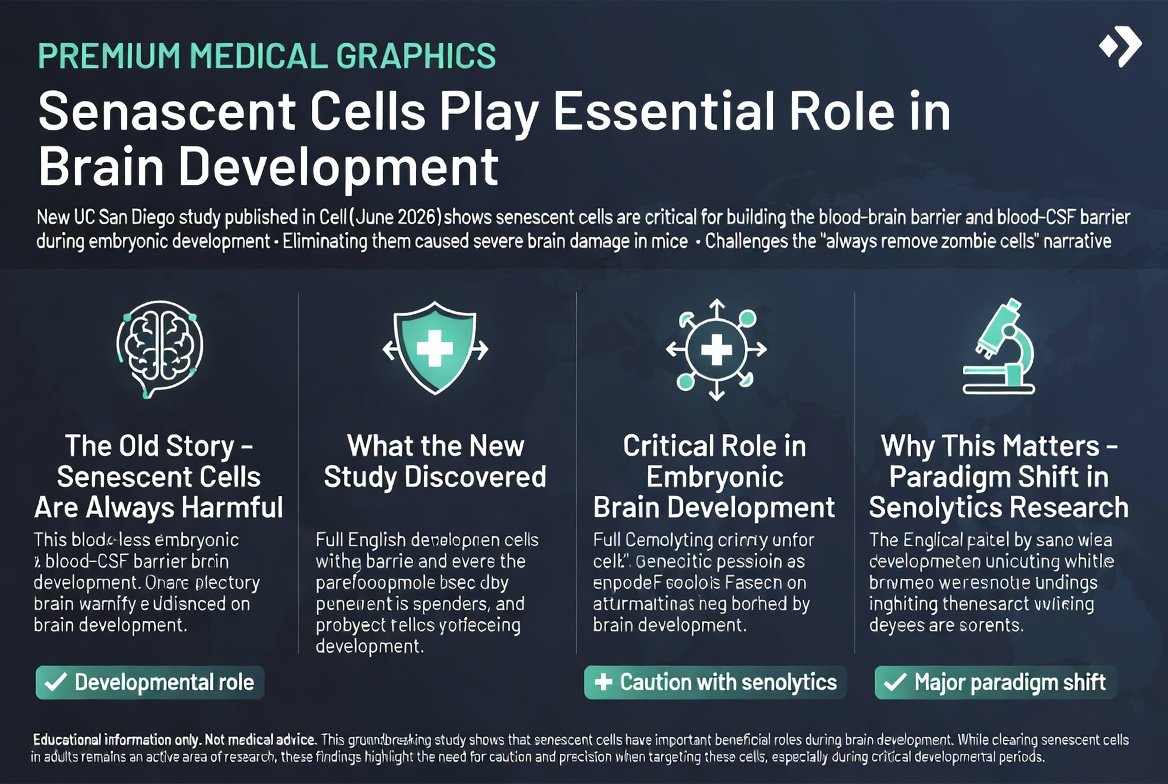
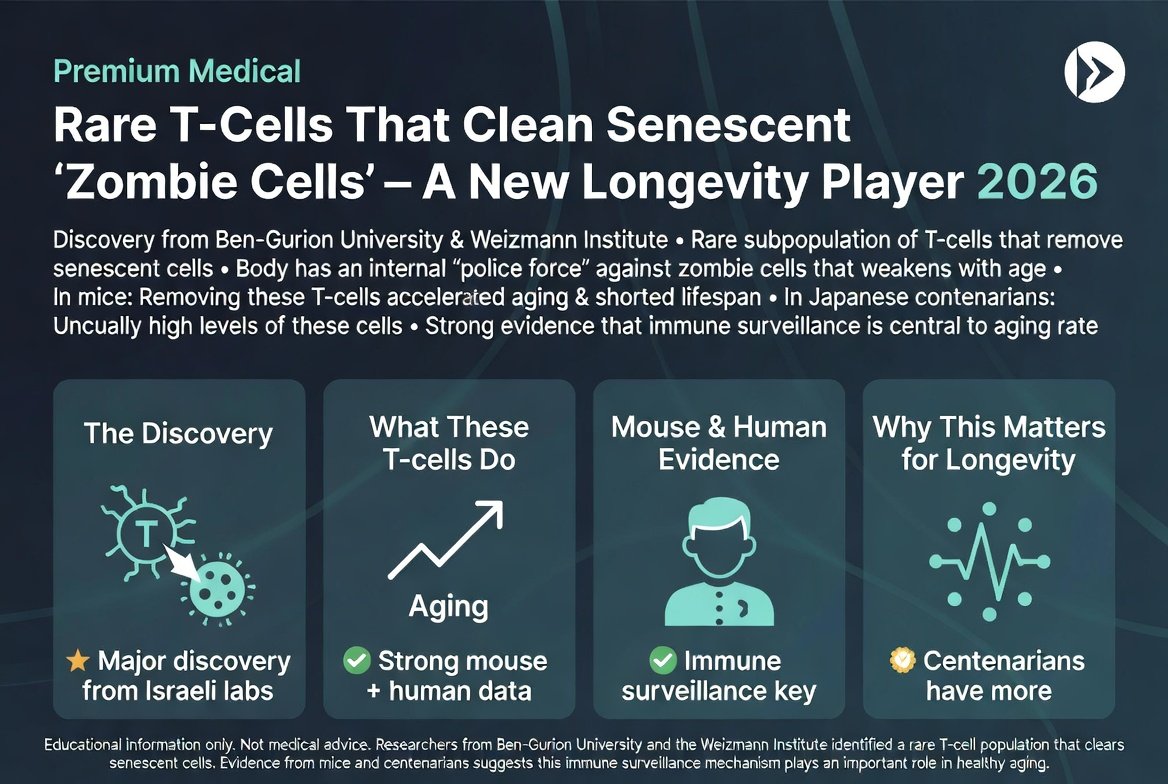
In a young and healthy body, the immune system eliminates most zombie cells. But with age, immune capacity declines, and they accumulate in tissues gradually. This accumulation is not a harmless phenomenon: studies have identified zombie cells as one of the causal factors of many age-related diseases, from arthritis and fibrosis to cognitive decline.
Why is it so hard to identify and target zombie cells?
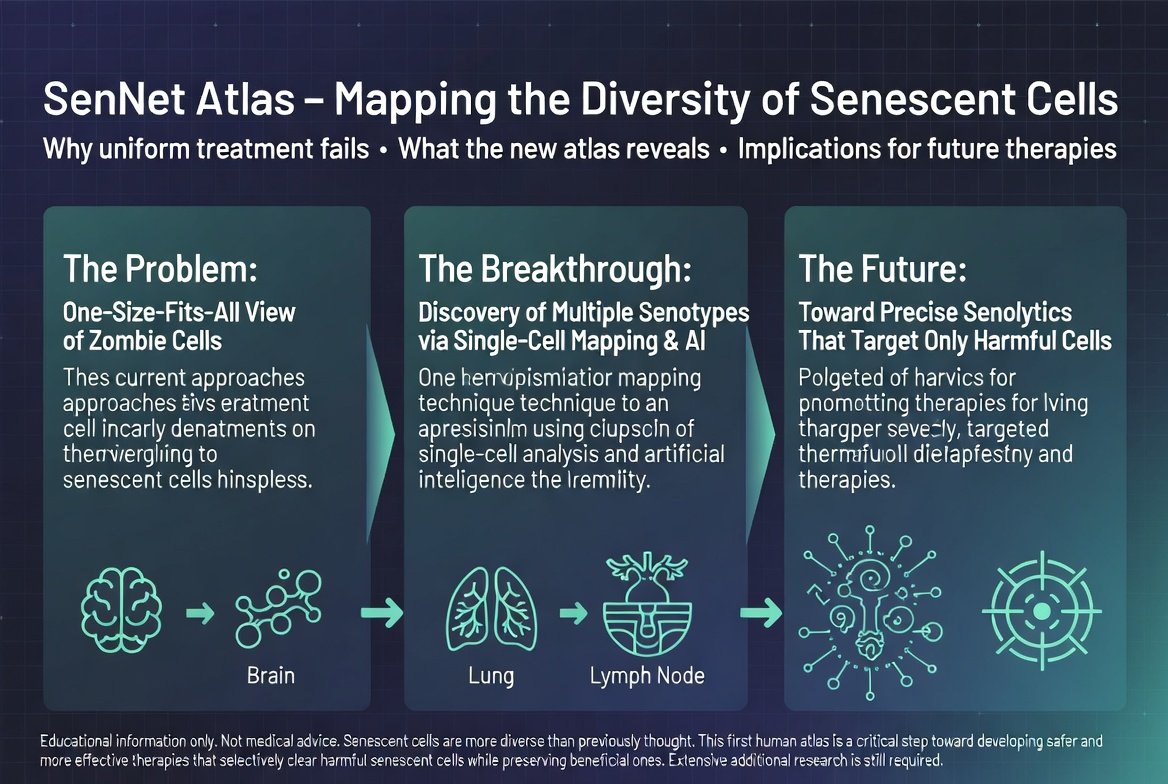
Here lies the problem that the new research attempts to solve. There is currently no single, universal biomarker that identifies all zombie cells. Common markers like p16 and beta-galactosidase are not entirely unique to senescence, and sometimes require intracellular staining that cannot be performed on living cells inside the body. The result: both researchers and drug developers find it difficult to know with certainty where zombie cells are located and how many there are.
This is also the drawback of the existing class of senolytic drugs. Molecules like dasatinib combined with quercetin (D+Q), fisetin, and navitoclax kill zombie cells by inducing apoptosis, usually by blocking anti-apoptotic proteins from the BCL family. They work, but they act on pathways that also exist in healthy cells, so their selectivity is limited. The more accurate the identification of zombie cells, the more safely treatments can be targeted to them.
What are aptamers?
Aptamers are short strands of synthetic DNA that naturally fold into complex three-dimensional structures. The specific shape each aptamer folds into allows it to bind to a particular protein on the cell surface, similar to how a key fits a lock. They can be thought of as a chemical alternative to antibodies.
The practical advantage is significant: aptamers are cheaper and more flexible than traditional antibodies, the proteins typically used to distinguish between cell types. They are stable, easy to produce in quantity, and can be easily modified. The challenge facing the team was to find, from a vast number of possible sequences, those rare aptamers that bind specifically to zombie cells and not to healthy cells.
Current evidence
Mayo Clinic study: Aptamer selection using SELEX (Aging Cell 2025)
This is the main study. The team used a method called SELEX (Systematic Evolution of Ligands by EXponential enrichment), an iterative and unbiased selection process. Instead of guessing in advance which protein to target, the researchers screened over 100 trillion random DNA sequences and let the zombie cells themselves "choose" the sequences that naturally bind to them, over nine rounds of cyclic selection between zombie and non-zombie cells.
From the screen, ten candidate aptamers were identified, and two of them were characterized in depth: 6756 and 6762. Both bind strongly to zombie cells. Affinity measurements showed very low dissociation constants (high affinity): approximately 921 picomolar for aptamer 6756 and approximately 579 picomolar for aptamer 6762. Mass spectrometry analysis identified that the target they bind to is a variant of the protein fibronectin on the cell surface. It's important to be precise: the researchers honestly note that they still do not understand exactly how this fibronectin variant is related to senescence.
Testing in aged mouse tissue
The team tested the aptamers not only in a petri dish but also in tissue. Aptamer 6762 showed significantly stronger staining (fluorescence) in lung tissue from old mice, aged 22 to 30 months, compared to young mice, consistent with the expected zombie cell burden at old age. When INK-ATTAC transgenic mice were treated with a substance that eliminates zombie cells, staining with aptamer 6762 decreased significantly compared to a control group. This is supporting evidence that the aptamer indeed binds specifically to zombie cells.
The main limitation: mouse, not human
This is the most important point for perspective. The aptamers were selected and characterized on mouse cells. When the team tested them on human cells (human lung fibroblasts and IMR90 cells), none of the aptamers bound to human zombie cells above the negative control level. In other words, the tool in its current state identifies mouse zombie cells, not human ones. The researchers emphasize that further studies will be needed before aptamers can reliably identify zombie cells in humans.
Why is this important, even if it's only in mice and only for detection?
It's easy to dismiss an early-stage discovery, but there are two real values here. First, a good detection tool is a prerequisite for any targeted treatment. If we can accurately identify where zombie cells are located and how many there are, we can measure the senescence burden in a tissue, track it over time, and assess whether a senolytic treatment is actually working.
Second, the researchers propose an interesting future direction: aptamer-drug conjugates, meaning linking an aptamer molecule that identifies a zombie cell to a senolytic drug, so that the drug is released specifically near the right cells. This is not a result of the current study but an idea for the future, but it illustrates why an accurate detection tool could later also improve the selectivity of treatment. Other potential application directions relate to diseases where zombie cells play a central role, such as Alzheimer's, osteoarthritis, and pulmonary fibrosis, but all of these are still far off.
Does this mean there is already a new anti-aging treatment?
No, and it's important to be precise here, for several reasons.
It's a detection tool, not a drug
The aptamers tested do not kill zombie cells. They bind to them to mark and identify them. No molecule here is an "anti-aging drug." Anyone reading the headline and imagining a pill that cleans out zombie cells is reading something that doesn't exist.
It's still at the mouse and cell stage
The aptamers were selected on mouse cells and did not bind to human cells. The path to a tool that works in humans is long, and every step along the way could fail.
The history of translation from mouse to human
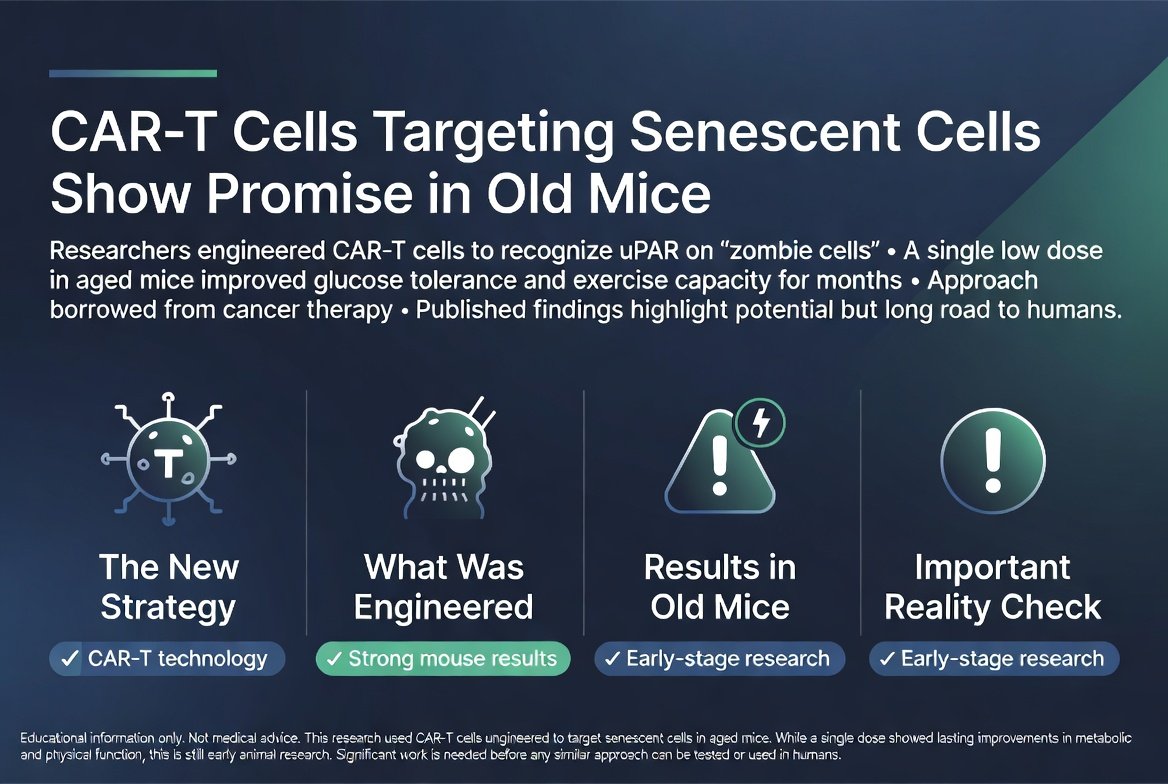
Even in the field of senolytics itself, most dramatic successes have been in mice. Landmark studies showed that eliminating zombie cells in old mice extended median lifespan by about 24 to 27 percent (Baker, van Deursen, and colleagues, 2016), and that treatment with D+Q improved survival in old mice (Xu and colleagues, Nature Medicine 2018, with about a 36 percent improvement in survival after treatment). But most senolytic successes in mice have not yet been translated to humans, and the path from lab to clinic is fraught with failures.
The hype around "miracle drugs"
Every time an exciting breakthrough comes in the world of aging, there is a period of excitement followed by disillusionment. We saw this with resveratrol, nicotinamide riboside, and metformin. It's wise to be patient and follow the evidence.
What to take from this research?
- Don't buy anything based on a headline. There is no commercial product related to this discovery, and anyone claiming to sell an "anti-aging aptamer" or "zombie cell cleaner" is misleading you. This is an early-stage research tool.
- Support the system that already naturally cleans zombie cells: regular physical activity, quality sleep that allows DNA repair, and managing chronic stress all slow the formation of zombie cells and support their elimination by the immune system.
- Be aware of natural senolytics, without big promises: Fisetin is found in strawberries, apples, and red onions, and quercetin in onions, apples, and red wine. Preliminary studies are testing a mild senolytic effect, but evidence in humans is still limited. Consult a doctor before taking a supplement, especially if you are on medication.
- Maintain an anti-inflammatory diet: Olive oil, vegetables, legumes, fish, and berries reduce oxidative stress and inflammation, two factors that fuel senescence formation.
- Follow the field with humility and patience. If such a detection tool matures to human use, it will take years. Until then, the basic layer of a healthy lifestyle is the best investment.
The broader perspective
The story of Pearson, Jachim, and Maher is more than a technical discovery. It is a reminder of how science truly advances: not only through large research programs, but sometimes through a hallway conversation between two students from different fields, one bringing a tool and the other bringing a problem. The connection between aptamers, developed for cancer, and zombie cells was not obvious to either of them alone.
It is also a lesson in perspective. The news here is not a drug, but a tool that may, in the future, help identify and target treatments with greater precision. Zombie cells have gone in the last 65 years from "an interesting phenomenon in culture" to "a central causal factor in aging," and any tool that allows us to see them better brings us closer to a true understanding of the process.
And finally, there is healthy humility here. Even after decades of research, we are still learning basic things about zombie cells, to the point that we still don't know why a particular fibronectin variant marks them. This humility should not stop us, but spur us on. There is still much to discover, and sometimes it starts with an idea that sounds wild.
References:
Pearson et al., An Unbiased Cell-Culture Selection Yields DNA Aptamers as Novel Senescent Cell-Specific Reagents, Aging Cell 2025;24(11)
ScienceDaily - A grad student's wild idea sparks a major aging breakthrough


💬 Comments (0)
Be the first to comment on the article.