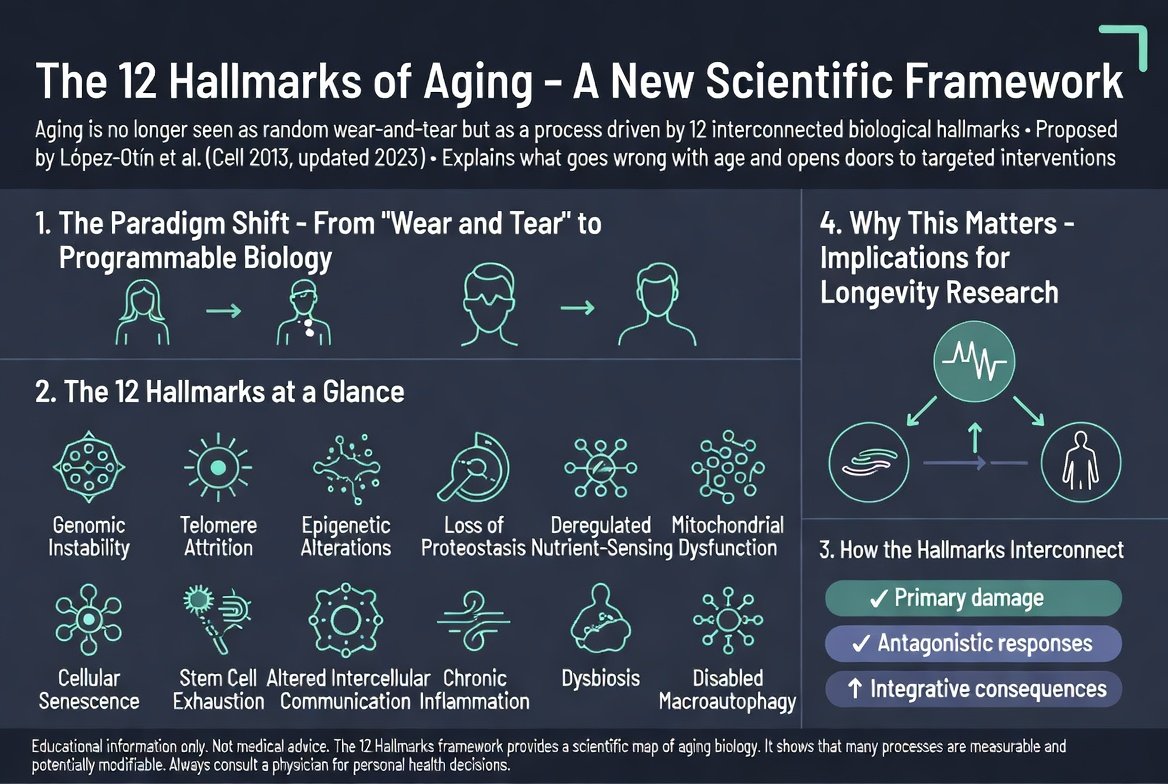
In the last decade, the field of aging biology has expanded around two central concepts: mitochondrial dysfunction and zombie cells (senescent cells). For years, both were considered separate items on the list of 'hallmarks of aging.' Now, accumulating evidence shows something entirely different: these two processes are deeply interconnected. A senescent cell is not just a cell that has stopped dividing. It is often a cell with broken mitochondria at its core, and these are part of the engine that produces its destructive effects on surrounding tissue.
An article published in Technology Networks on May 15, 2026, titled Targeting Mitochondrial Pathways To Reverse Cellular Senescence, describes work by Dr. Chang-Hoon Nam and colleagues at the Daegu-Gyeongbuk Institute of Science and Technology (DGIST) in Korea. The team examined a single molecule, vutiglabridin, in senescent human skin cells (fibroblasts). They found that prolonged treatment alleviated all tested senescence markers and prevented the deterioration in mitochondrial structure and function that accompanies the process. Additional research showed that the molecule improves mitochondrial function by binding to and activating the protein paraoxonase-2 (PON2) in the inner mitochondrial membrane. The idea behind this direction is simple yet powerful: if damaged mitochondria fuel senescence, then repairing mitochondria can either restore the cell to normal function or at least reduce the damage it causes. In this article, against the backdrop of this work, we will review the mitochondrial pathways researchers are trying to target and the drugs and supplements at the forefront.
What is a Senescent Cell with Broken Mitochondria
A senescent cell is a cell that has irreversibly stopped the cell cycle but has not died. Instead, it remains in the tissue and secretes a cocktail of inflammatory molecules known as SASP (Senescence-Associated Secretory Phenotype). The problem: SASP damages healthy cells in the environment, causes chronic inflammation, and accelerates the aging of entire tissues.
The mitochondrial signature of a senescent cell has recently been recognized as an important component of this state:
- Low mitochondrial membrane potential (Δψm), the mitochondria struggle to maintain the electrical charge essential for ATP production.
- Fragmented mitochondrial network, instead of a connected and dynamic mitochondrial network, the cell contains small, isolated mitochondria.
- Increased leakage of free radicals (ROS), the electron transport chain 'leaks' electrons that produce high amounts of superoxides.
- Impaired mitophagy, the cell fails to dispose of damaged mitochondria.
- Activation of cGAS-STING, mitochondrial DNA leaking into the cytoplasm activates this DNA sensor, fueling inflammatory SASP.
The connection between mitochondrial collapse and senescence is bidirectional and not unidirectional. On one hand, preclinical studies have indicated that damage to mitochondrial DNA in a young cell can promote a transition to a senescent state. On the other hand, experimental approaches that improve mitochondrial function, including early experiments of transferring healthy mitochondria into cultured cells, suggest that some senescent characteristics can be alleviated. It is important to emphasize: most of this work is still laboratory-based or in animals, and has not been proven as a treatment in humans.
The Connection Between Mitochondria and Senescence: Key Pathways
The practical question is: which mitochondrial pathway should be targeted to treat senescent cells? It is common to distinguish between several leading strategies, each with a drug or supplement attempting to activate it.
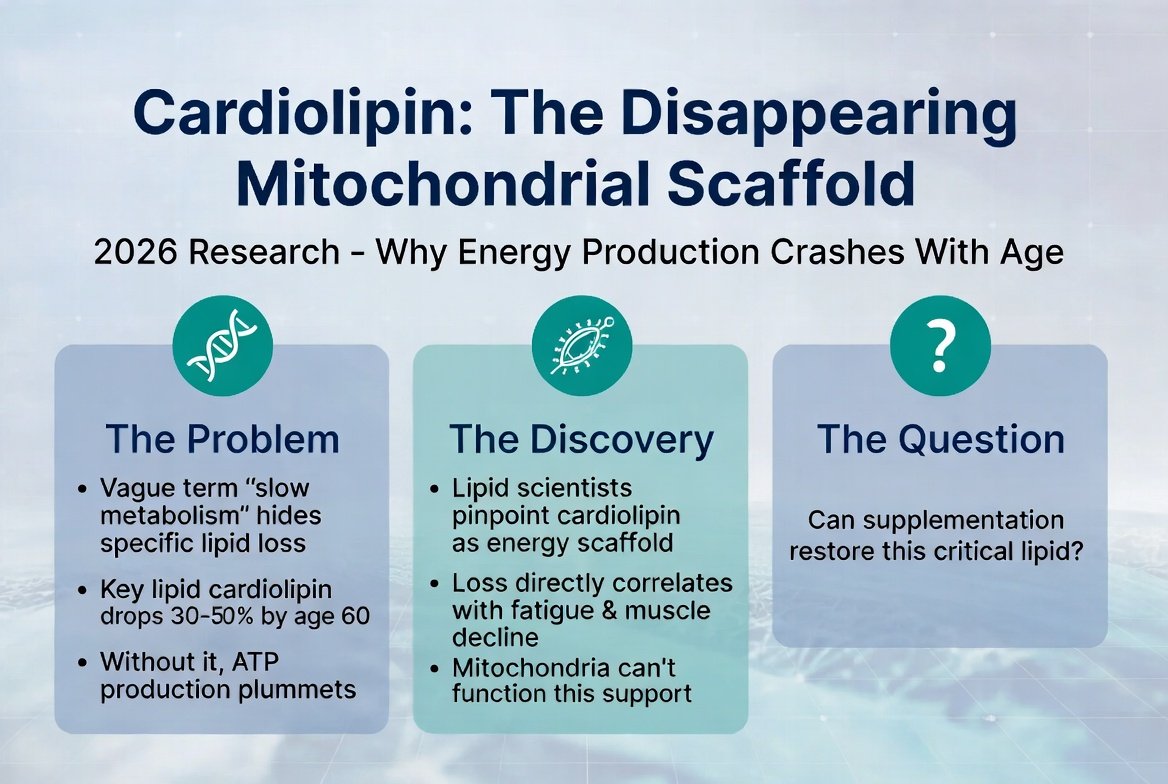
1. Restoring membrane potential. If the problem is low Δψm, one can try to restore it. Molecules like elamipretide (formerly SS-31, MTP-131, Bendavia) bind to cardiolipin in the inner mitochondrial membrane and improve its stability and efficiency.
2. Neutralizing ROS at the source. Most antioxidants (vitamin C, vitamin E) do not reach the mitochondria at all. But MitoQ, a derivative of CoQ10 engineered with a triphenylphosphonium cation (TPP+), is drawn directly into the mitochondria thanks to the membrane potential. There, it neutralizes superoxides at the site of their formation, before they can damage mtDNA.
3. Enhancing mitophagy. Urolithin A is a metabolite that our microbiome produces from ellagitannins (compounds found in pomegranates and walnuts). It activates mitophagy via the PINK1-Parkin pathway. In senescent cells, it can 'take out the mitochondrial trash' and improve function.
4. New mitochondrial biogenesis. If existing mitochondria are too broken, perhaps the solution is to produce new ones. PGC-1α is the master regulator of this biogenesis. Exercise, especially HIIT, is the most potent natural stimulator of PGC-1α. Drugs attempting to mimic this effect (ZLN005, SR-18292) are still in early research stages.
5. Pushing toward apoptosis. Sometimes a senescent cell is too broken to save. In such a case, the goal is to kill it. This is where senolytics come in. Drugs like navitoclax, fisetin, and dasatinib + quercetin act, among other things, through mitochondrial pathways: they lower the threshold for apoptosis in cells whose mitochondria are already on the brink, causing only them (not healthy cells) to die.
What the Evidence Says About Each Pathway
Urolithin A in the Elderly, the ENERGIZE Trial
A randomized, placebo-controlled clinical trial (ENERGIZE), conducted at the University of Washington in Seattle and published in JAMA Network Open in 2022, examined 66 adults aged 65 to 90 who took 1,000 mg of Urolithin A (Mitopure) or a placebo daily for four months. The primary outcome: significant improvement in muscle endurance, measured by the number of contractions until fatigue in hand and leg muscles. In contrast, the six-minute walk test showed no significant difference. The trial did not include biopsy findings on senescent muscle cells, but it is considered a proof-of-concept that a treatment targeting mitophagy can improve muscle function in humans.
Elamipretide in the Elderly with Impaired Mitochondrial Function
A Phase 2, randomized, placebo-controlled study (NCT02245620) examined 41 elderly individuals with prior evidence of impaired mitochondrial function. Participants received a single intravenous infusion of elamipretide (at a dose of 0.25 mg/kg/hour for two hours) or a placebo, to test whether the peptide alters the energetics or performance of hand muscles. The peptide works by stabilizing cardiolipin in the inner mitochondrial membrane. This is a small, early study designed to test feasibility and safety, not to extend lifespan or 'rejuvenate' muscle.
NMN and Senescence, a Cancer Warning
NMN raises NAD+ and thereby improves mitochondrial function and reduces senescence in preclinical models. However, a study by researchers from Case Western Reserve University, published in the journal Cancer Letters, showed that vitamin B3 derivatives (especially NMN) helped pancreatic cancer cells survive and resist chemotherapy, both in laboratory experiments and in a mouse model. The mechanism: the additional NAD+ fuels the cancer cells' energy system, aids in repairing DNA damage from treatment, and reduces their programmed cell death. Despite the anti-senescence potential, NMN use should be considered cautiously in people with active cancer or cancer risk factors, especially during chemotherapy.
HIIT, Mitochondria, and the Aging Muscle
A well-known Mayo Clinic study (Robinson et al., published in Cell Metabolism in 2017) examined 72 sedentary adults in two age groups. After 12 weeks of high-intensity interval training (HIIT), mitochondrial respiratory capacity in muscle increased by about 69% in the older adults (65-80) and about 49% in the younger ones, along with a broad increase in mitochondrial gene expression, especially in the older adults. In other words, exercise worked as a particularly potent stimulator of mitochondrial biogenesis, even in old age, without drugs and without side effects.
What About Neurodegenerative and Cardiovascular Diseases?
Mitochondrial collapse in senescent cells is particularly relevant to diseases where brain and heart cells are damaged. In Parkinson's disease, dopaminergic neurons with damaged mitochondria may develop senescent characteristics and release SASP that harms neighboring neurons, so mitochondrial pathways are being investigated as a potential target.
In Alzheimer's disease, brain ATP levels decline years before symptom onset. In mouse models of the disease, it has been demonstrated that Urolithin A activates mitophagy in the brain, reduces senescence characteristics in microglia (the brain's immune cells), and decreases the beta-amyloid burden, along with improvements in learning and memory. This is still primarily evidence from animals and cell culture, not clinical proof in humans.
Also in heart failure, the heart muscle contains many mitochondria per cell. When they break down with age, some cardiomyocytes may develop senescent characteristics and contribute to failure. Approaches combining mitochondrial improvement and senolytics are being studied but are in early stages.
Should We Start Taking Mitochondrial Supplements?
Each supplement has its profile and rationale:
Urolithin A (500-1000 mg per day)
The best clinical evidence in this group. Price: 350-500 shekels per month. Reasonable especially for an elderly person with muscle weakness or sarcopenia. The risk: there are still no long-term safety data beyond a few months.
MitoQ (10-20 mg per day)
Less proven in humans but with a unique profile due to its mitochondrial targeting. Price: around 250-300 shekels per month. Warning: an excessively potent antioxidant may interfere with normal ROS signaling, which itself mediates adaptation to exercise. It is advisable not to take it within two hours of a workout.
NMN/NR
Available everywhere but with the cancer caveat. If you are over 60, have active cancer, or a family history of cancer, consult a doctor before starting.
CoQ10 (100-200 mg per day)
The veteran and cheap option. Most of the supplement does not efficiently penetrate the mitochondria (hence MitoQ was developed), but it still has a role in people taking statins that lower endogenous CoQ10.
Senolytics (Fisetin, Dasatinib + Quercetin)
Fisetin is sold as a dietary supplement at a dose of 500-1000 mg for two days per month (pulses). Evidence in humans is still thin, but the safety profile is good. Dasatinib is a cancer drug and can only be prescribed by a doctor.
What to Do Starting Today
- Add 2-3 HIIT workouts per week. For example, 4 intervals of 4 minutes at high intensity, with 3 minutes of rest between them. This is the most proven way in humans to improve mitochondrial biogenesis.
- Fast for 14-16 hours daily. Activates mitophagy through AMPK activation and mTOR inhibition, and raises NAD+ without supplements. This is a 'natural' approach to the effect Urolithin A tries to mimic.
- Pomegranates, walnuts, raspberries, three times a week. Provide ellagitannins that the microbiome will convert to Urolithin A. Only in part of the population is the conversion efficient. For the rest, the direct supplement is preferable.
- Brief cold exposure, a cold shower for 2-3 minutes at the end of your shower. Activates UCP1 and may support mitochondrial activity.
- Quality sleep of 7-8 hours. During deep sleep, cellular maintenance mechanisms are particularly active. Poor sleep impairs the natural ability to clear damaged mitochondria.
- Consider pulses of Fisetin once a month, 500 mg per day for two days, if you are over 50. The evidence is modest but the risk is low.
The Broader Perspective
The story of mitochondria and senescence is an example of how the biology of aging is maturing. For years, researchers treated 'mitochondrial function' and 'senescence' as two separate topics. Now it is increasingly clear that these two hallmarks are intertwined: mitochondrial collapse and the senescent state feed each other.
The practical implication is interesting. A drug or molecule that works on the mitochondria (like vutiglabridin, MitoQ, or Urolithin A) may alleviate the senescent state because it helps restore the cell to normal function. And conversely, senolytics (like Fisetin or Dasatinib) act, among other things, through the mitochondria: they lower the threshold for apoptosis in cells whose mitochondria are already broken.
But the most important conclusion is humility. No drug has proven to extend lifespan in humans, and most of the data described here are laboratory-based, from animals, or from small, early clinical trials. The intervention with the strongest evidence remains the one without a patent: regular exercise, quality sleep, and occasional fasting. These activate the same mitochondrial pathways that scientists are trying to mimic with molecules, in a balanced way and without side effects. Until research matures into a real, proven drug, a large part of the answer to zombie cells lies in running shoes and on the plate.
References:
Technology Networks - Targeting Mitochondrial Pathways To Reverse Cellular Senescence (15 May 2026)


💬 Comments (0)
Be the first to comment on the article.