There's something captivating about the idea of the "Blue Zones." Five small corners of the world where, supposedly, people live to 100 and beyond, lean, vital, and happy, without gyms, expensive supplements, or trendy diets. Just simple food, walking, a warm family, and neighbors who care for each other. It's a beautiful, comforting story, and it's very easy to sell. And that's precisely why it's worth pausing and asking honestly: how much of this story is solid science, and how much is good marketing?
In this guide, we'll do exactly that. We'll present the Blue Zones and the appealing habits they symbolize, but also honestly bring the serious scientific critique published in recent years, centered on the work of researcher Saul Newman, which won an Ig Nobel Prize in 2024. His claim is troubling: a significant portion of claims about extreme longevity in the world correlates with poor birth registration, poverty, and pension fraud, not health. But here's the good news: Even if the centenarian count was inflated, the habits themselves—plants on the plate, daily movement, social connections, and a sense of purpose—are well-supported by independent, high-quality research. We'll separate the hype from the truth, without throwing the baby out with the bathwater.
What Exactly Are the Blue Zones?
The term "Blue Zone" was coined following the work of demographic researchers and popularized mainly by author and journalist Dan Buettner in a National Geographic cover story in 2005. The idea: there are a limited number of areas in the world where, reportedly, an exceptionally high percentage of people reach age 100 and beyond, while simultaneously suffering less from common age-related diseases. Over the years, five such areas were defined:
- Okinawa, Japan: An island in southern Japan, particularly known for its long-lived elderly women and a traditional plant-based diet rich in sweet potatoes and vegetables.
- Sardinia, Italy: Especially its isolated mountainous regions, known for a particularly high concentration of long-lived men, a relatively rare phenomenon worldwide.
- Ikaria, Greece: An island in the Aegean, nicknamed "the island where people forget to die," with a relaxed lifestyle, afternoon naps, and a Mediterranean diet.
- Nicoya Peninsula, Costa Rica: A rural area in Central America, with a diet based on corn, beans, and squash, and a strong sense of purpose ("plan de vida").
- Loma Linda, California: A community of Seventh-day Adventists, many of whom are vegetarians, non-smokers, and non-drinkers, living in the heart of the United States.
What made these areas so famous isn't just the numbers, but the story: the feeling that simple people, with a simple lifestyle, cracked something that the entire health industry tries to sell us at a high price. And that's precisely where both enthusiasm and caution are needed.
Common Habits: The "Power 9"
The popular analysis of the Blue Zones identified nine common habits, sometimes called the "Power 9." It's important to remember this is an observation, not a controlled experiment, but the habits themselves are familiar and sound reasonable. Here are the main ones:
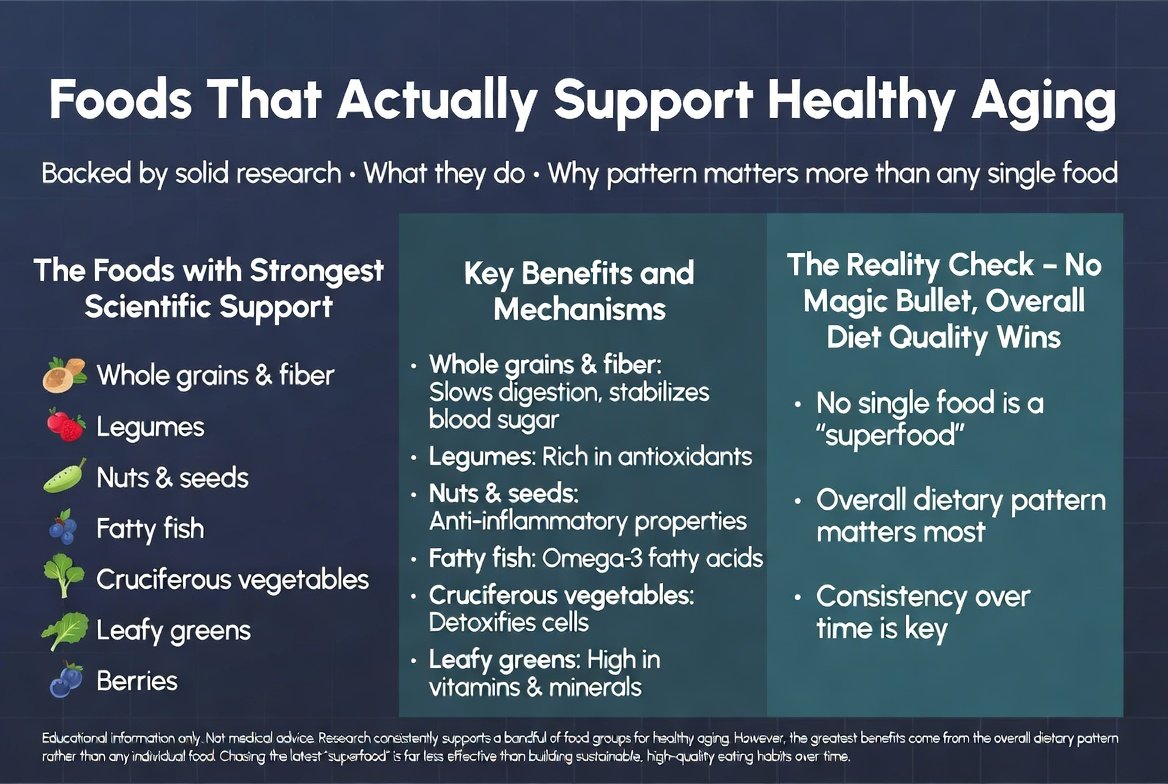
- Plant-based diet: Most calories come from plants, legumes, vegetables, whole grains, and nuts, with little meat.
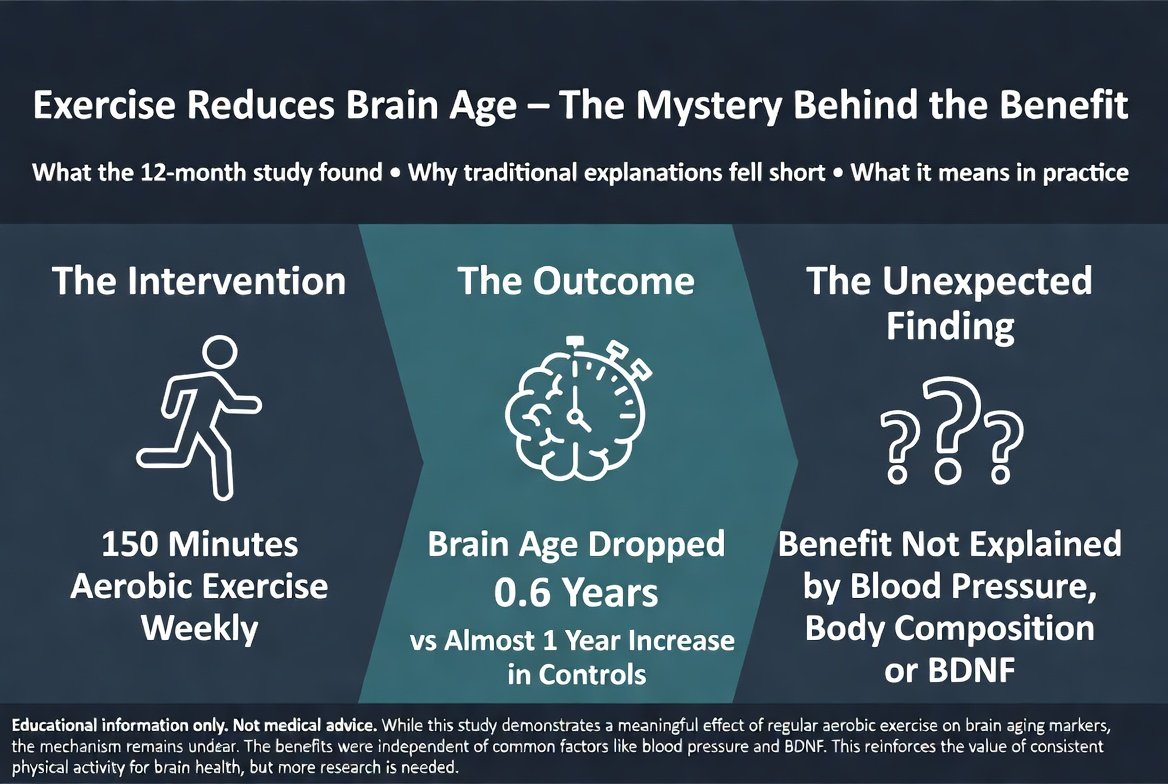
- Natural, daily movement: Not weight training, but walking, gardening, physical work, and climbing stairs as part of the routine.
- Strong social connections: A tight-knit community, lifelong friends, and belonging to a supportive group.
- Family at the center: Intergenerational closeness, caring for elderly parents, and investing in children and grandchildren.
- Sense of meaning and purpose: In Okinawa, it's called "ikigai," a reason to get up in the morning.
- Slowing down and reducing stress: Daily rituals that lower pressure, a nap, prayer, or simply a break.
- Moderate eating: Not eating until bursting; in Okinawa, they say "hara hachi bu," stop when you feel 80% full.
- Belonging and spiritual community: Many residents belong to some religious or spiritual community.
Note that this list sometimes includes "moderate alcohol consumption" (mainly wine). Here we must be honest: this recommendation is based on those old observational studies that have already been undermined. Current science, including the World Health Organization, states there is no safe level of alcohol for health. That is, even within the "Power 9," there is one item that hasn't stood the test of time and research, and this is an excellent example that not everything on this list is gold.
The Honest Caveat: Newman's 2024 Critique
And here comes the part people like to tell less. In September 2024, researcher Saul Justin Newman from University College London won the Ig Nobel Prize in Demography, a prize awarded for research that "first makes you laugh, then makes you think." His work attacks the data foundation of some claims about extreme longevity in the world, including the Blue Zones. It's important to present it calmly and fairly, without drama but also without sweeping it under the rug.
His main findings, published among other places as a scientific preprint, are troubling:
- Lack of documentation: According to Newman, only a small fraction of "verified" supercentenarians worldwide even have a birth certificate. In the United States, a very high percentage of "centenarians" lack a valid birth certificate, and sometimes a death certificate exists for them.
- Pattern of round numbers: The birth dates of many "long-lived individuals" are suspiciously concentrated on days divisible by five, a typical sign of recording errors or fraud.
- Correlation with poverty, not health: Counterintuitively, high rates of reaching extreme age were found to correlate with poverty, illiteracy, poor record-keeping, and economic pressure, not with excellent health.
- Pension fraud: When an elderly person dies but the death is not reported, family members sometimes continue to collect their pension. This creates "old people" on paper who are no longer alive.
Newman even pointed out that some of the Blue Zones correspond to areas with low income and poor historical record-keeping, and that certain data on diet (e.g., vegetable consumption in Okinawa) didn't always match the image. It's important to clarify what this critique does and does not say. It does cast serious doubt on the statistics of extreme longevity—that is, whether there really are that many centenarians living there. It does not negate the value of the healthy habits themselves, nor does it claim that a plant-based diet or social connections are harmful. The opposite is true, as we'll see shortly.
What Does Hold Water: Independent Science
This is the most important point in this guide. Even if we assume the centenarian count in the Blue Zones was completely inflated, the habits identified there are well-supported by independent, large, high-quality studies that have nothing to do with birth registration in one Greek village or another. Let's look at a few of them:
Social Connections and Life Expectancy
One of the most powerful insights. A comprehensive meta-analysis by Holt-Lunstad and colleagues from 2010, published in the journal PLoS Medicine, combined 148 studies with over 308,000 participants. The finding: people with strong social connections have about a 50% higher chance of survival over the follow-up period compared to socially isolated individuals. The strength of the effect of loneliness on mortality is similar to that of smoking, and stronger than the effect of obesity or physical inactivity. This is precisely the "social leg" of the Blue Zones, fully validated independently.
Plant-Based Diet and Mortality
Here too, there is strong and independent support. The Adventist Health Study-2, led by Orlich and colleagues, published in JAMA Internal Medicine in 2013, followed over 73,000 Seventh-day Adventists (the same community as Loma Linda). The finding: plant-based dietary patterns were associated with lower all-cause mortality, especially in men. That is, one of the "Blue Zones" itself was studied with rigorous methodology, and its plant-based diet passes the test.
Movement and Meaning
Physical activity is perhaps the most well-established factor in longevity, and it doesn't require a special village: dozens of studies show that regular movement is linked to lower mortality, a healthier heart, and a slower-aging brain. The sense of meaning and purpose ("ikigai") has also been studied independently and linked to better health and lower mortality. In other words, each of the well-founded "Power 9" stands on its own, even without the story of the magical village.
How to Apply the Good Parts in Modern Life
Here's the practical news: You don't need to move to a Greek island or abandon the city to enjoy the benefits. The idea is not to imitate a village, but to adopt the principles behind the habits and adapt them to your life. Here are realistic ways to do this:
- Shift your plate towards plants. You don't have to become a vegetarian. Add more legumes (lentils, chickpeas, beans), vegetables, and whole grains, and reduce processed meat. You can delve deeper into the topic in the Nutrition for Longevity guide.
- Incorporate natural movement into your routine. Instead of seeing walking as a "workout," make it part of your day: get off one stop earlier, take the stairs, go for a walk after a meal. Combining this with structured exercise can be planned with a Training Program.
- Invest in relationships, like you would invest in fitness. This might be the most important step according to science. Schedule a weekly meal with friends, call your parents, join a group, class, or volunteer. Loneliness is a real risk factor, and connection is an available and free remedy.
- Find your "reason to get up in the morning." A hobby, meaningful work, caring for others, or a personal goal. A sense of purpose is not a philosophical luxury; it's linked to health.
- Build slowing-down rituals. Chronic stress wears down the body. A few minutes of breathing, walking in nature, prayer, or meditation a day makes a cumulative difference.
- Eat in moderation. The principle of "stop at 80% full" is a simple and smart way to prevent overeating, without obsessive calorie counting.
Want to see how all these habits add up to a personal picture? You can get an initial assessment with our Biological Age Calculator, which weighs lifestyle, diet, activity, and social connections.
What to Watch Out For: The Hype Around It
Precisely because the story is so appealing, a whole industry has been built around it, and not everything that boasts the "Blue Zones" label is worth your money or trust. Here are some red flags:
- "Secrets" of longevity. When someone promises you a single "secret" cracked in a remote village, beware. Health is built from many cumulative habits, not a miracle ingredient.
- Supplements and products branded "Blue Zone." Powder, oil, or pills sold claiming to be "what they eat in Okinawa" are often marketing. The real diet there was whole, cheap food, not an expensive supplement.
- Cherry-picked claims. It's easy to point to one item ("They drink wine!") and ignore the whole picture. As we saw, some of the "Power 9," like alcohol, no longer stand up to scrutiny.
- Confusing correlation with causation. Even if many old people really lived there, it doesn't prove a specific habit is the cause. Only controlled studies, like those we brought, can establish a causal link.
The healthy approach is simple: Take the ideas, leave the hype. You don't need to buy anything to implement the core of the Blue Zones, and that's precisely their power.
The Honest Bottom Line
So what are we left with after all this? A much more balanced picture, and also a more useful one. On one hand, it's wise to take the dramatic statistics about "the most centenarians in the world" with a grain of salt. Newman's critique reminds us that data on extreme longevity is highly sensitive to recording errors, poverty, and fraud, and that it's better not to build beliefs on shaky ground. On the other hand, there's no reason to throw out the habits themselves. Plants on the plate, daily movement, warm social connections, and a sense of purpose—all of these are supported by independent, high-quality research, regardless of whether the old people in Sardinia were counted correctly.
Here's a quick reality checklist of the well-founded habits worth adopting:
- Plant-based diet, less processed meat. Supported by large mortality studies.
- Natural movement every day, not just gym workouts.
- Strong social connections, the effect on mortality is similar to quitting smoking.
- A sense of purpose and meaning, a reason to get up in the morning.
- Slowing down and reducing stress as part of the routine.
- Eating in moderation, stopping before full.
- Don't chase a magical village, and don't buy "Blue Zone" products. Implement the principles for free.
In the end, the beauty of the Blue Zones story is not in whether someone lived there to 110, but in that it points, unknowingly, to the same principles that science confirms again and again: real food, a moving body, people who love us, and something to live for. These can be adopted today, anywhere, and that's what truly matters. Want more? We have more practical guides that help build a healthy lifestyle, step by step.
The information in this guide is general and for lifestyle and informational purposes only, and does not constitute medical advice or a substitute for consultation with a qualified physician. Significant changes in diet or physical activity, especially for those with an existing medical condition, taking medication, or elderly, should be done under the guidance of a professional.
References:
Holt-Lunstad J, Smith TB, Layton JB, PLoS Medicine 2010, Social Relationships and Mortality Risk: A Meta-analytic Review
Orlich MJ et al., JAMA Internal Medicine 2013, Vegetarian Dietary Patterns and Mortality in Adventist Health Study 2
UCL 2024, Saul Newman, Ig Nobel Prize for debunking Blue Zone exceptional lifespans

💬 Comments (0)
Be the first to comment on the article.