Professor David Sinclair from Harvard University: Control over aging will be possible in about ten years
Professor David Sinclair, a geneticist and longevity researcher from Harvard University, believes that aging is a disease and that if research into anti-aging treatments continues, people could live to be 120 years old.
In a recent interview, Sinclair said: "We see that most people don't believe it's possible because it's never happened. But we know, just like the Wright brothers, that we have the knowledge and the beginning of the information to reverse aging... It's really just a question of when."
"And I believe it will happen in the next decade, maybe even a little sooner, that we will be able to control our biological age."
Sinclair, author of the bestseller "Lifespan: Why We Age – and Why We Don't Have To," is a full professor in the Department of Genetics at the Paul F. Glenn Center for the Biological Mechanisms of Aging at Harvard Medical School.
Sinclair, best known for his work over more than 30 years on understanding the causes of aging and ways to slow its effects, and also one of Time magazine's "100 Most Influential People in the World," spoke with the Korean Economic Daily about his longevity research regarding treatments for aging as a disease.
Questions and Answers
Question: Professor Sinclair, please explain in detail the importance of your anti-aging research and how it affects the human future.
Answer: There have been a few moments in human history where some event changed the world so much that it could never be the same again.
Flight is a great example. It was truly a moment where things were never normal before the Wright brothers. It was a world where only birds could fly, ... until the Wright brothers, most people believed flight was impossible. But once it happened, everyone had to believe in it.
And what will happen with aging research is the same. We see that most people don't believe it's possible because it's never happened. But we know, just like the Wright brothers, that we have the knowledge and the beginning of the information to reverse aging. So it's no longer a question of if it will happen. It's really just a question of when.
And I believe it will happen in the next decade, maybe even a little sooner, that we will be able to control our biological age... and we will look back on this day and say that people died when they didn't have to die prematurely... I'm not saying we're going to cure aging, but I am saying we are dying from unnecessary diseases.
Question: Could you elaborate on that?
Answer: With today's technology available at the scientific forefront with DNA tests, body scans, (and) blood tests, these small screens, these monitors, are watching over our bodies better and better. I believe the main causes of mortality in society today are preventable... I mean, already a few years ago I saw that we had to get sick before we went to the doctor and we had a tumor and cancer and then it was often too late. We are now at a point in history where you don't have to get sick before you can find a tumor and remove it.
Question: With a combination of advanced medical technologies and anti-aging research, will it be possible for people to live more than 150 years?
Answer: I don't know about 150. That's a long time, but we know people can live to 120.
So the average age of death is 80 right now... so we have 40 years that we know we can play with beyond 120. I think it will be possible not immediately, but it's the same as with the Wright brothers... It took decades, but I know just like the Wright brothers that that day will come when we will have drugs that can truly reverse aging. And not far off is the day when people will live healthily to 150.
It's not like in 10 years everyone will live to 120 because these drugs won't be widely available, they may be expensive and you might need three or four drugs to reach 120. But it will become more and more common in the same way as with all new technologies.
Question: Among the three main anti-aging methods - cellular reprogramming, eliminating zombie cells with senolytic drugs, and developing drugs that mimic specific genes found in organs and tissues, which will be the first to become commercial?
Answer: Well, the two most advanced methods are number two and number three. Number two, there has been success in humans in improving vision in macular degeneration, killing zombie cells in the retina.
And in the case of number three, ... we have molecules that activate the sirtuin genes and these have been tested in humans. And they improve health and may be on the market in the coming years.
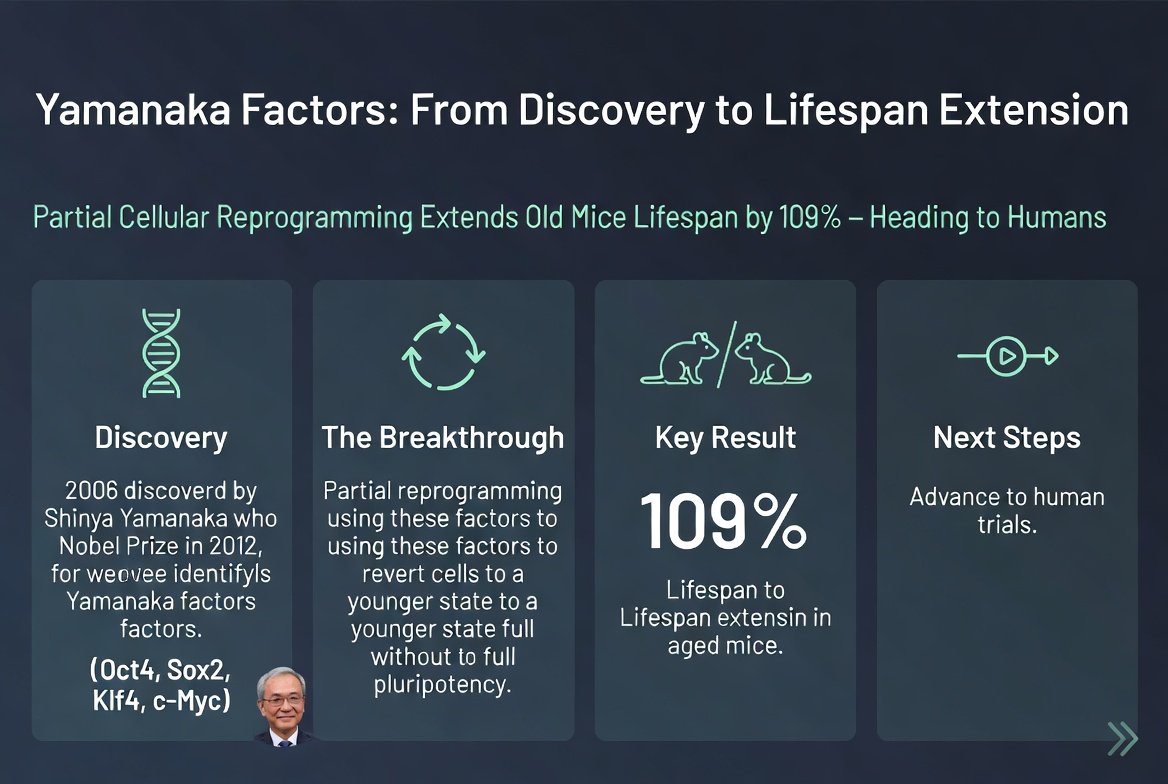
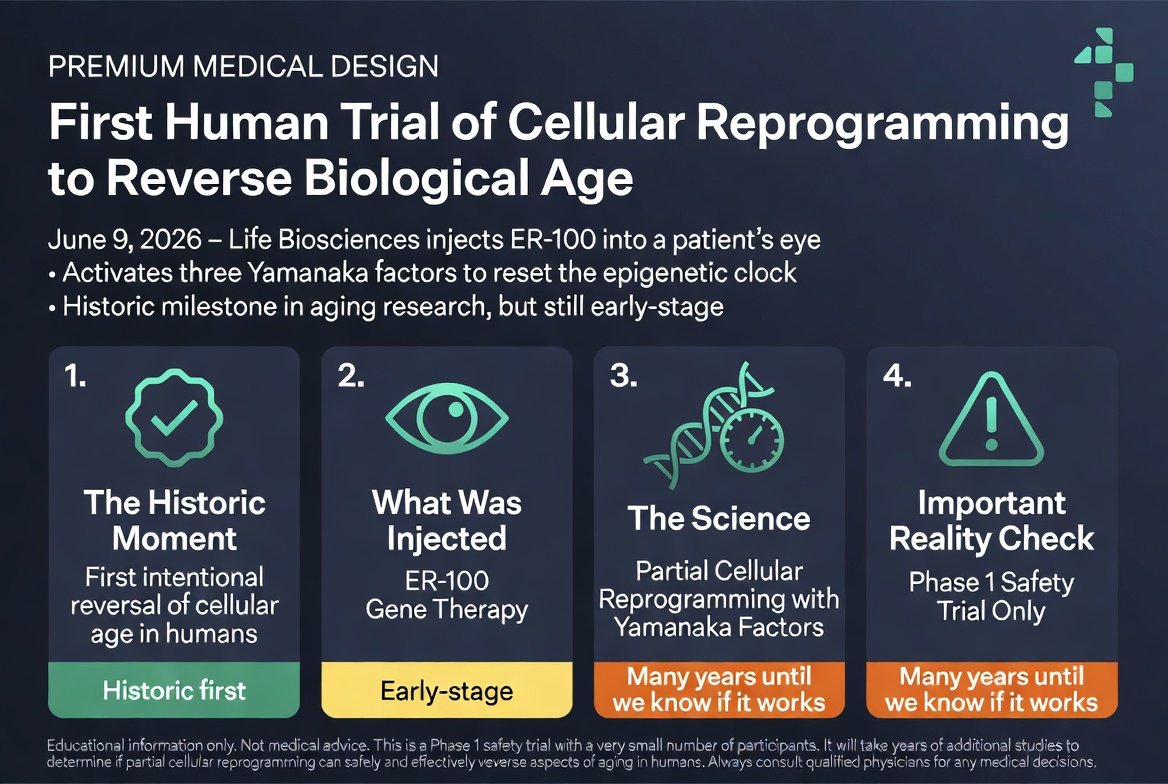
Two types of drugs. Number one, reprogramming has not been tested in humans yet. The closest to that has been tested in monkeys and it's done in my company, called Life Biosciences, and there it works really well to cure blindness. Yes, so we want to test the drug in glaucoma in humans next year.
Question: Tell me about the importance of your research findings on blind mice that underwent reprogramming, recently published in the journal "Nature."
Answer: What was important about it was not that we cured blindness but that we showed it's possible to reverse aging safely. No one had done that before. It came with disease or cancer. And we found a way that is super safe that doesn't cause cancer no matter what you do, for now in animals.
And the second important point is that we didn't choose the eye because it was easy. We chose it because it was hard. And what that means is that it should work in the rest of the body as well.
Now we are reversing aging in the brains of mice and it should work in other tissues. This is just the beginning. The eye is not the point. The eye was the first case.
Question: Tell me how you expanded your research.
Answer: We created a virus that targets the mouse brain and thus made the mouse remember things again and learn again. So what we are doing now is giving the mice the virus in different parts of the body or throughout the body.
Question: Given that research on slowing aging is still in its infancy, is reversing aging a distant future?
Answer: 10 years ago I was considered crazy when I talked about reversing aging. In fact, someone told me I shouldn't use those words, but now it's normal to talk about reversing aging, not just slowing it down.
We can clearly see that there are drugs that when given to mice they behave younger, they have more strength and endurance... Reversal is real.
It's just around the corner.
Question: As you said, aging is the main cause that leads to symptoms like cancer and sarcopenia.
But the FDA still hasn't classified aging as a disease. What is your opinion on that?
Answer: Correct. I was the first person to say that aging should be a disease. And again, that was considered crazy 10 years ago.
Now many scientists agree on that.
The definition of a disease is that people get sick and die. That's what aging does.
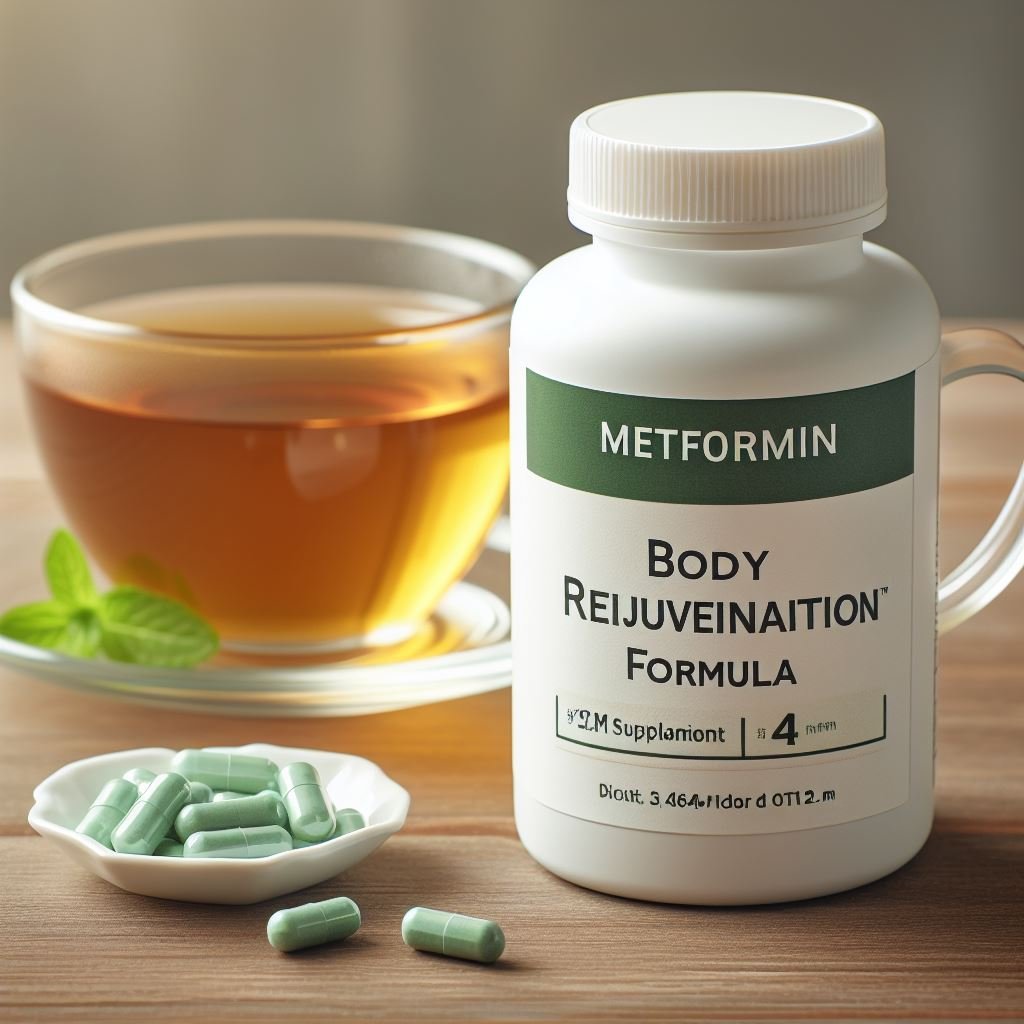
And the FDA is already open to declaring aging a treatable condition. They just want to see proof that it's possible. And so the TAME trial, or Targeting Aging with Metformin, is underway.
(The TAME trial is a series of nationwide clinical trials in the US lasting six years to confirm the efficacy of metformin, a drug successfully approved by the FDA for treating diabetes for over 60 years, in delaying the development or progression of chronic age-related diseases.)
They just started and it's meant to show the FDA that aging can be treated. I hope that in five years, the FDA will classify aging as a disease.
Question: Is there anything you want to say to the readers?
Answer: I want to end by talking about my father. He is the opposite of my mother. My mother didn't care about her health. She smoked, didn't exercise, didn't eat particularly healthily, and she died in agony over 20 years at age 70.
My father looked at the science, looked at my research, started exercising, and started skipping meals in his 60s. He is 84 now. He feels like he did when he was 40. He has no diseases... he doesn't even have a minor ache. He can see perfectly. He doesn't even need glasses to drive at night and he enjoys his time in life.
That's the kind of life I want everyone to have, not to die in their 70s in a terrible way and not to worry about heart disease and cancer...
He had no problem getting on a plane and he just traveled across Europe for two months. You know, that's not a typical 84-year-old.
This concludes the interview. The above is a translation of Prof. Sinclair's statements to the Korean Economic Daily, and reflects his views and predictions only. These are scientific hypotheses about the future, not medical advice or a definite promise.
References:


💬 Comments (0)
Be the first to comment on the article.