Inside every cell of your body, there are between 100 and 2,000 mitochondria, tiny organelles that produce ATP, the energy currency of life. But mitochondria are also a source of the problem: they leak free radicals, their DNA accumulates damage, and when they malfunction, they become more harmful than beneficial. Nature solved this problem with an elegant mechanism: mitophagy, a process where the cell identifies damaged mitochondria, wraps them in a membrane, and breaks them down into their components.
On May 15, 2026, Countdown, a non-profit foundation accelerating mitochondrial science and medicine, announced a new research grant awarded to Dr. Elias Adriaenssens at the Institute of Molecular Pathology (IMP) in Vienna. The announcement was reported, among others, by The Manila Times. The grant funds a project called 'From Hypoxia to Therapy', which investigates how cells identify, remove, and renew damaged mitochondria, based on the understanding that mitochondrial dysfunction is a broad common denominator for rare diseases, chronic diseases, neurodegenerative diseases, and aging itself. The connection between mitophagy and aging is becoming one of the most active frontiers in the biology of aging.
What is Mitophagy?
The word mitophagy is a combination of mitochondrion and phagein (to eat in Greek). In practice, it is a process where the cell performs specific 'garbage collection' for damaged mitochondria:
- Identification, the cell identifies which mitochondrion has lost its membrane potential (low Δψm) or is accumulating oxidative damage.
- Tagging, specialized proteins, mainly PINK1 and Parkin, settle on the damaged mitochondrion and tag it with a ubiquitin chain.
- Wrapping, a double membrane (autophagosome) closes around the tagged mitochondrion.
- Breakdown, the autophagosome fuses with a lysosome, and hydrolytic enzymes break down the mitochondrion.
- Recycling, the components are sent to build new mitochondria (along with the biogenesis process via PGC-1α).
The rate of mitochondrial turnover is not uniform throughout the body, but rather tissue-dependent. In the liver, mitochondrial proteins turn over quickly, with a half-life of just a few days; in the brain, the process is much slower, with a half-life of weeks. With age, the turnover rate tends to slow down, and old, less efficient, more ROS-leaking mitochondria accumulate in cells.
The Connection to Mitophagy and Aging: The PINK1-Parkin Pathway
At the center of the story is one biochemical pathway that scientists have deciphered over the last 15 years. It is called PINK1-Parkin, named after its two main proteins, and it served as the first source of understanding that defective mitophagy causes human disease.
PINK1 (PTEN-Induced Kinase 1) is the damage sensor. Normally, it enters a healthy mitochondrion and is rapidly degraded. But when the mitochondrion has lost its membrane potential, PINK1 cannot enter, remains on the outer membrane, and accumulates there. It functions as a red flag.
This flag recruits Parkin, an E3 ubiquitin ligase enzyme. Parkin begins to attach ubiquitin to proteins on the outer mitochondrial membrane. These ubiquitin chains are the 'label' that tells the autophagy system: 'this organelle needs to be removed'.
The discovery of this pathway came from research on early-onset Parkinson's disease. People with inherited mutations in PINK1 or Parkin develop Parkinson's before age 40. The reason: their dopamine neurons, which rely on particularly high-quality mitochondria, accumulate damaged mitochondria and die early in life. The understanding that 'Parkinson's is largely a disease of mitophagy' began here and spread to other diseases.
With age, even without a mutation, the ability to clear damaged mitochondria via the PINK1-Parkin pathway tends to decline. This means that even without a genetic disease, the mitochondrial quality control system gradually tires, and mitochondrial waste accumulates.
Current Evidence
Study 1: Urolithin A in Humans, Mitopure by Amazentis
Urolithin A is the mitophagy enhancer with the best clinical evidence in humans. It is a metabolite that the gut microbiome produces from ellagitannins (compounds found in pomegranates and walnuts), and has been found to activate mitophagy via the PINK1-Parkin pathway. It has been studied in two major clinical trials by the Swiss company Amazentis, in different age populations, and is currently marketed under the name Mitopure:
- Middle-aged adults: A randomized, placebo-controlled trial (Singh et al., Cell Reports Medicine 2022) on 88 adults aged 40-64, who were untrained and overweight, taking 500 or 1,000 mg daily for 4 months. The trial showed an improvement of about 12% in muscle strength, along with signs of improvement in aerobic performance and mitochondrial health markers, and a decrease in inflammatory markers.
- Elderly: A separate randomized, placebo-controlled trial (Liu et al., JAMA Network Open 2022) on 66 adults aged 65-90, where a dose of 1,000 mg daily significantly improved muscle endurance (number of contractions until fatigue) in the hand and leg compared to placebo, and also lowered blood markers of mitochondrial health. However, it is important to be precise: this trial did not observe a significant improvement in the primary functional measures (6-minute walk distance).
Study 2: HIIT and Mitochondria, Mayo Clinic
A controlled study at the Mayo Clinic (Robinson, Nair et al., Cell Metabolism 2017) examined 12 weeks of HIIT training in young and elderly adults. In the elderly, HIIT increased mitochondrial cellular respiration by about 69%, and led to a significant increase in the expression of mitochondrial genes and proteins, reversing a large portion of age-related changes at the muscle level. The conclusion: high-intensity exercise is one of the most powerful natural stimulators of mitochondrial health known to medicine.
Study 3: Drugs Targeting the PINK1 Pathway, in Clinical Development
Several companies are developing small molecules that directly target the mitochondrial quality control pathway as a disease-modifying treatment for Parkinson's:
- ABBV-1088 (a derivative of MTK-458 from Mitokinin, acquired by AbbVie) is a selective activator of PINK1, and is in Phase 1 clinical trials.
- MTX325 (Mission Therapeutics) is a selective inhibitor of the enzyme USP30, which removes ubiquitin from mitochondria and thus 'blocks' their removal. Inhibiting USP30 restores mitophagy and is in Phase 1 clinical trials.
Both approaches are still in early stages, and their goal is to test whether it is possible to protect dopamine neurons in humans by improving mitochondrial quality.
Study 4: Fasting and Mitophagy
Fasting activates the energy sensor AMPK and inhibits mTOR, thereby promoting autophagy and mitophagy. The mechanism is well-documented in cells and animal models, and there is also evidence in human muscle, although in humans the response in skeletal muscle is relatively modest during short fasts. This is likely one reason why intermittent fasting improves metabolic function even without overall calorie reduction.
Study 5: Mitophagy and Rare Mitochondrial Diseases
Primary mitochondrial diseases, such as Leigh syndrome and MELAS syndrome, involve impaired mitochondrial quality control and accumulation of damaged mitochondria. Understanding mitophagy pathways in these diseases is considered a promising gateway for developing treatments, and this is one reason why research in the field, like the Countdown grant, is gaining momentum.
What About Heart, Kidney, and Chronic Diseases?
After the connection to neurodegenerative diseases was clarified, researchers turned to the rest of the body. Heart failure is characterized by cardiomyocytes filled with damaged mitochondria. Studies in mice indicate that activating mitophagy provides cardiac protection and reduces heart damage, although the magnitude of the effect varies between models.
Chronic kidney disease, impaired mitophagy in tubular cells has been found in studies of damaged kidneys. Restoring mitophagy via Urolithin A in animal models slowed the progression to kidney failure.
Type 2 diabetes, the insulin-producing pancreatic beta cells rely heavily on mitochondria. Failure of mitophagy may cause these cells to lose sensitivity to glucose and impair insulin production. Approaches targeting mitophagy in the pancreas are in early research stages.
Cancer, the connection here is complex. In early stages, normal mitophagy helps prevent cancer formation. But in advanced stages, some tumors rely on mitophagy to survive stress conditions and resist treatment. Therefore, inhibiting mitophagy is being studied as a treatment for certain types of cancer.
Should We Start Taking a Supplement That Enhances Mitophagy?
As of 2026, there are several options with varying levels of evidence:
Urolithin A (Mitopure, 500-1,000 mg per day)
The best clinical evidence available for a mitophagy enhancer in humans. Price: 350-500 NIS per month. Particularly suitable for elderly individuals with muscle weakness, sarcopenia, or general frailty. Mild side effects (stomach discomfort in a small percentage of patients). The main risk: no safety data beyond a few years.
Spermidine (1-3 mg per day)
A polyamine naturally found in wheat germ, aged cheeses, and soy. Its evidence for mitophagy is thinner than that of Urolithin A, but it is cheap and has a good safety profile after many years of dietary consumption.
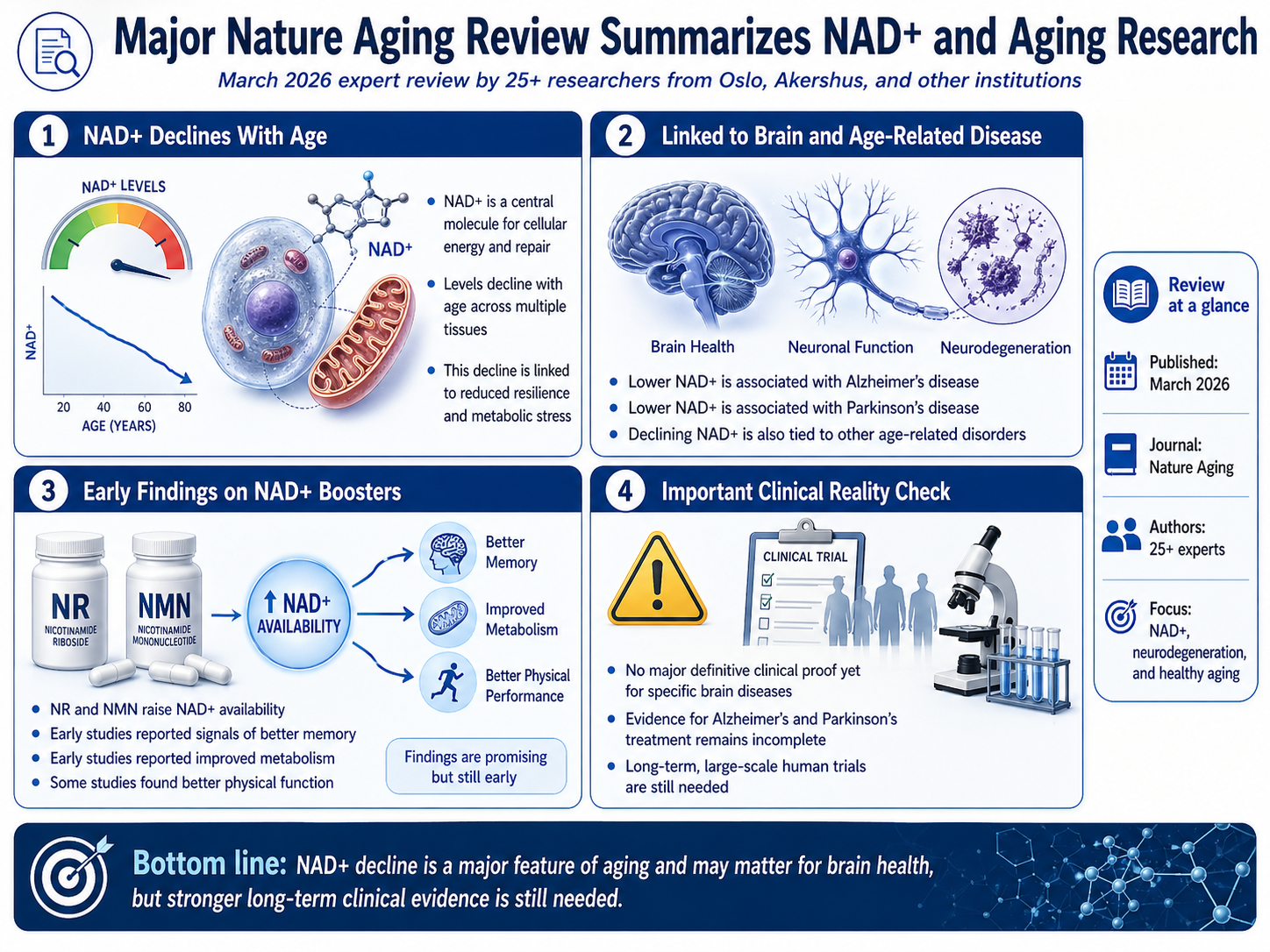
NMN and NR (Boosting NAD+)
NAD+ is required for normal mitophagy. Supplementing with NMN raises NAD+ and may indirectly encourage mitophagy. Warning: Researchers from Washington University have shown that the NAD+ pathway (the enzyme NAMPT, which produces NMN) helps glioblastoma stem cells, an aggressive brain cancer, survive, regenerate, and become more resistant to radiation. Anyone with cancer risk factors should consult a doctor before taking NAD+ supplements.
Exercise
The cheapest intervention with the strongest evidence for mitochondrial health. 2-3 HIIT sessions per week improve mitochondrial function more than any molecule tested to date, with the most modest side effects.
The Risk of Taking a Non-Targeted 'Mitophagy Enhancer'
One should not underestimate the possibility that excessive mitophagy could also be problematic. Neurons, for example, rely on mitochondria that last for a relatively long time. Enhancing mitophagy beyond the physiological level could theoretically cause cells to lose essential mitochondria. A supplement is not a drug: it is advisable to start with a low dose and monitor.
What to Do Starting Today
- Add 2-3 HIIT sessions per week. The classic protocol: 4 intervals of 4 minutes at 85-95% of maximum heart rate, with 3 minutes of recovery between each. This is one of the most powerful natural stimulators of mitochondrial health known to science.
- Eat pomegranates, walnuts, and raspberries, several times a week. They provide ellagitannins, the raw material that the microbiome converts into Urolithin A. Only in about one-third to 40% of the population (estimates vary) is the conversion by the microbiome efficient. For the rest, the direct supplement is preferable.
- Fast for 14-16 hours daily. For example, from 19:00 to 11:00. Fasting activates mitophagy via AMPK and inhibition of mTOR. This is a cheap and natural way to support the process.
- Get 7-8 hours of quality sleep. Cellular cleaning processes are particularly active during sleep. Poor sleep impairs the body's ability to maintain and clear damaged mitochondria.
- Consider a Urolithin A supplement (Mitopure or a similar product) if you are over 50 or have signs of muscle weakness. 500 mg per day for 4 months is the clinically tested protocol.
- If there is a family history of Parkinson's, consult a neurologist about genetic testing for PINK1 and Parkin. Early detection of a mutation does not change treatment today, but helps with monitoring.
The Broader Perspective
The Countdown grant marks an important moment in aging medicine. For years, mitophagy was a biological concept studied by basic scientists in the lab. Now, following clinical evidence for Urolithin A and the progress of drugs targeting the PINK1 pathway, it is becoming a legitimate research and therapeutic target.
The deeper idea is that aging is not a static condition that needs to be 'fixed' all at once, but a dynamic process of accumulating cellular waste. Every day, the body produces damaged proteins, damaged mitochondria, and zombie cells. Healthy life depends on the efficiency of the cleaning systems. When they work, even at age 80, cells look relatively young. When they fail, even at age 50, the signs are visible.
But the most important message remains consistent: before looking for a supplement or drug, ensure the natural mechanisms are working. Exercise, moderate fasting, long sleep, and a diet rich in phytochemicals activate the same mitophagy pathways that scientists are trying to mimic with molecules. The best anti-aging drug of 2026 is still the one without a patent.

💬 Comments (0)
Be the first to comment on the article.