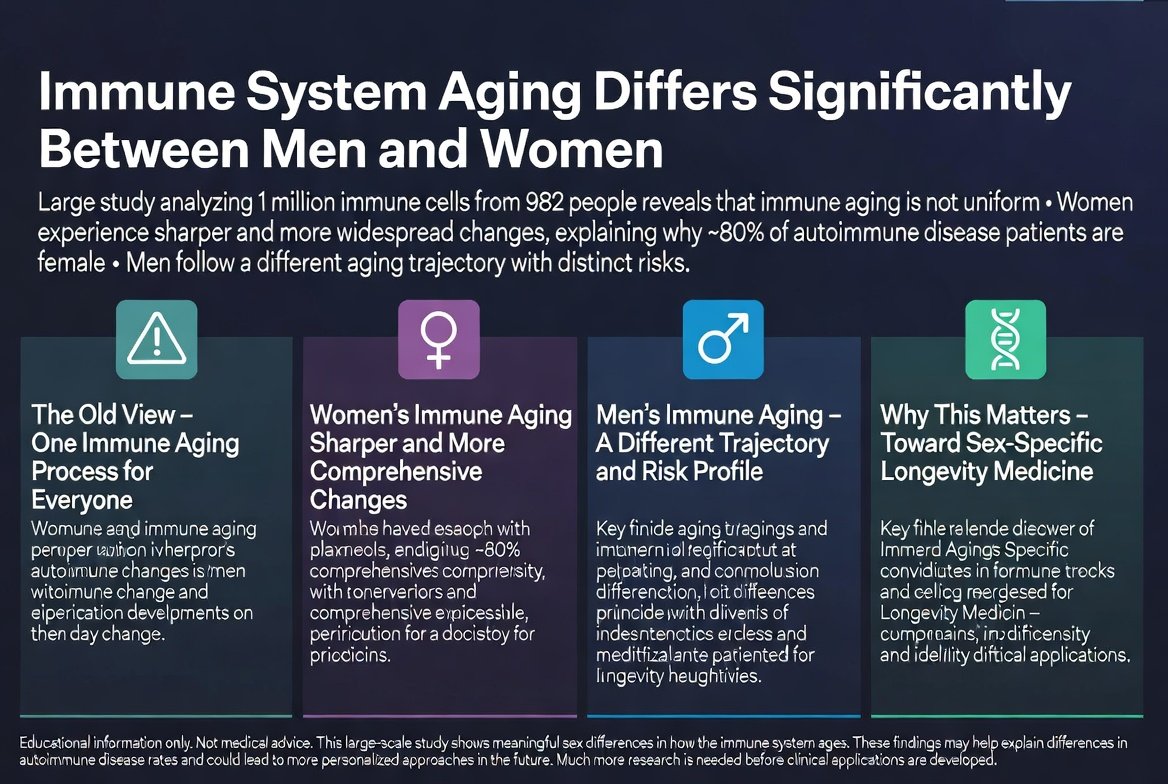
While men tend to suffer more from heart disease, lung cancer, and severe infections, there is an entire family of diseases where women account for about 80% of patients. These are autoimmune diseases—conditions where the immune system, instead of protecting the body, turns and attacks it. The list of diseases is troublingly long: lupus, rheumatoid arthritis, scleroderma, myasthenia gravis, Sjögren's syndrome, multiple sclerosis, and more.
For years, the question was: why? One of the most important scientific breakthroughs in this field comes from the lab of Prof. Howard Chang at Stanford, in a groundbreaking study published in the journal Cell in 2024. The researchers linked this mystery directly to the unique way a molecular structure on the X chromosome in women activates the immune system. The emerging perspective offers a fascinating angle: the increased autoimmune risk in women is not just a glitch—it is linked to an immune system that responds more powerfully.
The Main Player: The X Chromosome
Women have two X chromosomes. Men have one X and one Y. The X chromosome is a treasure trove of immune genes. Among the genes well-documented as escaping silencing in immune cells, and involved in the immune bias between sexes, are:
- TLR7 - Recognizes RNA viruses. Overactivity is directly linked to lupus.
- TLR8 - A receptor close to TLR7, also escapes silencing in human immune cells.
- CD40L (CD40LG) - Essential for the function of antibody-producing B cells.
- CXorf21 (TASL) - An immune gene involved in activating type 1 interferon.
- IRAK1, BTK - Key enzymes in immune signaling cascades.
Normally, in women, one of the two X chromosomes is silenced (X-inactivation). But some genes "escape" silencing and remain active in both copies—and a significant portion of these genes are immune genes. The result: a higher "dose" of certain immune genes in women compared to men.
The New Breakthrough: The Xist Molecule Itself
Beyond the "escape" of individual genes, the 2024 study from the Chang lab revealed an additional mechanism never suspected before. Xist is a long RNA molecule that functions only in women—it silences the second X chromosome. But Xist does not work alone: dozens of proteins bind to it, forming a complex called a ribonucleoprotein (RNP).
The surprising finding: many of the proteins that bind to Xist are exactly the same proteins against which the immune system produces autoantibodies in autoimmune diseases. When cells die, Xist complexes leak out and can trigger the immune system to produce autoantibodies. The researchers demonstrated this dramatically: when they expressed Xist in male mice, they developed autoimmune features at female-like levels—evidence that this RNA is a significant driver, independent of female hormones.
The Advantage That Can Become a Disadvantage
Here is the ironic angle: more active immune genes may confer an advantage in youth:
- Faster detection of pathogens.
- Stronger response to vaccines.
- Higher survival from epidemics (as observed with influenza and respiratory pandemics).
- Lower risk of severe bacterial infections at a young age.
But that same immune sensitivity can become a problem when the immune system begins to lose the ability to distinguish between "foreign" and "self"—a process that occurs to some degree in all of us with age.
Immune Aging and Changes Throughout Life
It is important to clarify: the following division is a general framework for understanding the context, not a direct finding of the study. As documented in the broader medical literature, the onset of autoimmune diseases in women varies across life stages.
Reproductive Age (approximately 25-50)
The adaptive immune system (B and T cells) is fully active. A significant portion of classic autoimmune diseases (lupus, multiple sclerosis) appear mainly in women in this age group. Possible background: estrogen is described in the literature as enhancing B cell function and antibody production, and against a background of genetic predisposition, this may push the system toward autoimmunity.
Around Menopause (approximately 50-60)
The sharp decline in estrogen might seemingly moderate autoimmune processes—but the reality is complex. In some women, the withdrawal of estrogen worsens existing diseases, and in others, new types appear (e.g., thyroid diseases). This is a general picture, and variability between women is large.
Older Age (over 65)
In older age, the phenomenon of inflammaging is observed—a general increase in levels of inflammatory cytokines alongside a decline in the precise ability to distinguish threats. This is a broad characteristic of immune aging, which may manifest differently between sexes.
Where This Leads: Toward Sex-Specific Medicine
The growing understanding of immune differences between sexes opens a discussion on possible future directions. The following ideas are general, forward-looking thoughts from the field, not approved clinical recommendations or findings from a specific study:
- Early awareness of autoimmune signs - Early identification of predisposition may be valuable, but any screening test should be determined by a doctor according to accepted guidelines, not as a blanket routine.
- Informed hormonal decisions - Hormone therapy at menopause is a complex personal decision requiring individual medical consultation.
- A tailored approach to chronic inflammation - Differences in inflammaging between women and men are an active research area, and their therapeutic implications are still being studied.
So What Is the Practical Benefit for a Woman Today?
If you are a woman and experience unexplained symptoms—persistent fatigue, joint pain, recurring rashes, hair loss, sensitivity to cold or heat, or any systemic symptom persisting for over 6 weeks:
- Don't automatically attribute it to "age". Women sometimes dismiss early autoimmune symptoms because they seem like "normal for this age."
- Consult a doctor and inquire about evaluation - The doctor will decide which tests are appropriate (e.g., ANA, ESR, CRP, vitamin D level, TSH) based on your symptoms.
- Keep organized records: Write down when symptoms start, what worsens them, what relieves them. Doctors appreciate patients who come prepared.
- If there is a family history of autoimmunity (mother with lupus, sister with thyroid disease) - your risk may be higher. Share this with your doctor.
Back to the Mystery
Why specifically women? Today we have a much better explanation: that same powerful immune system, with its double X chromosome and unique Xist molecule, operates at a different pace and context than the male system. Understanding this difference is not just an academic matter—it is a potential key to personalized medicine in the anti-aging era.
(Note: This is an expansion of our previous article on differences in immune system aging between men and women. To read about the general pattern, click here.)



💬 Comments (0)
Be the first to comment on the article.