If you want a simple translation of "journalistic breakthrough," this is it: a team led by Professor Ashok Shetty at the Texas A&M Institute for Regenerative Medicine developed a nasal spray delivered through the nose, which, according to the study, reverses brain aging. Just two doses restored old mice to improved brain function. The paper was published in the Journal of Extracellular Vesicles in February 2026.
What exactly is in the spray?
The active ingredient is something called extracellular vesicles, tiny particles secreted by cells that contain signaling molecules. The vesicles, derived from human neural stem cells, naturally contain microRNAs (such as miRNA-30e-3p and miRNA-181a-5p) that are known to suppress inflammation.
When the spray is administered into the nose, the vesicles travel along the olfactory nerve and reach brain tissue directly. They bypass the blood-brain barrier, which is a major obstacle for most drugs.
What happens after the dose?
The team tracked old mice (about 18 months old) that received the spray, compared to mice that received a placebo. The differences were dramatic:
- Reduction of chronic inflammation: Decreased inflammatory activity of microglia (the brain's immune cells), reduced microglial accumulation, and less astrocyte hypertrophy
- Improved mitochondrial function: The treatment restored mitochondrial function in neurons and reduced oxidative stress, along with increased expression of antioxidant proteins
- Improved memory: In object recognition and novel object recognition tests, the mice showed significant improvement
- Long-term effect: The benefits lasted for months, even beyond the treatment cycle
"We are giving neurons their spark back by reducing oxidative stress and reactivating mitochondria," explained Dr. Madhu Leelavathi Narayana, the study's lead researcher.
How does it work biologically?
The aging brain suffers from what is called chronic neuroinflammation: low-level inflammation that is not visible externally but impairs neuronal function. The two main inflammatory pathways that the spray suppressed are:
- NLRP3 inflammasome: A protein complex that triggers a powerful inflammatory response. It is elevated in Alzheimer's and Parkinson's brains
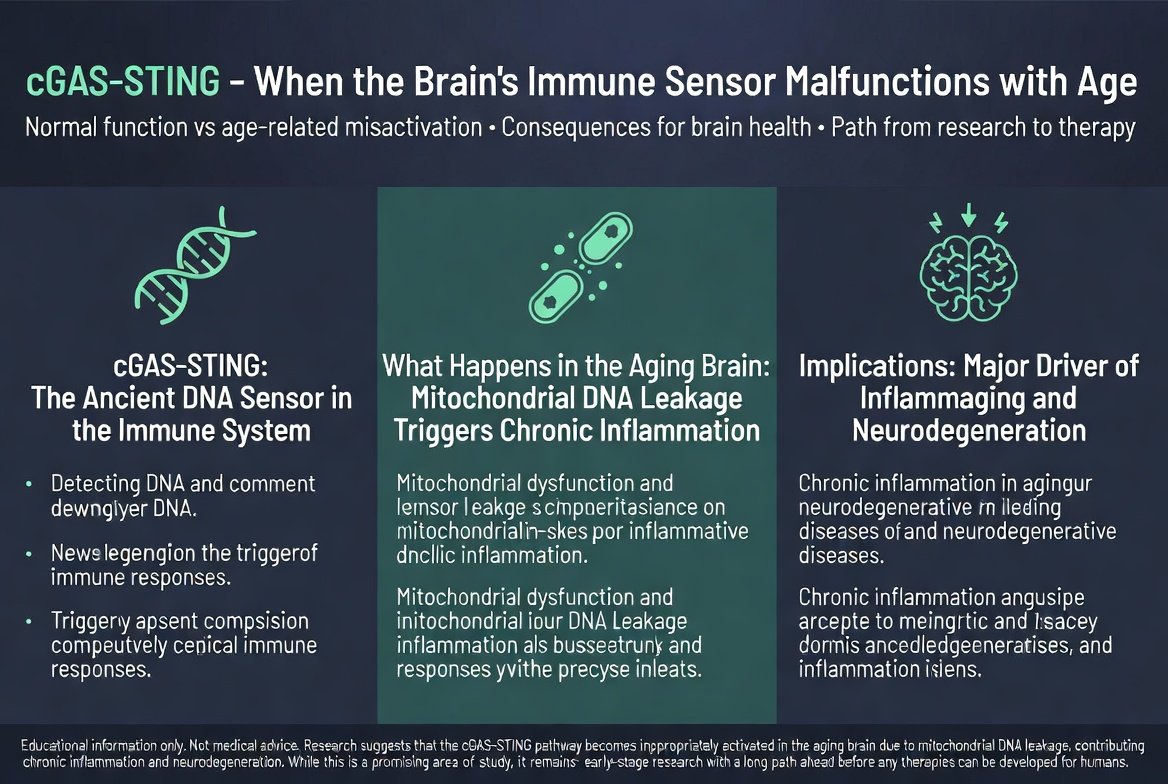
- cGAS-STING pathway: A pathway activated by damaged DNA, which increases with age
In addition to suppressing inflammation, gene expression analysis in microglia showed an increase in genes that improve cellular energy production (oxidative phosphorylation) and a decrease in genes that drive inflammation.
What's next?
This is still preclinical research in mice, not tested in humans. The team is optimistic for three reasons:
- Known delivery route: Intranasal sprays are already used clinically (migraine medications, naloxone). No need to approve a new route
- Solid composition: Extracellular vesicles have been studied for years. They are not a new regulatory issue
- Clear effect: Just 2 doses with a long-term effect indicates high sensitivity
It is important to clarify: no date has been set for human trials, and the researchers note that further study is needed before the treatment can be tested in people. As of now, a US patent application has been filed, but this is an early stage.
What does this mean for you?
As of now, there is nothing to do. But the study suggests an approach: chronic brain inflammation is a real problem, and there are solutions. Dietary changes (less sugar, more omega-3), physical activity, quality sleep, and less stress all reduce the inflammatory burden in the brain even without a spray.



💬 Comments (0)
Be the first to comment on the article.