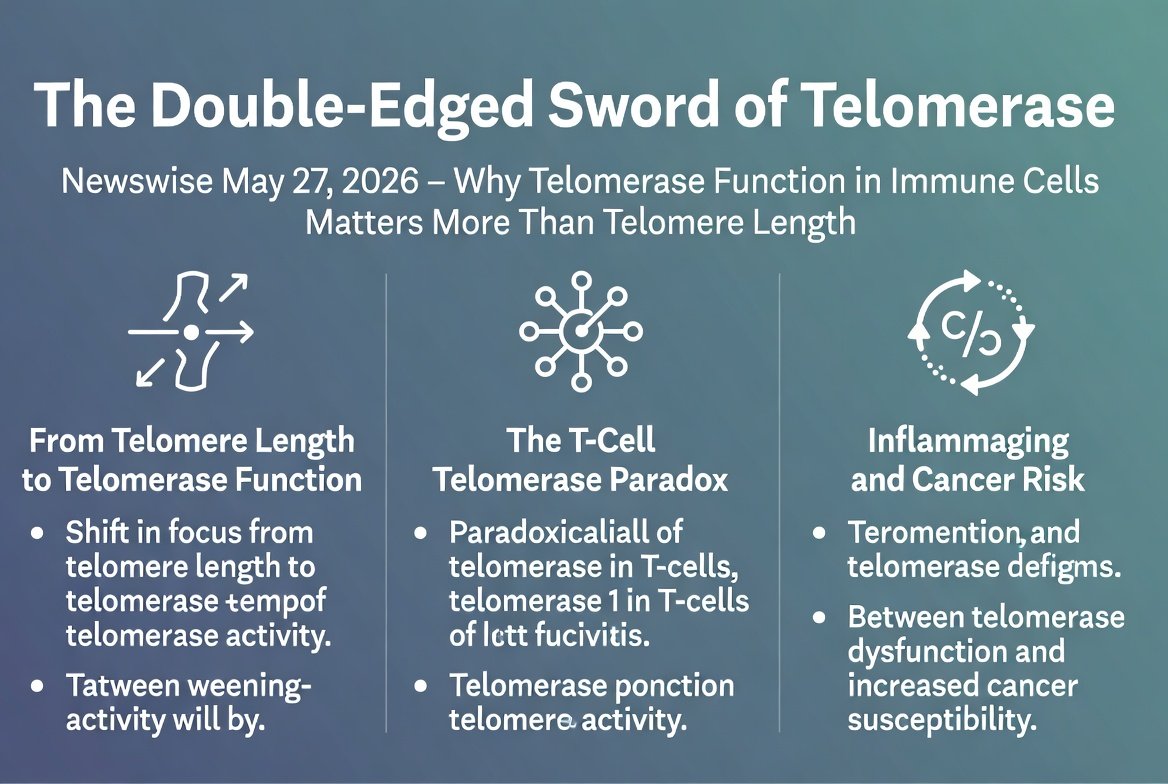
Thirty years after the initial discovery, telomere length has been considered one of the strongest biomarkers of aging. "Short telomeres = old cell = old body" became almost an axiom. But a new study published in iScience offers a significant shift: Telomere length does not predict well when an individual cell will enter senescence. Other factors—lysosomal content, cell size, the p21 protein—are better predictors.
The Background: The Classical Theory
Researcher Leonard Hayflick discovered in 1961 that normal human cells can divide only about 50-70 times. They reach the "Hayflick limit," stop, and enter a state called replicative senescence. They don't die, but they no longer divide.
When telomeres were discovered, it seemed like the perfect explanation: with each division, telomeres shorten. When they erode below a threshold, the cell enters senescence. Telomere length is the timer.
But this story is too simplistic, it turns out.
The Experiment: Tracking Individual Cells
The team from the University of Colorado Boulder performed something technologically complex: they used live-cell microscopy to track individual human cells for weeks. Each cell was "monitored": its telomere length, nucleus size, which proteins it expresses, and where it is in the cell cycle.
The expectation: cells with short telomeres would enter senescence first.
The finding: Telomere length did not reliably predict which cell would enter senescence. Cells with similar telomere length entered senescence at different times, so no reliable correlation was found between telomere length and the timing of senescence at the single-cell level.
What Does Predict Senescence?
The team examined several factors beyond telomeres. The markers that predicted well:
1. Lysosomal Content
Lysosomes are the cell's "digestive system." They break down cellular waste. Cells with many large lysosomes tended to enter senescence quickly. This explains why old cells look "dirty."
2. Cell Size
Cells that grew too large (without dividing) tended toward senescence. Excessive size is a stress signal.
3. Genomic Architecture
How DNA is organized in the nucleus matters. Cells with more randomly "spread" DNA enter senescence quickly.
4. p21 Protein
This is a "division arrest" protein. When its levels rise, the cell receives a signal to stop. High levels of p21 predicted senescence much better than short telomeres.
The Conclusion: Senescence Is a Complex Process
Instead of a simple clock (shortening telomeres), senescence is a complex state transition. Many factors work together:
- DNA damage
- Metabolic stress
- Accumulation of cellular waste
- Changes in genome organization
- External signaling (cellular environment)
- Telomere length (one factor among many)
The study's conclusion is not that telomeres are unimportant, but that they are only part of the equation. Other markers offer a broader picture of when and how a cell enters senescence.
Why Does This Matter?
If telomere length is not the exclusive factor, there are implications:
- Biological age tests that measure only telomeres: Less reliable than we thought
- Drugs aimed solely at lengthening telomeres: Will not be sufficient
- Cancer risk assessment: Should include p21, cell size, and other factors
- Future anti-aging research: Will focus on more than one pathway
Relevance to Health Outcomes
It is important to emphasize: Telomere length still predicts bodily outcomes, just not at the single-cell level. In populations, people with shorter telomeres on average are sicker. But within an individual, other markers are more reliable for predicting which cell will enter senescence first.
Next Steps
The team and other groups are moving toward developing multi-factor senescence indices. Instead of testing only telomeres, they will examine:
- Telomere length
- p21 and p16 levels in blood
- Metabolic markers (NAD+, glucose, insulin)
- Inflammation indicators (CRP, IL-6)
- SASP markers (proteins secreted by zombie cells)
Combining all these will provide much more accuracy than a single telomere test.
What Can Be Done?
Even without advanced tests, the interventions that reduce cellular senescence are the same ones that reduce aging in general:
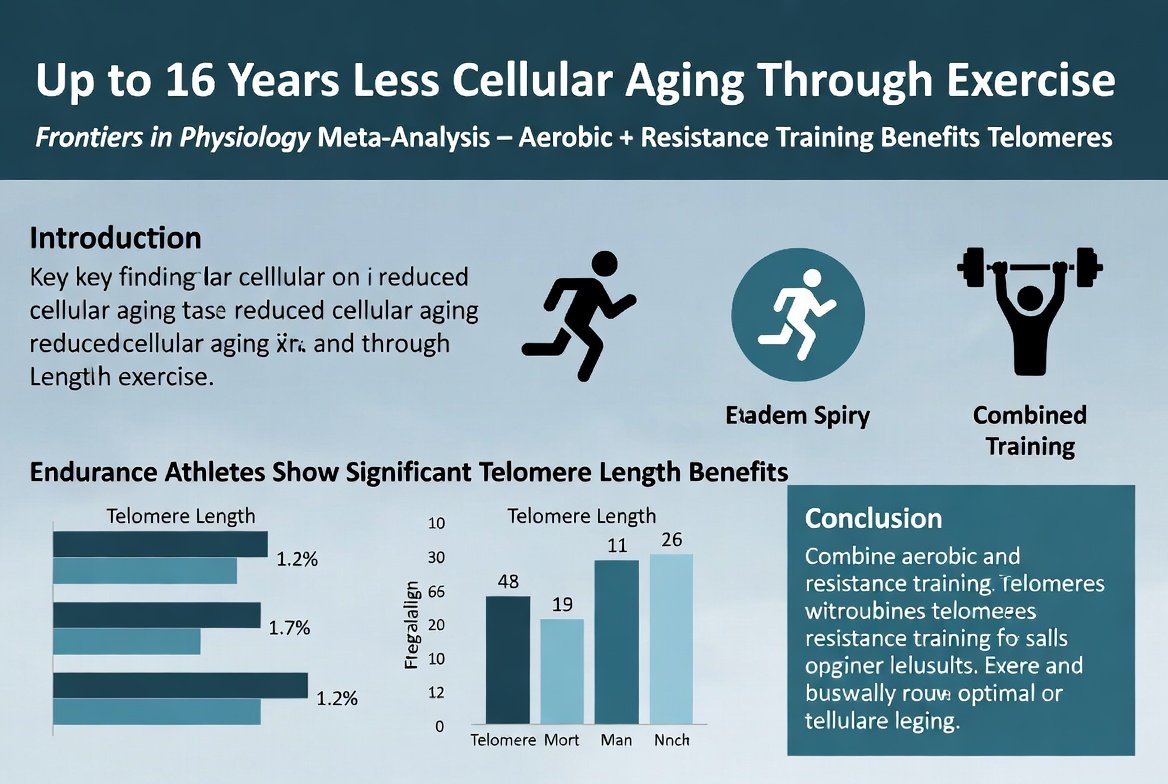
- Physical activity: Reduces inflammation, promotes cell cleaning, and lengthens telomeres
- Mediterranean diet: Rich in polyphenols that protect cells
- Quality sleep: Time for cellular cleaning through autophagy
- Managed stress: Chronic stress accelerates senescence (cortisol)
- Senolytics: Remove cells that have already entered senescence
Conclusion
Cellular aging turns out to be more complex than we thought. Telomeres are not the clock; they are just one component. The more we understand the full picture, the more targeted our interventions can be. In the meantime, comprehensive interventions (lifestyle, diet, activity) remain the most certain.



💬 Comments (0)
Be the first to comment on the article.