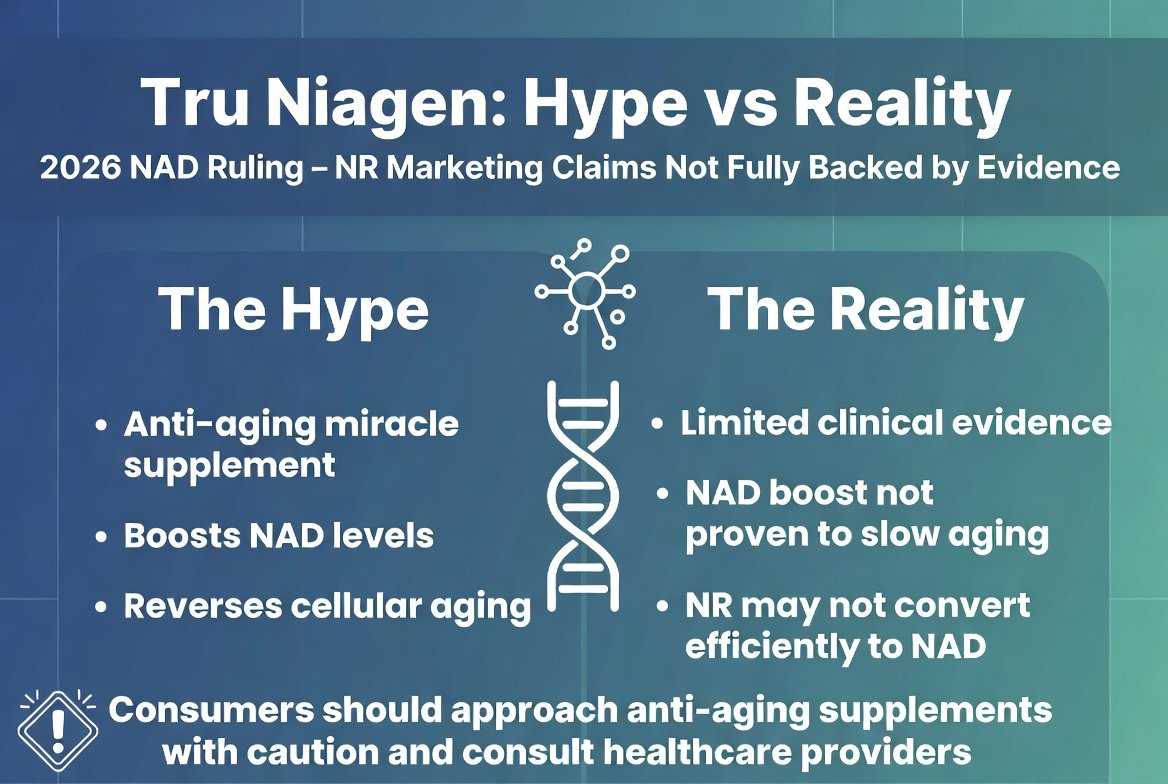
Open Instagram, YouTube, or basically any health platform, and you'll find something similar: a celebrity or doctor-blogger telling you about the NMN supplement that turned them into a "younger version of themselves." Studies from Harvard! Trials from Stanford! Extended lifespan in mice! Price: $80-150 per month. But what does the science actually show about NAD supplements? A critical review published in Ageing Research Reviews in February 2026 presents a much less impressive picture.
What is NAD Anyway?
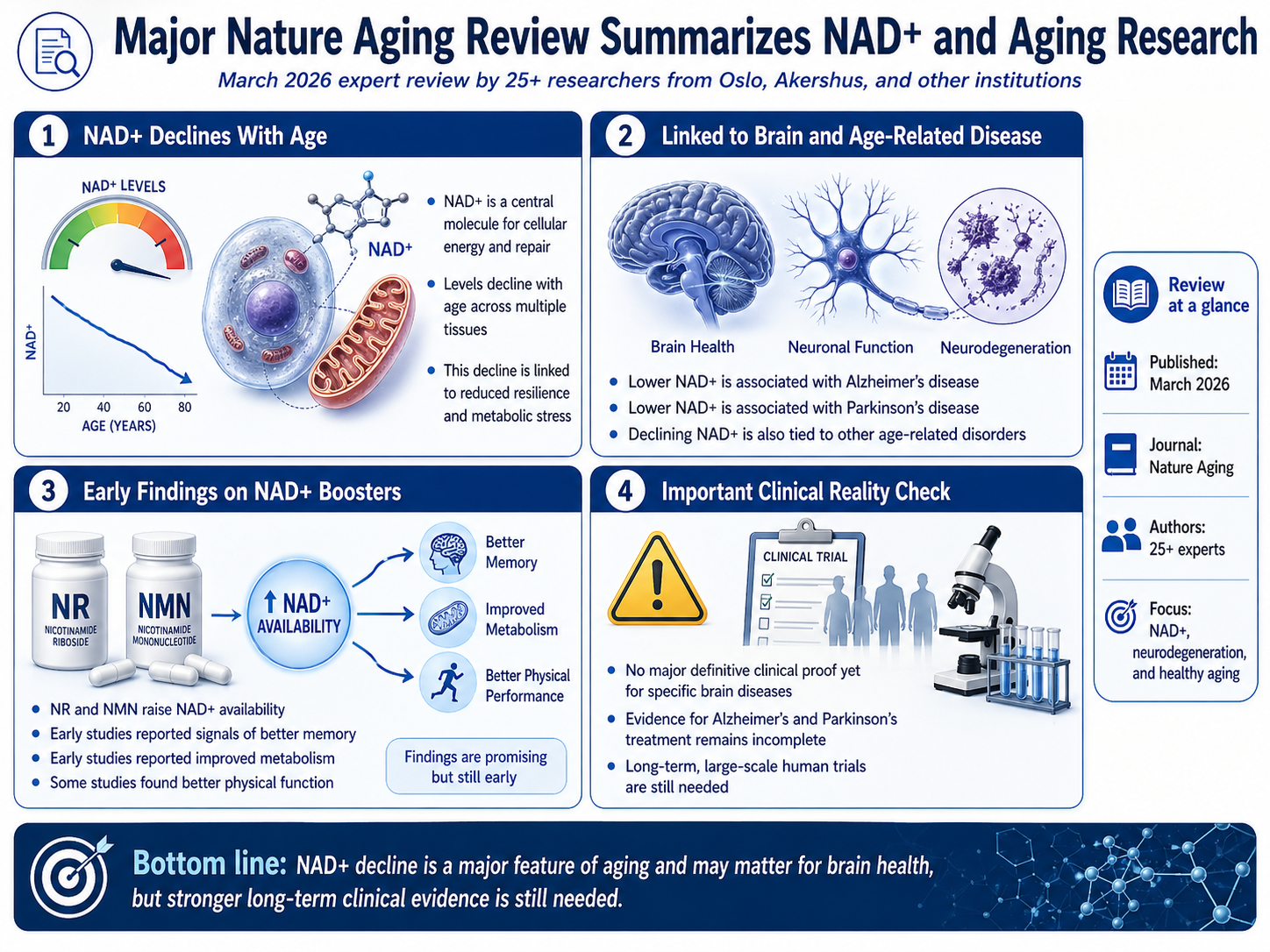
NAD+ (Nicotinamide Adenine Dinucleotide) is a central coenzyme found in every cell of the body. It participates in mitochondrial energy production, DNA repair, and protection against oxidative stress. With age, NAD+ levels decline, and this observation gave rise to a logical hypothesis: if we restore the levels, we will rejuvenate the body.
The two main supplements on the market:
- NMN (Nicotinamide Mononucleotide): A precursor that, when consumed, the body converts into NAD+
- NR (Nicotinamide Riboside): Another precursor, more stable in water
The First Problem: Most Studies Are in Mice
The new review in Ageing Research Reviews analyzed 113 studies: only 33 of them were in humans, compared to 80 studies in mice and other rodents. This is the heart of the problem: most of the impressive evidence comes from animals, not from us.
When Harvard researchers gave NMN to old mice in 2018, they showed impressive results: improvement in blood vessels and endothelial function, better aerobic endurance, and improved metabolism (the improvement in female fertility comes from other mouse studies). But those were mice.
In humans, controlled clinical trials have shown only modest results:
- Increase in NAD+ levels in the blood, yes, obviously, that's what is measured
- Modest effect on diastolic blood pressure (-2 mmHg on average)
- Possible slight improvement in aerobic fitness
- Slight decrease in inflammatory markers
None of the human studies showed lifespan extension, reversal of aging, or functioning "like a 25-year-old." All these promises are extrapolations from mice.
The Second Problem: High Doses Masking Unclear Benefit
Most NMN studies in humans use doses of 250-1500 mg per day. These are pharmacological doses, not nutritional ones. While regular vitamin B3 in food does not exceed 50 mg, NMN in supplements is 5-30 times more.
Issues:
- Long-term effects are unknown. Most studies lasted 8-24 weeks. What happens after 5 years of 1000 mg per day? No idea.
- Hidden metabolic effects. NMN undergoes complex processing in the gut and liver. Most of the dose breaks down before reaching cells. When taking NMN orally, gut bacteria break down a large part of it into nicotinamide (NAM) and nicotinic acid (NA), and at the same time, additional metabolites are formed such as nicotinamide riboside (NR) and nicotinamide methyl (Me-NAM). The exact metabolite profile and its long-term effects have not yet been thoroughly studied for safety.
- The comparison between NMN and NR is still undecided. Contrary to what is sometimes claimed, there are human studies where NR actually raised NAD+ levels in the blood more than NMN at the same dose, and NR currently has more clinical trials. The question of which precursor is better remains open.
The Third Problem: NAD+ Also Helps Cancer
The sharpest point in the research. We recently showed in Reverse Aging a study from Case Western Reserve published in Cancer Letters: NMN and other NAD+ supplements help cancer cells survive DNA damage and withstand chemotherapy. Cancer cells need NAD+ to survive DNA damage, and when supplied, they become more resistant to treatment.
This does not mean NAD+ supplements cause cancer. But if there is active cancer or a family history of cancer, you should consult an oncologist.
Why Are They Popular Anyway?
Three marketing reasons:
- Leading researchers promote them. David Sinclair from Harvard, one of the prominent researchers in the field, is known as an enthusiastic supporter of NMN. He also invests in companies that produce it (like MetroBiotech), a financial conflict of interest worth remembering.
- The mechanism sounds sexy. "Restoring NAD+ levels of a 20-year-old" - a catchy headline. The "science" behind it is more complex.
- The little that works is slightly noticeable. If taking NMN improves fitness by 2-3% or lowers blood pressure by 2 mmHg, people feel the difference and believe it works much more than it does.
So What Does NAD+ Actually Do?
Don't dismiss it entirely. Here is what science actually suggests (not what marketing promises):
- May support healthy metabolism in adults over 60
- May lower diastolic blood pressure modestly (~2 mmHg)
- Seems safe in the short term at reasonable doses (less than 1000 mg per day)
- Possibly beneficial in neurodegeneration (Alzheimer's, Parkinson's), early evidence only
What it does not do:
- Does not extend lifespan in humans (no evidence)
- Does not turn you into a younger version of yourself
- Does not replace sleep, physical activity, or good nutrition
What to Do With This Information?
If you are already taking NMN/NR, there is no need to stop (if you are healthy), but:
- Have a realistic understanding of what you are getting
- Don't give up on interventions with stronger evidence (physical activity, sleep, protein)
- If there is active cancer in the body, stop and consult an oncologist
- Don't buy only from companies with a "from Harvard" or "from the Weizmann Institute" label - that's marketing
The Bottom Line
NAD+ supplements are not a miracle drug and not a scam. They are dietary supplements with moderate evidence for moderate benefits. Instead of $100 per month on a supplement, those dollars go further on: fresh vegetables, a gym membership, a quality mattress for sleep, and regular medical checkups. Each of these is backed by stronger research and has a greater impact on your life expectancy.

💬 Comments (0)
Be the first to comment on the article.